
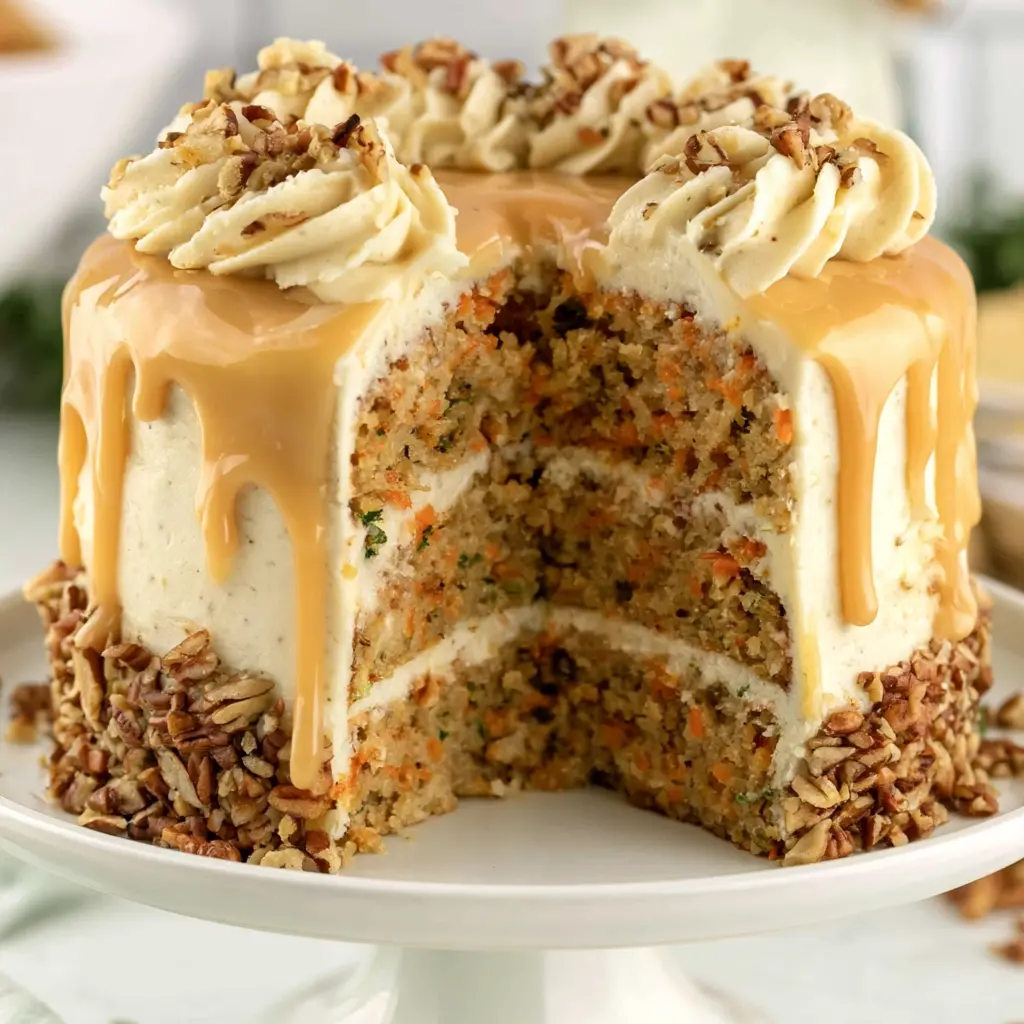
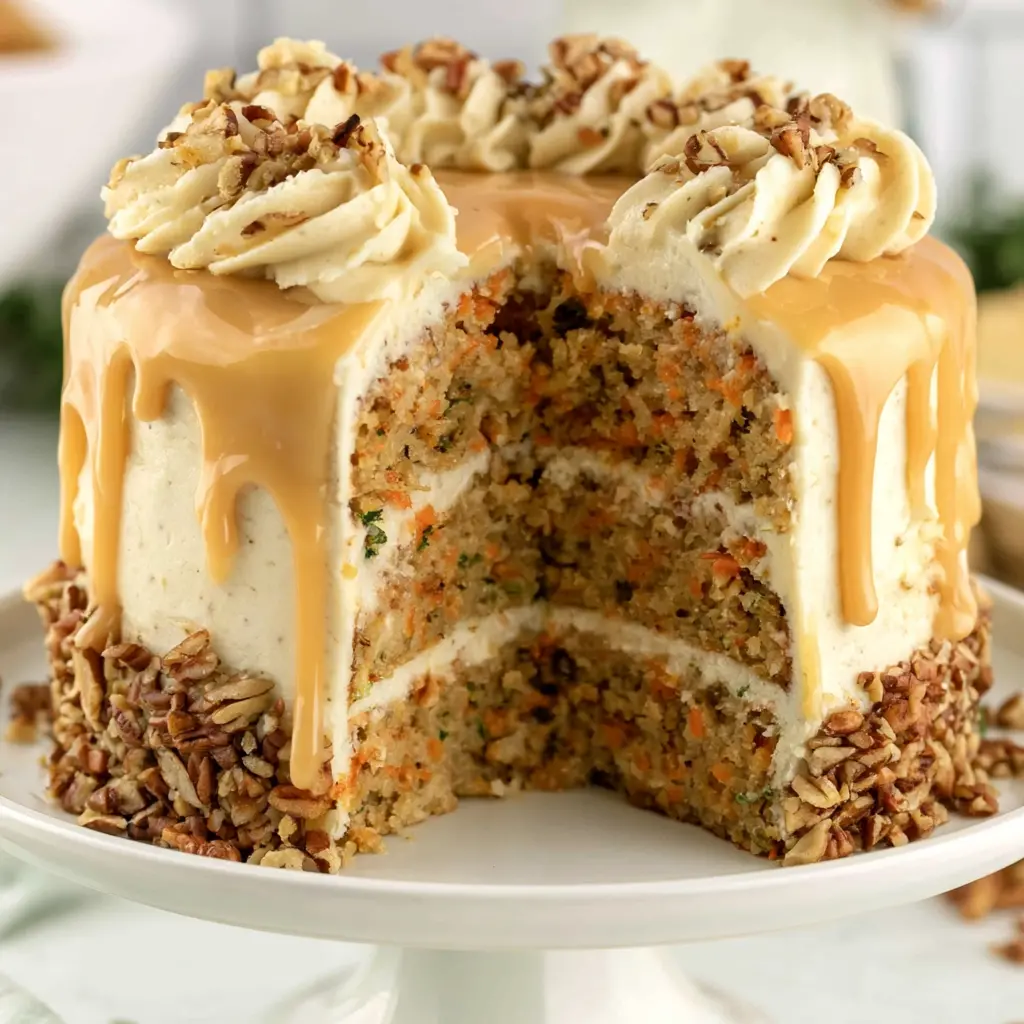
Salted Caramel Carrot Cake
Ingredients
Method
- Preheat the oven to 350°F. Butter three 8-inch round cake pans, line the bottoms with parchment paper, and dust the sides with flour. Spread the pecans on a rimmed baking sheet and toast for 5 to 8 minutes until fragrant; cool and chop coarsely.
- Place the caramel baking chips in a microwave-safe bowl. Microwave in 30-second intervals, stirring between each, until melted and smooth. Set aside.
- In a large bowl, whisk the flour, granulated sugar, brown sugar, baking powder, baking soda, salt, cinnamon, nutmeg, and ginger. Add the eggs, buttermilk, vegetable oil, sour cream, bourbon (if using), and vanilla. Mix on low speed until combined, then beat on medium for 1 minute. Gently fold in the melted caramel chips, 1 cup of the toasted pecans, and the grated carrots.
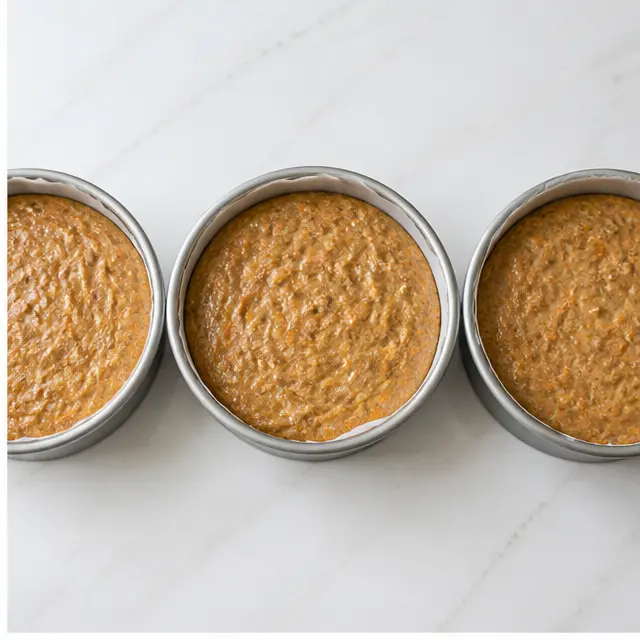
- Pour the batter evenly into the prepared pans. Bake for 22 to 26 minutes, or until a toothpick inserted into the center comes out clean. Cool the cakes in the pans for 10 minutes, then invert onto wire racks to cool completely.
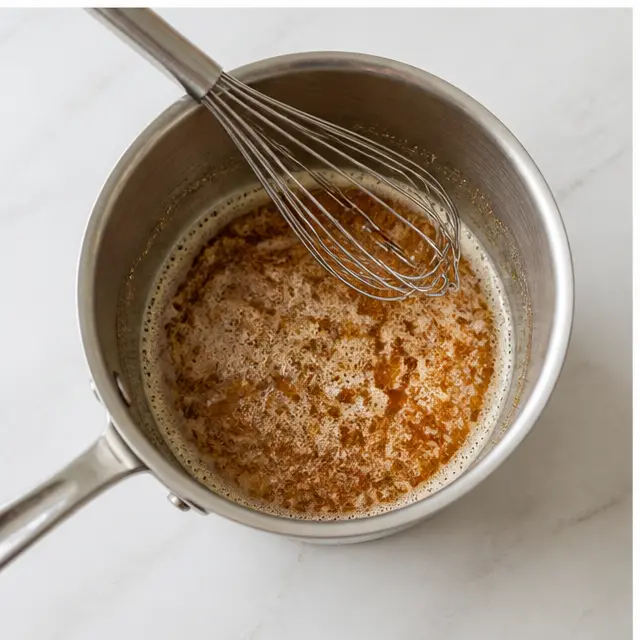
- Melt the 1/2 cup butter in a small saucepan over medium heat. Let it boil and bubble, stirring frequently, until the milk solids turn amber and the butter smells nutty, about 5 minutes. Remove from heat, pour into a heatproof bowl, and refrigerate for 15 to 20 minutes, until it is a soft, spreadable solid.
- In a stand mixer fitted with the paddle attachment, beat the room-temperature butter on medium speed for 3 to 4 minutes until pale and creamy. Scrape down the bowl and add the browned butter, beating until fully combined.
- Add 4 cups of powdered sugar and the vanilla extract, mixing on low until incorporated. Add the remaining 3 cups powdered sugar, the heavy cream, and salt. Beat on low until moistened, then increase to high speed and beat for 1 to 2 minutes until the frosting is fluffy and spreadable.
- Trim the domed tops from the cooled cakes with a serrated knife or cake leveler. Set a dab of frosting on a cake board or platter and place the first cake layer on top.
- Spoon or pipe about 1 cup of frosting onto the first layer and spread it evenly with an offset spatula. Top with the second layer and repeat with another cup of frosting. Place the final layer on top, inverted, so the bottom is the smoothest surface.
- Use the remaining frosting to fill any gaps between the layers and coat the entire cake in a thin crumb coat. Smooth it with a bench scraper or offset spatula, then refrigerate for 15 to 20 minutes until the crumb coat is set.
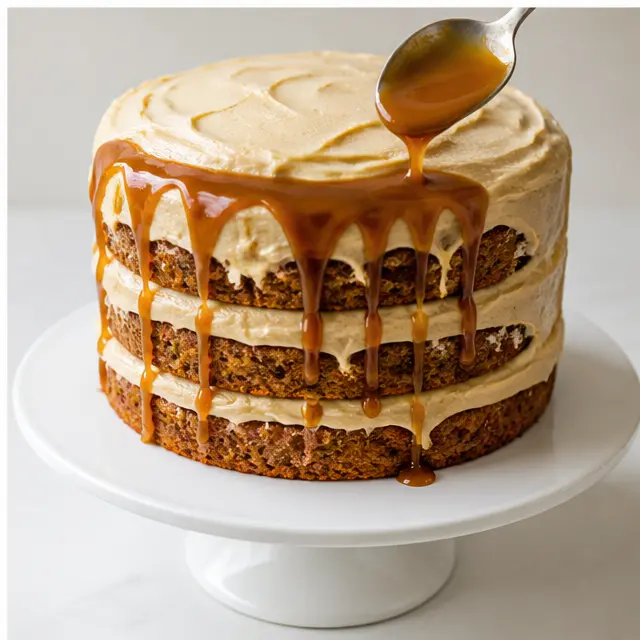
- Finish by frosting the outside of the cake with a generous final layer. Press the reserved toasted pecans into the bottom edge, then drizzle the salted caramel sauce over the top just before serving.
Nutrition
Notes
Tried this recipe?
Let us know how it was!Why You’ll Love This Salted Caramel Carrot Cake
The first carrot cake I ever baked could have doubled as a doorstop. Dense, dry, and about as exciting as cardboard. It took far too many attempts to realize the problem wasn’t my skill. It was the method.
This salted caramel carrot cake is what I landed on after all those experiments. It’s genuinely my favorite cake. Worth every step.
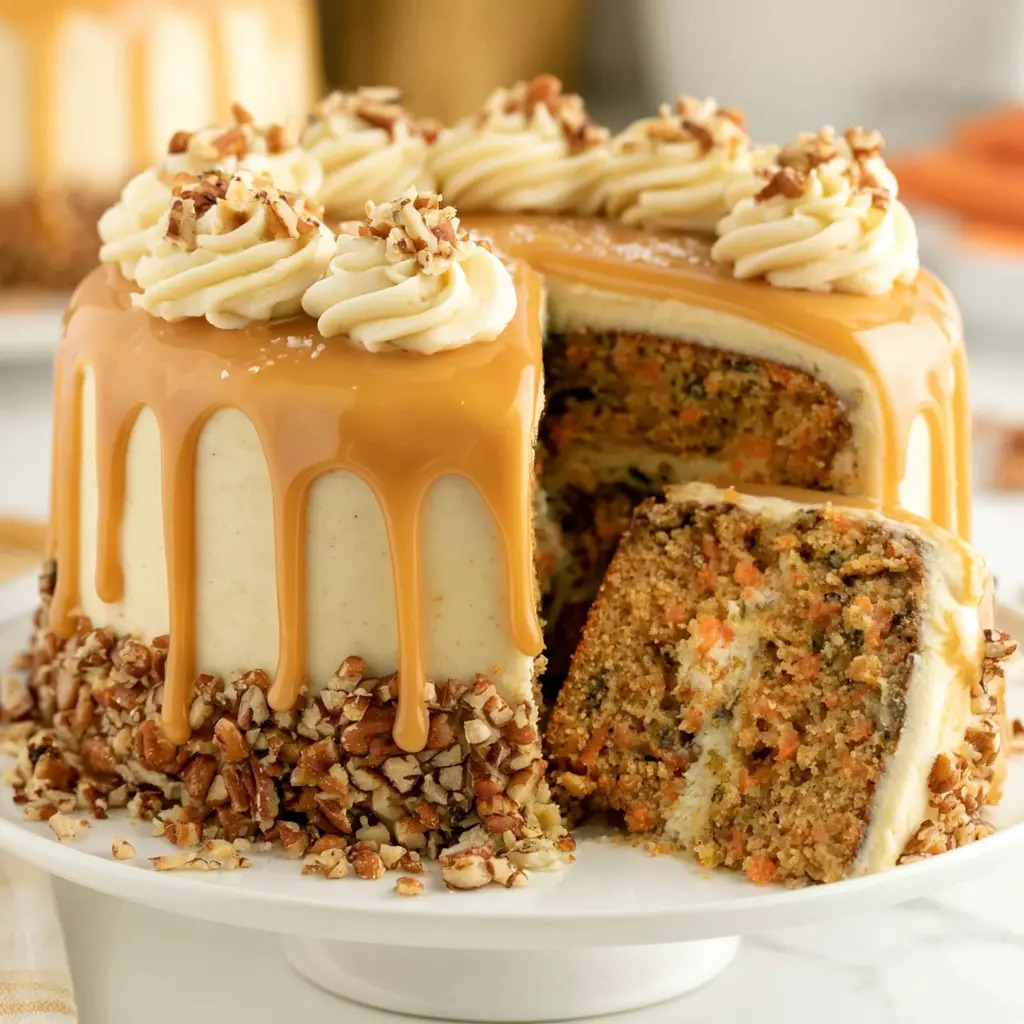
The layers are seriously moist, thanks to a vegetable oil cake base boosted with buttermilk and sour cream. Shredded carrots and toasted pecans give every slice texture. Then there’s the brown butter frosting, which tastes like toasted caramel in whipped form, and finally, the salted caramel drip running down the sides. I’ve tried countless salted caramel carrot cake variations over the years, and this one wins every single time.
A salted caramel carrot cake that looks bakery-worthy isn’t about pastry talent. It’s about a few key techniques, and these warm spices smell like fall, even in the middle of an August heat wave in LA.
Key Ingredients for Salted Caramel Carrot Cake
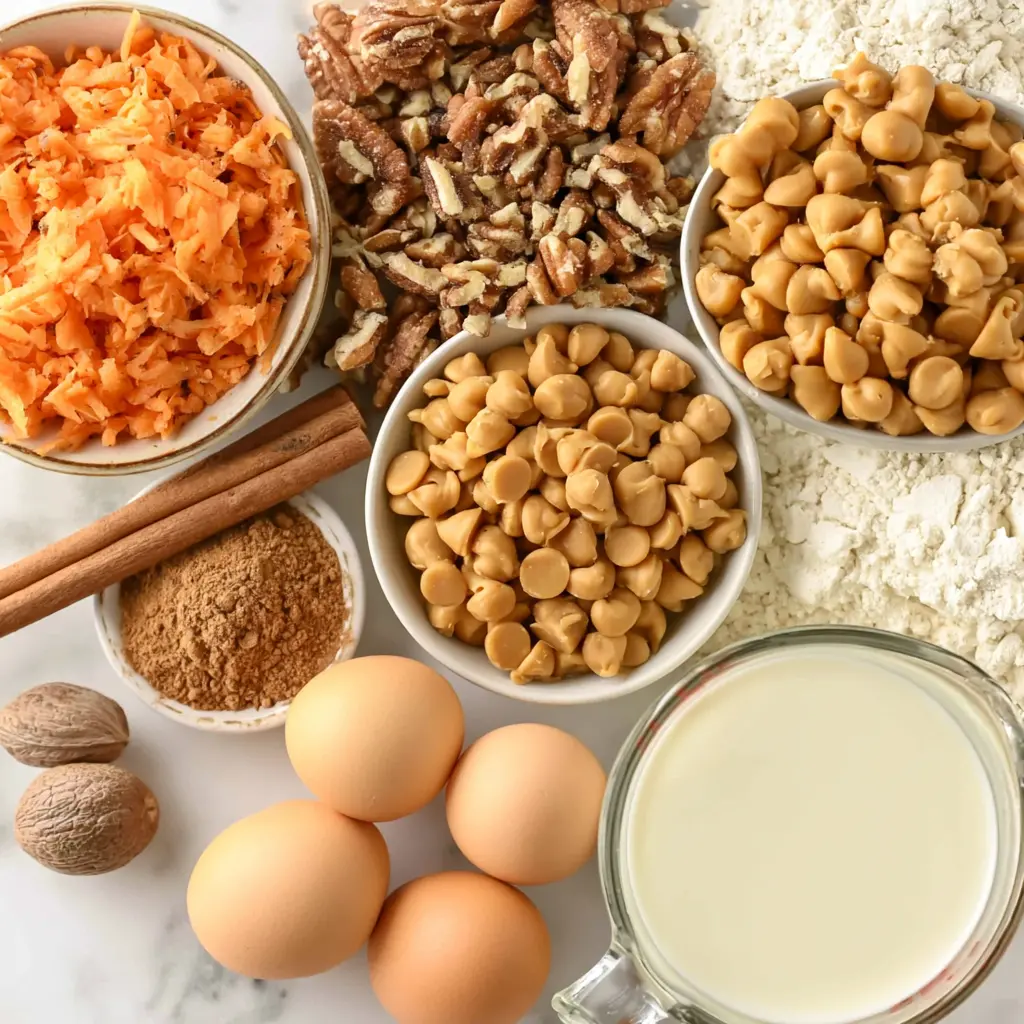
Every ingredient in this salted caramel carrot cake has a job. Some do the obvious heavy lifting. Others quietly keep the crumb tender.
- Shredded carrots: Grate on the fine holes of a box grater, then pat dry with paper towels. Bagged pre-grated carrots turn dry and woody.
- Buttermilk, sour cream, and vegetable oil: The moisture trio. Oil stays liquid at room temperature, so the crumb stays soft. Buttermilk adds a gentle tang. Sour cream adds richness.
- Warm spices: Cinnamon, nutmeg, and ginger give that unmistakable carrot cake aroma.
- Caramel baking chips: Melted and folded into the batter, they leave hidden pockets of caramel in every layer.
- Toasted pecans, divided: One cup goes in the batter, the rest gets pressed onto the sides.
- Optional splash: Two tablespoons of apple juice or brewed coffee adds depth without drawing attention to itself.
The best part about this salted caramel carrot cake? The layers stay moist for days. And because the caramel chips melt right into the batter, every bite carries a deep caramel sweetness that plays off the warm spices. The result is a genuinely moist carrot cake that stays that way from the first slice to the last.
How to Make Salted Caramel Carrot Cake
This recipe is designed to be broken into stages. Bake the layers one night, make the frosting the next, assemble when you have time. That flexibility is what makes this salted caramel carrot cake so doable for a busy week.
Stage 1: Build the batter. Butter three 8-inch round pans, line the bottoms with parchment, and dust the sides with flour. Toast the pecans on a rimmed baking sheet at 350°F for 5 to 8 minutes until fragrant, then chop them coarsely. Melt the caramel baking chips in 30-second microwave intervals, stirring between each. Whisk together the flour, granulated sugar, light brown sugar, baking powder, baking soda, salt, cinnamon, nutmeg, and ginger in a large bowl. Add the eggs, buttermilk, vegetable oil, sour cream, your splash of apple juice, and vanilla. Mix on low just until combined, then beat on medium for one minute. Gently fold in the melted caramel chips, one cup of the toasted pecans, and the shredded carrots. Do not overmix. Overmixing develops gluten, and gluten makes carrot cake tough.
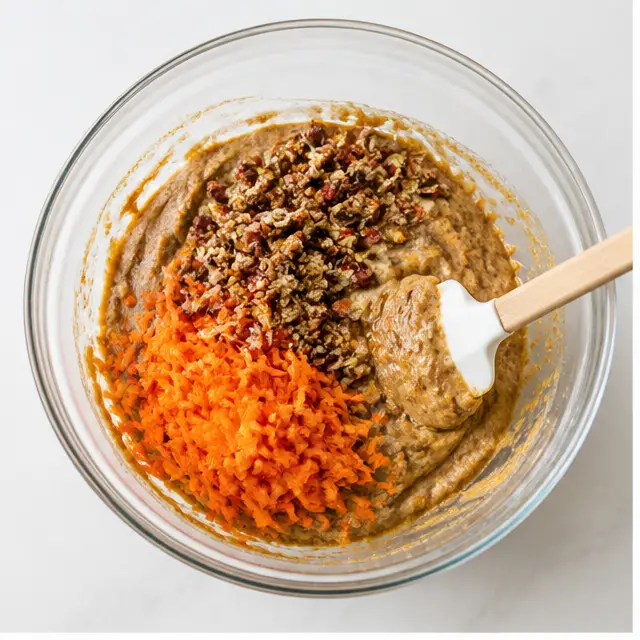
Stage 2: Bake and cool. Divide the batter evenly among the prepared pans and bake at 350°F for 22 to 26 minutes. A toothpick inserted into the center should come out clean, with no wet streaks. Cool the cakes in the pans for 10 minutes, then invert them onto wire racks and let them cool completely. I cannot stress this enough: completely. Three evenly baked layers are the backbone of a beautiful salted caramel carrot cake, and frosting a warm cake is how you end up with frosting sliding down the sides.
Make the Brown Butter Frosting
This frosting is the unsung hero of the whole cake. Melt half a cup of unsalted butter in a small saucepan over medium heat and let it boil and bubble. Keep stirring. After about 5 minutes, the milk solids turn amber and the butter smells deeply nutty, like toasted hazelnuts. Pour it into a heatproof bowl and refrigerate for 15 to 20 minutes until it becomes a soft, spreadable solid.
For the frosting itself, you want that 1 1/2 cups of unsalted butter to be truly at room temperature. Beat it for 3 to 4 minutes until pale and creamy, then add the browned butter and combine. Beat in 7 cups of powdered sugar in batches, along with the vanilla, a tablespoon of heavy cream, and a pinch of fine salt. Beat on high for a minute or two until fluffy and spreadable. The browned butter gives this salted caramel carrot cake a toasted, almost nutty depth that plain buttercream simply doesn’t have.
Assemble and Decorate the Cake
Trim the domed tops off the cooled layers with a serrated knife. Set a dab of frosting on your cake board or platter, place the first layer down, then spoon or pipe about a cup of frosting on top. Repeat with the second layer, then place the final layer upside down so the flat bottom becomes your top surface. That one little trick gives you a perfectly smooth cake top.
Use the remaining frosting to fill any gaps and apply a thin crumb coat. Refrigerate for 15 to 20 minutes until it’s set. Then finish with a generous final layer, press the reserved toasted pecans into the bottom edge, and drizzle the warmed salted caramel sauce over the top just before serving.
The first time I tried the drip, it slid straight off the cake. Turns out the layers needed a proper chill first. Now I refrigerate the assembled cake for at least 15 minutes before the caramel goes anywhere near it. Once you see that first drip fall, you’ll understand why it’s worth the wait.
Easy Salted Caramel Tips That Actually Matter
Caramel can feel intimidating, but it doesn’t have to be. For this salted caramel carrot cake, you’re using a salted caramel sauce for the drip, and the technique matters more than any secret ingredient.
- Start with a good sauce. Store-bought works beautifully here. If you’re making your own, keep the heat on medium and stir the sugar constantly. High heat and neglect are how you end up with burnt, bitter caramel.
- Watch the color, not the clock. You want the color of a shiny penny. If it creeps into dark amber, you’re in burnt territory.
- Never add cold liquid to hot caramel. Cold butter or cream makes the sugar seize and turn lumpy. Warm them first, or add them slowly off the heat.
- Warm the sauce before drizzling. About 10 seconds in the microwave gives you a clean, controlled drip. Too thick and it globs. Too thin and it pools at the base.
- If your caramel seizes anyway, gentle reheating with a splash of warm cream usually pulls it back. Don’t panic. Don’t crank the heat.
Common mistakes to avoid:
❌ Burning the sugar with high heat and no stirring. ✅ Keep the heat on medium and stir constantly.
❌ Cold butter or cream in caramel, which causes the sugar to seize. ✅ Warm them first or add them slowly.
❌ Low-fat cream cheese in a frosting swap, which turns it runny. ✅ Use full-fat brick cream cheese only.
❌ Bagged pre-grated carrots with a dry, woody texture. ✅ Grate your own and pat them dry.
❌ Frosting a warm cake, which makes the frosting melt and slide. ✅ Cool completely, then chill before frosting.
Tips and Variations for the Best Carrot Cake
This recipe is forgiving, but a few small decisions change the final result. Let’s talk through the tradeoffs, because you have options.
Substitutions That Actually Work
- No buttermilk? Add a tablespoon of lemon juice or white vinegar to one cup of whole milk and let it sit for 5 minutes. It curdles slightly, and that’s exactly what you want.
- Keeping it alcohol-free: The optional two tablespoons of apple juice or brewed coffee add depth without any alcohol. Coffee gives a subtle roast that plays nicely with the spices.
- Walnuts for pecans: Swap them one-for-one if that’s what you have. Toast them the same way.
- Crushed pineapple, optional: Some bakers love the extra moisture. Drain it very well, and reduce the sour cream slightly, or you’ll be fighting a soggy crumb.
Baking Pan Size Alternatives
Don’t have three 8-inch pans? Bake this salted caramel carrot cake in two 9-inch pans and add about 5 minutes to the baking time. A 9×13 sheet pan works too, just start checking for doneness around the 25-minute mark. Whatever pan you choose, line the bottoms with parchment. Nobody wants a stuck layer, especially not on celebration day.
Frequently Asked Questions
Can I Use Cream Cheese Frosting Instead of Brown Butter Frosting?
Yes, absolutely. The tangy cream cheese frosting pairs gorgeously with the salted caramel sauce in this salted caramel carrot cake. Use full-fat brick cream cheese, not the spreadable tub, and expect a softer frosting. Chill the finished cake for a few hours so it holds clean slices.
Storage and Make-Ahead Instructions
This salted caramel carrot cake stores beautifully, which makes it ideal for celebration prep.
- Refrigerate: Store leftover frosted cake in an airtight container for up to 4 days. Bring slices to room temperature before serving so the frosting softens and the spices come alive.
- Freeze the layers: Wrap cooled, unfrosted layers tightly in plastic wrap and then foil, and freeze for up to 2 months. Thaw in the fridge overnight before assembly. The brown butter frosting freezes well too, just re-whip it briefly after thawing.
- Make the caramel ahead: Salted caramel sauce keeps in the fridge for a week or two. Warm it for about 10 seconds before drizzling.
- Hot weather tip: In August heat, give the assembled salted caramel carrot cake an extra 30 minutes in the fridge before serving. The frosting slices cleanly, and the caramel drip stays exactly where you put it.
Make this salted caramel carrot cake for someone you love. Or honestly, just for yourself on a random Tuesday. You’ve earned it.
Planning ahead? Save this salted caramel carrot cake recipe to your Pinterest boards so it’s ready when the craving hits. I pin everything I plan to bake, and this one deserves a permanent spot.
Source: Learn More About This Dish



4 Responses
Made this for my husband’s birthday and it was a huge hit! The butterscotch chips in the batter add such a lovely caramel flavor. The brown butter frosting is absolutely divine, and the salted caramel drip made it look like it came from a bakery. Will definitely be making this again!
This cake sounds amazing! I don’t have instant butterscotch pudding on hand. Could I use vanilla pudding instead, or should I make a homemade butterscotch pudding? Also, the recipe says beef broth as an optional ingredient – what does that do to the flavor? Thanks!
Hi James! You can substitute vanilla pudding, though the butterscotch flavor won’t be as intense. The beef broth is actually a trick to add a savory depth that complements caramel – but you can omit it or use a few drops of vanilla extract instead. Let me know how it turns out!
The cake was super moist and the caramel sauce was heavenly. However, the frosting was a bit too sweet for me personally. I added a pinch of sea salt on top which helped. Overall still a great dessert!