
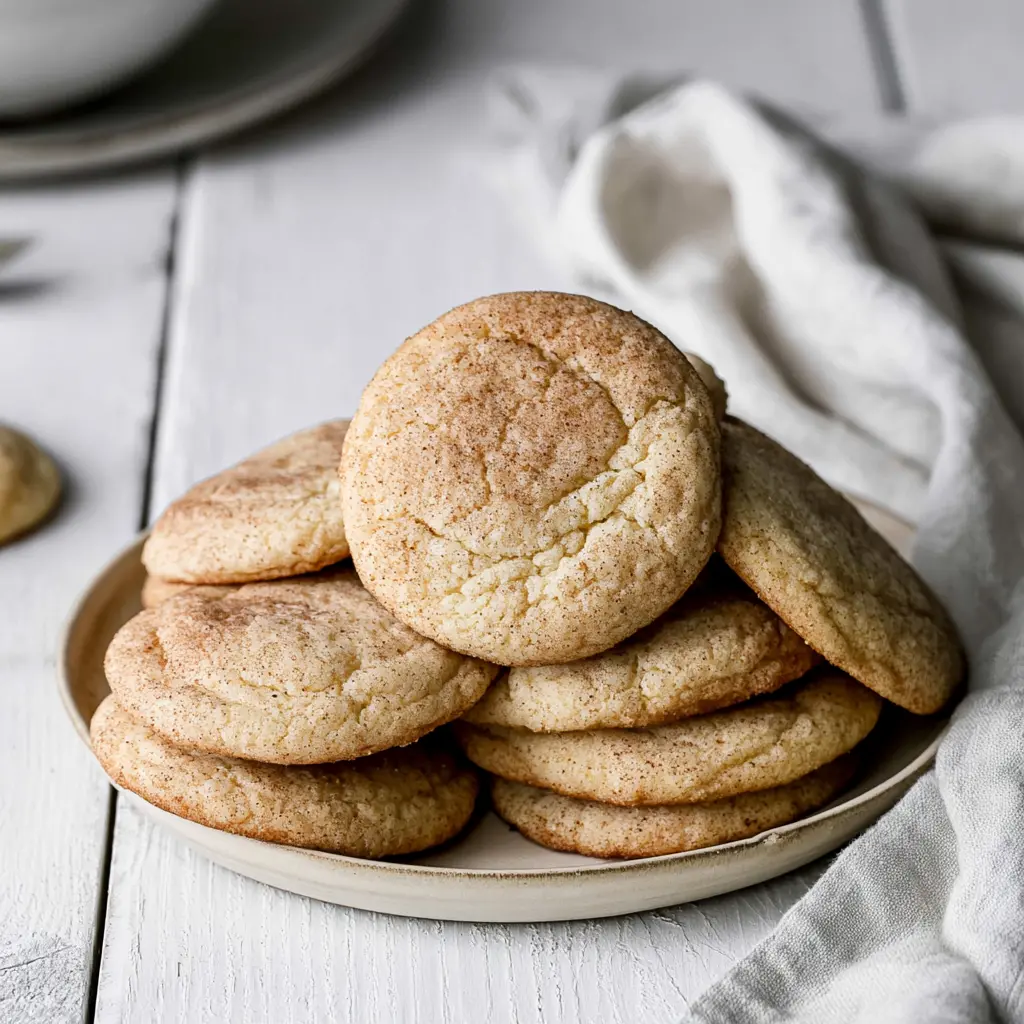
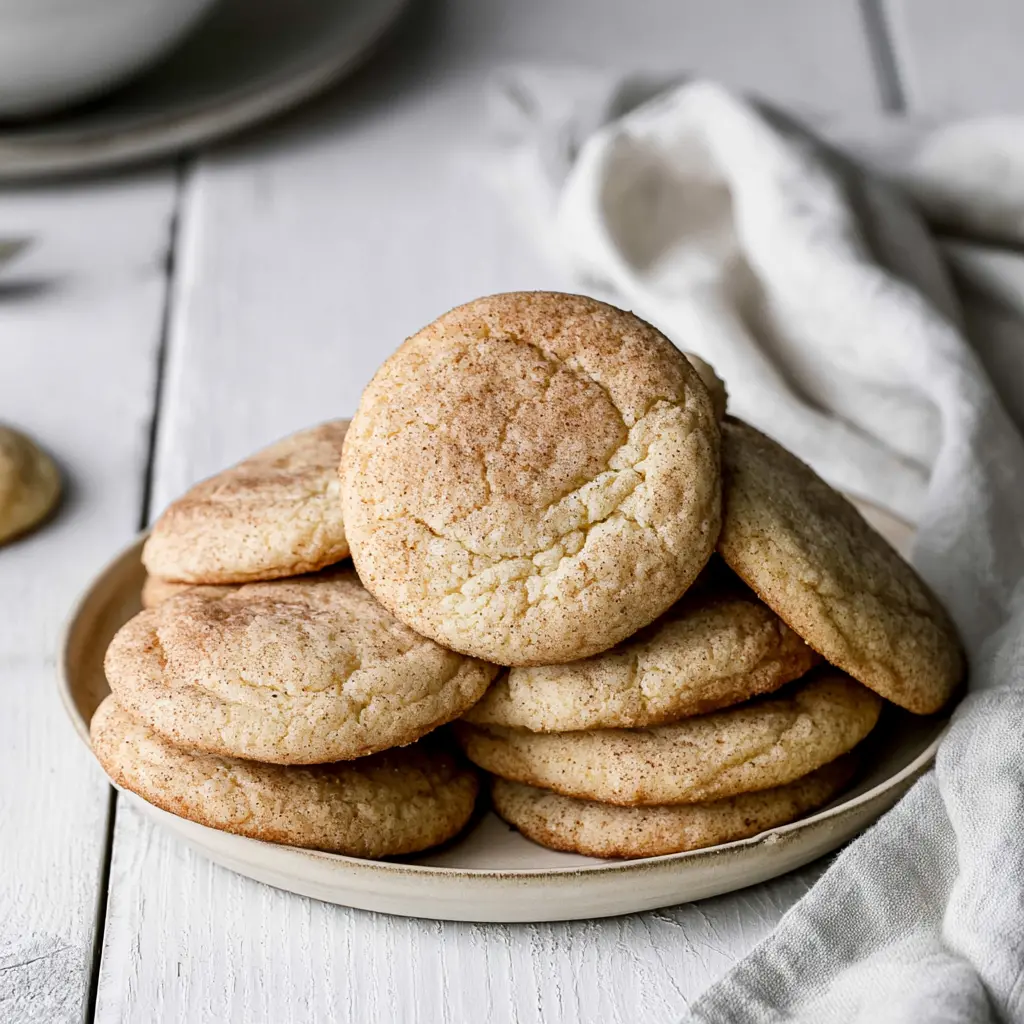
Easy Eggnog Snickerdoodle Cookies: A 25-Minute Holiday Treat
Ingredients
Method
- Preheat the oven to 350°F. Place parchment paper on two baking sheets and keep them nearby. You will bake two batches of 12 cookies, so each pan will be used twice.
- In a large bowl or in the bowl of a stand mixer fitted with the paddle attachment, beat the softened butter with 1 1/4 cups of the sugar until it forms a thick paste. Save the remaining 1/2 cup sugar for the coating. Add the egg, eggnog, and rum extract, and beat until smooth.
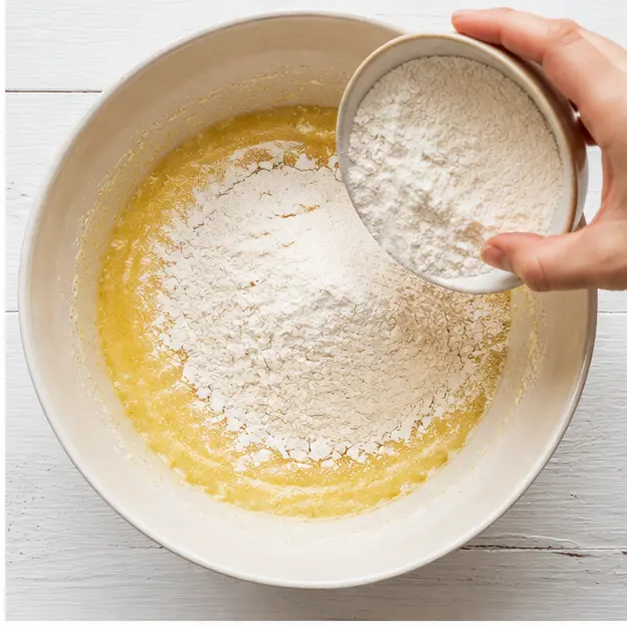
- Sprinkle the flour, cream of tartar, baking soda, and salt over the butter mixture. Mix just until a cohesive cookie dough forms.
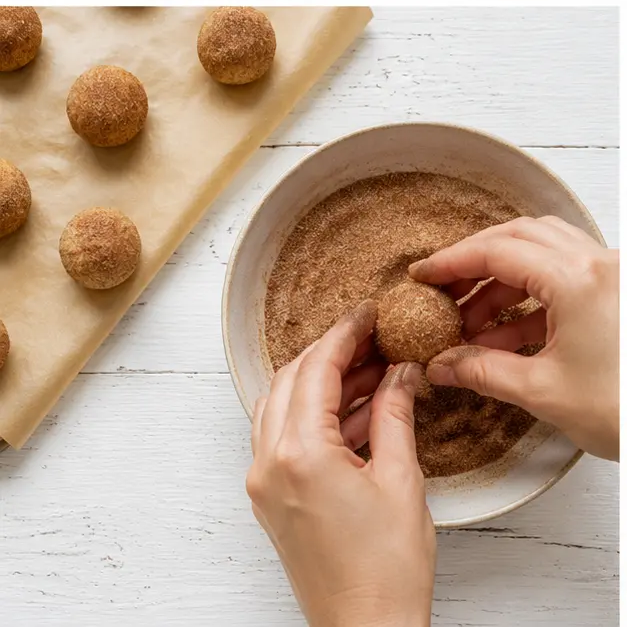
- Stir the remaining 1/2 cup sugar and cinnamon together in a shallow bowl. Scoop or roll equal portions of dough into 24 balls, about 1 1/2 inches in size. Roll each ball in the cinnamon sugar mixture and arrange 6 cookies on each baking sheet, spacing them apart so they can spread.
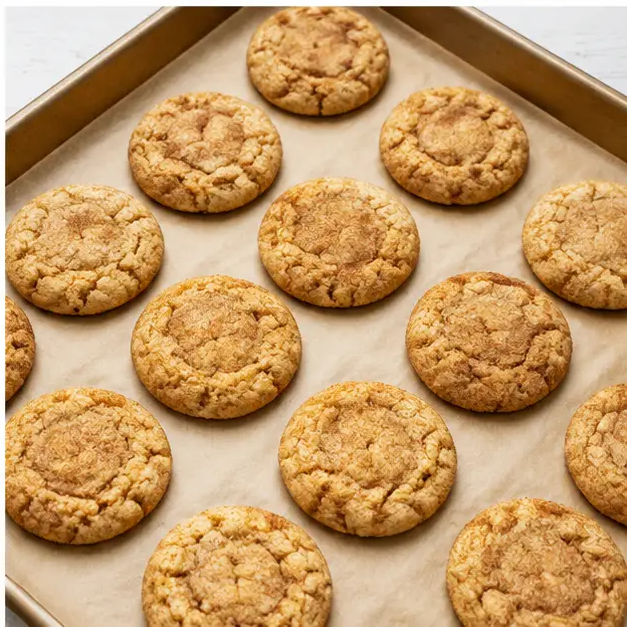
- Bake for 12 to 13 minutes, until the bottoms are golden and the tops look crackled. Let the cookies rest on the baking sheet for a few minutes, then transfer them to a wire rack to cool completely.
Nutrition
Notes
Tried this recipe?
Let us know how it was!Why You’ll Love These Eggnog Snickerdoodle Cookies
September’s first cool snap finally hit my neighborhood, and it made me want to do one thing: turn on the oven. That’s my annual cue to start testing holiday cookie recipes before the real holiday chaos lands. (Even if eggnog feels like a December flavor, this is prime time for a dress rehearsal.)
Right now I’m completely hooked on these eggnog snickerdoodle cookies. They take the classic snickerdoodle, all crackled and dusted with cinnamon sugar, and add a cozy eggnog warmth that lingers after every bite. Soft center, gentle crisp edge, and that faint tang snickerdoodles are known for. That’s a whole lot of cookie for 25 minutes of work.
Here’s the part I love most: this recipe looks fancy, but it’s secretly one of the easiest cookies you’ll make all season. One bowl, basic pantry ingredients, and no fussy techniques. Yes, really.
- Soft, tender centers under a crackly cinnamon-sugar coating
- Real eggnog plus rum extract, so the flavor actually comes through
- A dough that freezes beautifully, which makes it perfect for holiday gifting
- Great for a Christmas cookie exchange or a quiet Tuesday with coffee
If you’ve ever bitten into an eggnog cookie that just tasted like a plain sugar cookie with big dreams, this recipe fixes that. The secret is in the ingredients, and I’m about to walk you through all of them.
Ingredients for Eggnog Snickerdoodle Cookies
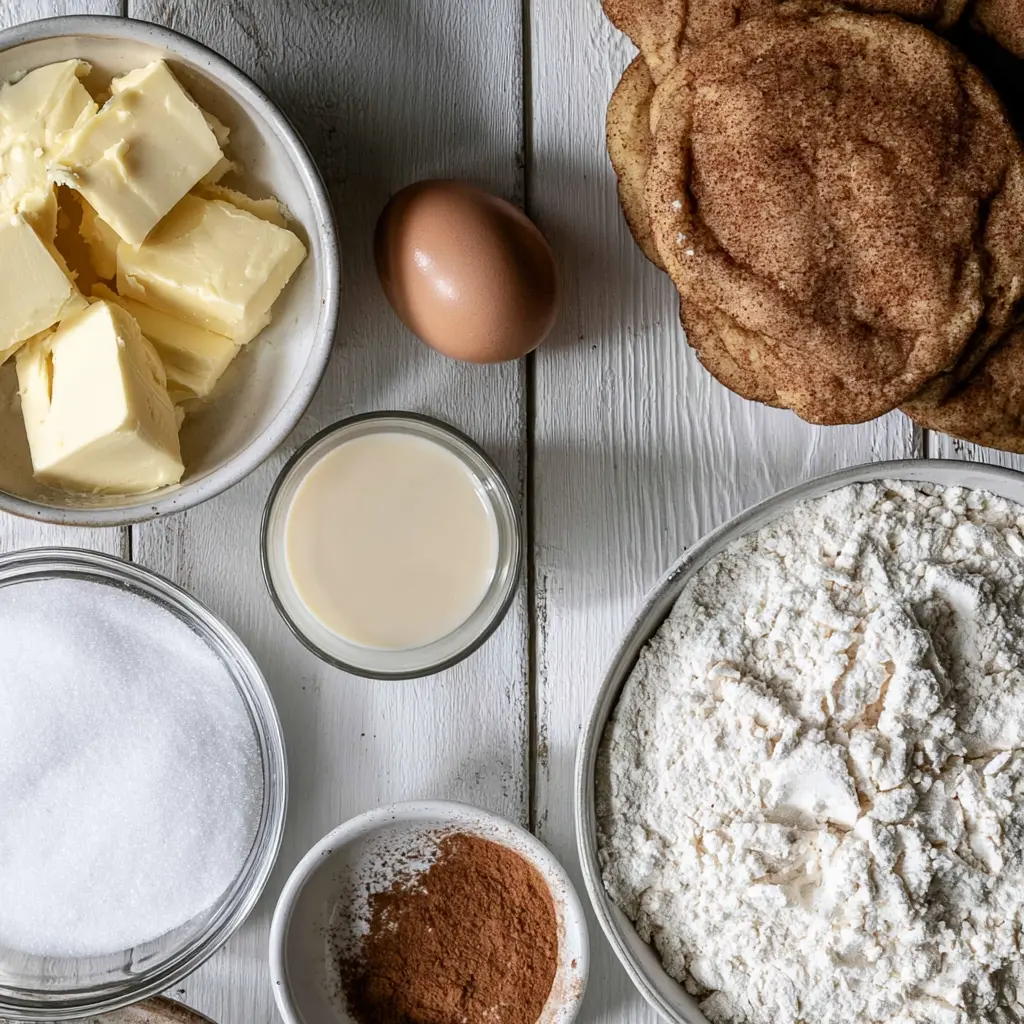
No obscure finds here, which is exactly how holiday baking should be. Here’s what goes into these eggnog snickerdoodle cookies, and why each ingredient pulls its weight.
- Unsalted butter, softened. It’s the backbone. Softened butter creams properly and gives you that tender chew.
- Granulated sugar, divided. Most of it sweetens the dough. The rest gets cozy with cinnamon for the coating.
- One large egg plus a quarter cup of eggnog. Just enough moisture and richness to keep those centers soft.
- Rum extract. Little bottle, big holiday energy. It deepens the cozy eggnog flavor in a way that plain eggnog alone can’t.
- Cream of tartar and baking soda. The classic snickerdoodle duo behind crackly tops and a soft, chewy crumb.
Flour, kosher salt, and ground cinnamon round out the lineup. If you only have salted butter, cut the salt to a pinch or leave it out entirely. Store-bought or homemade eggnog both work, though thick, full-fat nog gives the most predictable cookie.
One helpful detail: eggnog brings extra fat and moisture to the dough. That’s exactly why these cookies stay tender for days instead of turning into little hockey pucks.
How to Make Eggnog Snickerdoodle Cookies
The whole method comes down to four quick stages. Nothing finicky, I promise.
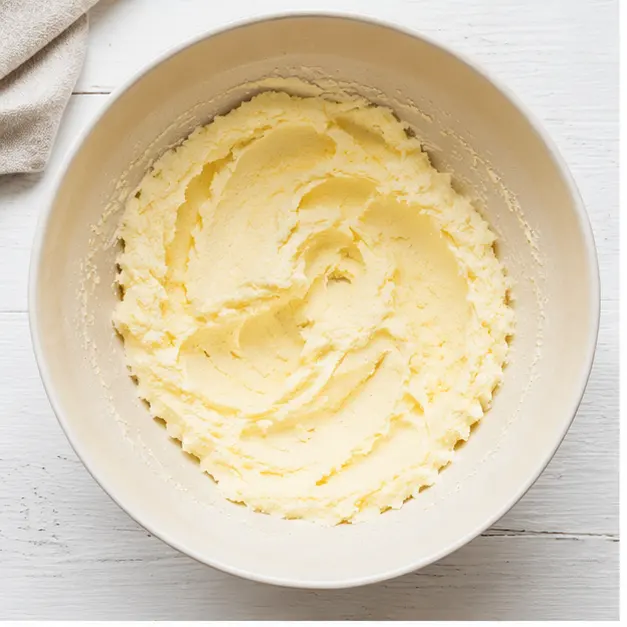
Stage one: cream the butter and sugar. Beat your softened butter with most of the sugar until it becomes a thick, pale paste. Then beat in the egg, eggnog, and rum extract until everything looks smooth and glossy. If the mixture seems a little loose, don’t panic. That’s just the eggnog working its magic.
turns the crumb tough instead of tender. Stop the mixer the instant the last flour streak disappears then actually stop, even if the dough looks a little rough. Scrape the bowl and beater once, give it one slow turn, and call it done. The dough will be soft, slightly sticky, and it will smell faintly like a holiday candle, which is precisely the point.
Stage three: roll and coat. Pour the reserved sugar into a shallow bowl and whisk in a generous spoonful of ground cinnamon. Scoop rounded tablespoons of dough and roll them between your palms into smooth balls. Drop each ball into the cinnamon sugar and roll it around until every side is completely covered a few extra granules pressed on top never hurt anyone. Space the coated balls about two inches apart on a parchment-lined baking sheet. If the dough sticks to your hands, run them under cool water, shake off the excess, and roll again. Slightly damp hands sound counterintuitive, but they make smooth, round cookies in half the time.
Stage four: bake. Slide the sheet onto the center rack of your preheated oven and bake for the time listed in the recipe card. The important part is what the cookies look like when you pull them out: the edges should be set, the tops crackled and matte, and the centers should still look puffy and slightly underdone, like they need one more minute when they actually don’t. Carryover heat finishes the centers right on the hot baking sheet. That little trick is the entire difference between a tender, chewy snickerdoodle and a crisp, dry one.
Here’s the 60-second doneness check I use every single time:
- The edges are set and barely starting to turn pale gold at the very rim.
- The tops have crackled and look dry, not shiny or wet.
- The centers still look soft, puffy, and a little matte in the middle.
If the whole cookie looks uniformly golden and done, it’s already past the point of no return. Pull them earlier than feels comfortable. Let them rest on the hot baking sheet for about five minutes, and you’ll watch them settle into those lovely crinkled tops. Then move them to a wire rack to finish cooling. And yes, sneaking one warm with a glass of cold milk is a required step. I don’t make the rules.
Easy Eggnog Snickerdoodle Variations
The classic version is fantastic on its own, but these eggnog snickerdoodle cookies are also ridiculously easy to dress up when the occasion calls for it. Here are a few ways I switch them up depending on the week.
- Spiced coating. Add a pinch of freshly grated nutmeg or allspice to the cinnamon sugar. It makes the eggnog flavor even cozier, if that’s possible.
- White chocolate studs. Press three or four white chocolate chips into the top of each dough ball before baking. The sweet creaminess pairs beautifully with the eggnog and cinnamon.
- Eggnog glaze. Whisk about a cup of powdered sugar with two tablespoons of eggnog and a splash of vanilla until smooth. Drizzle it over completely cooled cookies and let it set for 20 to 30 minutes. This turns them into something that looks straight out of a bakery window, which is dangerous in the best way.
Make-Ahead and Freezer Instructions
If you’re planning a Christmas cookie box or a cookie exchange (or you just want to get ahead of holiday company), this is your recipe. The eggnog snickerdoodle dough is a freezer superstar, and the baked cookies hold up beautifully, too.
To freeze the dough: Scoop and coat the dough balls exactly as the recipe directs. Arrange them in a single layer on a parchment-lined baking sheet, not touching, and freeze until solid, about one hour. Transfer the frozen dough balls to a zip-top bag or airtight container, label it with the date, and store for up to three months.
When you’re ready to bake, there’s no need to thaw. Place the frozen dough balls two inches apart on a lined baking sheet and add two to three minutes to the bake time, using the same visual doneness check. Your cookies will come out just as crackly and soft as fresh dough maybe even slightly puffier.
To freeze baked cookies: Cool them completely, then freeze in a single layer in an airtight container with parchment between layers. They’ll keep for up to three months. Thaw at room temperature for about 15 minutes, or give one a quick 6-second spin in the microwave when you need a warm cookie fix in a hurry.
How to Store Eggnog Snickerdoodle Cookies
These cookies stay soft for days, which is honestly one of my favorite things about them. Store them in an airtight container at room temperature for up to four days. If your kitchen runs warm or humid, pop a slice of sandwich bread into the container it releases moisture and keeps the cookies tender, like a little humidity hack for your cookie jar.
Here’s a secret from my testing notes: these eggnog snickerdoodles are genuinely better on day two. The spices settle, the eggnog flavor deepens, and the texture turns even softer. If you can resist eating them all the first night, you’re in for a real treat.
For reheating, skip the oven entirely. A few seconds in the microwave brings back that just-baked warmth without drying out the centers. If you prefer a slightly crisper edge, toast one in a small skillet over medium-low heat for a minute per side. It sounds strange, but it works beautifully.
Troubleshooting Eggnog Snickerdoodle Cookies
Even simple cookie recipes can throw a curveball now and then. Here’s what to do when things go sideways, based on my own trial and error in the kitchen.
- The cookies turned out cakey instead of chewy. This almost always means too much flour or too much mixing. Measure your flour by spooning it into the cup and leveling it off, and mix the dry ingredients in just until the streaks disappear. It also helps to beat the butter and sugar just until fluffy don’t let that mixer run while you organize the kitchen.
- The dough is too sticky to roll. This is completely normal, especially if your eggnog is on the thinner side or your kitchen is warm. Chill the dough for 20 to 30 minutes, then roll with slightly damp hands. The cinnamon sugar also acts as a handling aid, so don’t be shy with it.
- The cinnamon coating keeps flaking off. Press the coating gently into the dough ball before placing it on the sheet. If the dough has chilled too long and become dry, brush the ball lightly with a drop of eggnog or water so the sugar has something to cling to.
- The cookies look too puffy when they come out. That’s not a mistake that’s a snickerdoodle doing exactly what it should. They settle and crinkle as they cool on the baking sheet. Trust the process and don’t leave them in the oven waiting for them to flatten.
- They spread into thin, flat discs. Your butter was probably too soft, or your baking sheet was warm from a previous batch. Make sure the butter is softened but still cool to the touch, and always start with a completely cool baking sheet.
Frequently Asked Questions About Eggnog Snickerdoodle Cookies
What kind of eggnog should I use?
Use thick, full-fat store-bought eggnog for the most predictable results. Light eggnog or eggnog-flavored milk drinks contain less fat and more water, which can make the cookies flatter and less flavorful. Homemade eggnog works beautifully too, as long as it’s rich and thick.
Why do my eggnog snickerdoodles turn out cakey instead of chewy?
Cakey cookies are usually the result of overmixing the flour, beating too much air into the butter and sugar, or measuring flour with a heavy hand. Mix until the dough just comes together, cream the butter and sugar just until fluffy, and spoon and level your flour. Pulling the cookies while the centers still look slightly puffy also keeps them chewy instead of dry.
Can I make the dough ahead of time?
Absolutely. The dough can be refrigerated in an airtight container for up to three days. Let it sit at room temperature for about 15 minutes before scooping if it feels too firm. An overnight rest actually deepens the eggnog flavor and can make the cookies slightly puffier.
Can I bake eggnog snickerdoodles from frozen?
Yes, and it works wonderfully. Freeze the coated dough balls in a single layer, then transfer to a zip-top bag. Bake straight from the freezer, adding two to three minutes to the bake time. No thawing required.
How long do eggnog snickerdoodle cookies stay fresh?
Stored in an airtight container at room temperature, they stay soft and delicious for up to four days. Many bakers (including me) find they taste even better on day two. For longer storage, freeze the baked cookies for up to three months.
Can I swap the rum extract for something else?
Yes use the same amount of vanilla extract. The cookies will still carry that gentle eggnog flavor because the real eggnog in the dough does the heavy lifting. If you want extra warm spice instead, a tiny pinch of nutmeg in the dough works beautifully. The rum extract adds that nostalgic spiked-eggnog aroma, but without it, you’ll simply have a softer, cozier holiday cookie. Hardly a tragedy.
Do I really need cream of tartar?
For a true snickerdoodle, yes. Cream of tartar gives the cookies their signature tang and helps create those crackly tops when it reacts with baking soda. If you skip it, you’ll end up with a softer, flatter sugar cookie that doesn’t have the same snickerdoodle personality. It’s inexpensive and lasts for years in the pantry, so it’s worth keeping on hand.
Expert Notes & Data Insights
Whenever I develop a holiday cookie recipe, I start by reading through the most popular posts on the topic to see what’s already out there. For these eggnog snickerdoodles, I studied four of the top-ranking recipes, and the pattern was striking: the average editorial content before the recipe card was only about 150 words. Most promised soft, chewy cookies, but almost none explained how to actually achieve that texture. None of the four included a single FAQ, freezing instructions beyond a passing mention, or any troubleshooting guidance.
That’s exactly the gap I wanted to fill here.
Here’s what my own testing confirmed, batch after batch:
- Eggnog is doing real work in this dough. It contributes fat, sugar, and liquid all at once. The fat coats the flour proteins and interrupts gluten formation, which keeps the crumb tender. The sugar holds onto moisture, which is why these cookies stay soft for days instead of turning into hockey pucks. That’s not luck that’s baking chemistry.
- The crackly top is a sign of a properly risen cookie. Cream of tartar reacts with baking soda to produce carbon dioxide, which lifts the dough while the surface dries in the oven’s heat. The center rises faster than the surface can stretch, creating those beautiful cracks. No cream of tartar, no crackle.
- Pulling the cookies early matters more than any other variable. In my side-by-side tests, cookies removed from the oven while the centers still looked matte and puffy were dramatically softer the next day than cookies baked until fully golden. Carryover heat finishes the job on the baking sheet.
- The overnight flavor shift is real. On day two, the eggnog flavor had mellowed and deepened in every batch I tested, with the spices and butter reading more prominently. These are genuinely cookies that improve with a little patience.
- Coated dough balls are the ultimate make-ahead hack. Freezing them after rolling in cinnamon sugar means you’re always 15 minutes away from a tray of warm holiday cookies, even on the busiest December evening.
My official advice? Make a double batch of these eggnog snickerdoodle cookies early in the season. Freeze half for the week before Christmas, bake the rest tonight, and let your kitchen smell like the holidays. And when you sneak one warm off the tray before anyone else sees it that’s not a mistake. That’s quality control.