
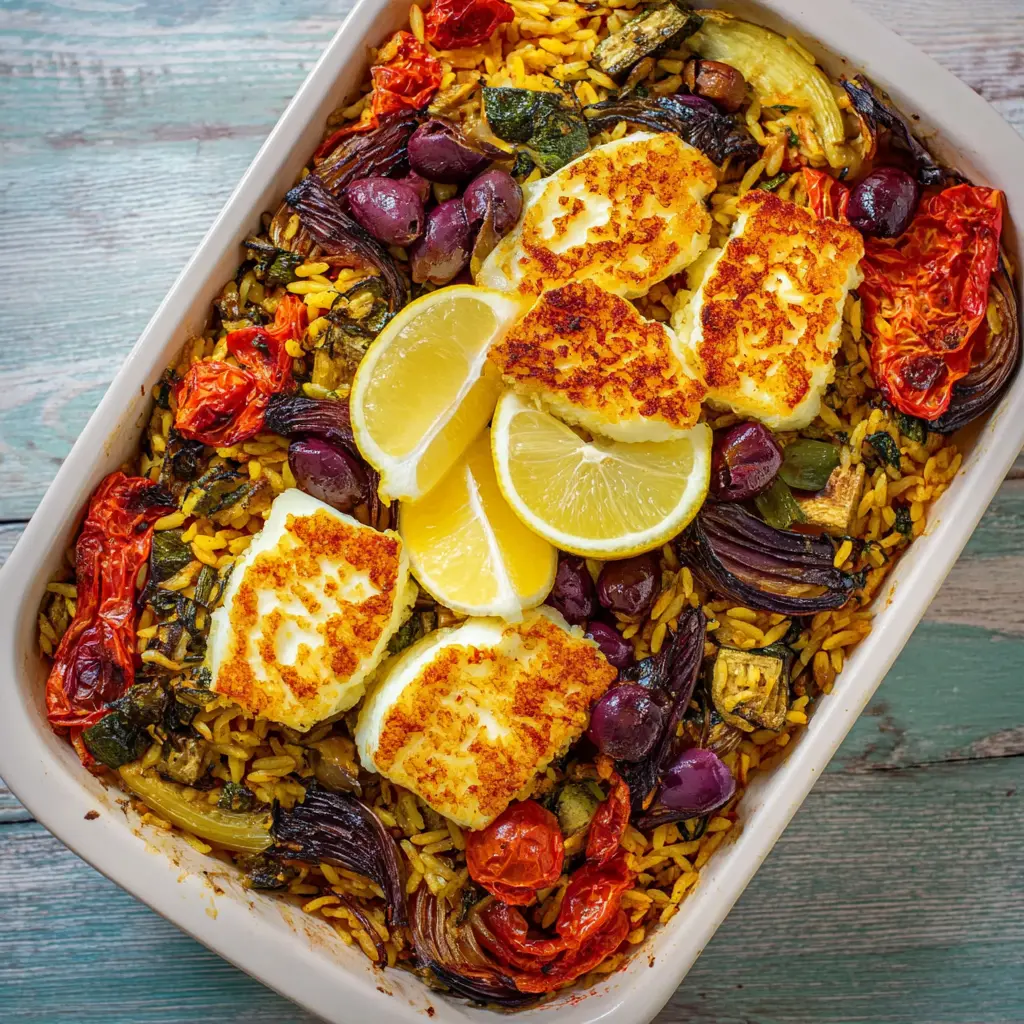
Why This Baked Orzo with Halloumi Works
Ever stare at a block of halloumi in your fridge and wonder what to actually do with it? I have. For years, I’d buy it, fry it up as a quick side, and call it a day. But then I discovered this baked orzo with halloumi, and honestly, it changed everything.
This isn’t just another pasta bake. It’s a one-pan Mediterranean dinner that somehow manages to be both creamy and crispy at the same time. The orzo soaks up all the vegetable broth and tomato juices, getting that risotto-like texture without the constant stirring. And the halloumi? It gets golden and slightly crunchy on the outside while staying soft and squeaky inside.
I first made this on a Tuesday night when I had zero energy but wanted something that felt special. My kids devoured it. My husband asked for seconds. And I barely dirtied any dishes. That’s the kind of magic we’re talking about here.
Let’s break down why this baked orzo recipe works so well for busy weeknights:
- One pan, minimal cleanup You roast the veggies, add the orzo and broth, and bake everything together. Just one baking dish and a skillet for the halloumi.
- Forgiving technique Unlike risotto, you don’t have to stand over the stove stirring. The oven does the work.
- Vegetarian but satisfying The halloumi brings enough protein and richness that even dedicated meat-eaters won’t miss anything.
- Peak summer flavor With tomatoes, zucchini, and oregano, it tastes like the Mediterranean coast in a bowl.
I’ll admit, my first attempt at this Mediterranean baked orzo was a bit of a mess. I added the halloumi too early, and it turned into rubbery little nuggets. Not great. But I learned, and now I’m sharing everything so you don’t make the same mistake.
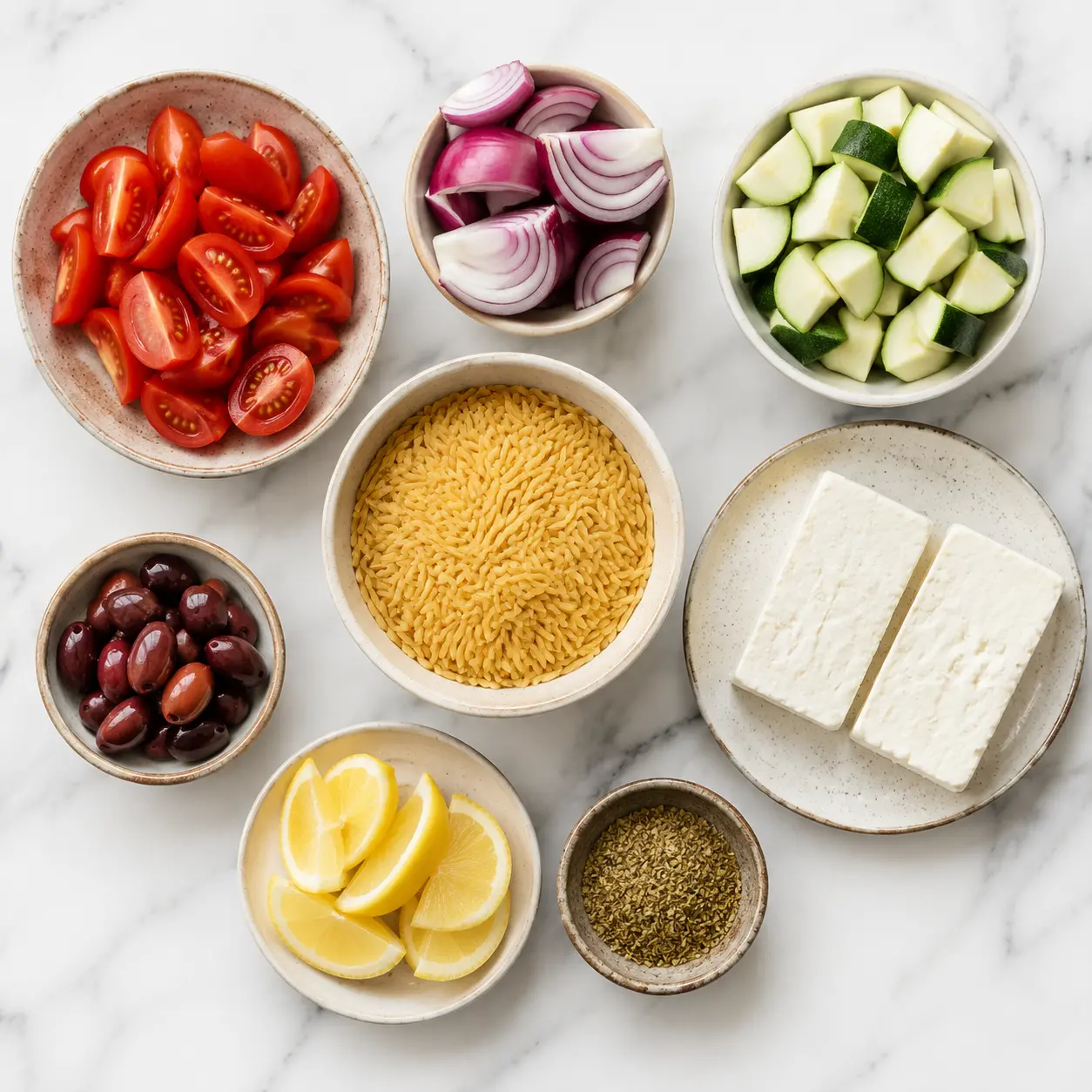
Ingredient Spotlight
Let’s talk about what goes into this dish. The ingredient list is short, but each one plays a specific role. And no, you can’t really skip the halloumi it’s the star here.
Halloumi Cheese
If you’ve never cooked with halloumi, here’s the deal: it’s a semi-hard, brined cheese from Cyprus that has a super high melting point. That means it doesn’t turn into a puddle when heated. Instead, it softens and gets golden and crispy on the outside while keeping that satisfying squeak when you bite into it.
For this baked orzo with halloumi, you’ll want two 8-ounce blocks. Slice them into thin pieces about a quarter-inch thick works well. You can find halloumi at most grocery stores these days. Trader Joe’s carries it, Whole Foods has it, and I’ve even spotted it at Costco in two-packs.
Halloumi vs. feta: If you absolutely can’t find halloumi, feta is an okay substitute, but it behaves differently. Feta will crumble and melt into the orzo rather than giving you those beautiful golden slices on top. The texture is creamier, less squeaky. Honestly, try to find the halloumi if you can. It’s worth the extra effort.
Orzo Pasta
Orzo is that tiny, rice-shaped pasta that I always have in my pantry. It cooks quickly and absorbs flavors beautifully. In this baked orzo recipe, it soaks up the vegetable broth and the juices from the roasted tomatoes and zucchini, getting that creamy, almost risotto-like texture.
Can you use a different pasta? Technically yes, but the cooking time and liquid ratio will change. Smaller shapes like ditalini or stelline might work, but I wouldn’t go larger than orzo. The whole point is that it cooks evenly with the vegetables and broth.
The Vegetables
We’re using salad tomatoes, red onions, and zucchini. That’s it. And honestly, that’s plenty. The tomatoes break down and create a sort of sauce, the onions get sweet and jammy, and the zucchini adds a nice tender bite.
For the best results, choose ripe, colorful tomatoes and firm zucchini. Cut everything into uniform sizes so they roast evenly. I usually cut the tomatoes into wedges, the onions into wedges, and the zucchini into chunks about the same size.
Oh, and we’re using Meyer lemons here. They’re sweeter and less acidic than regular lemons, and they grow abundantly here in California. If you can’t find Meyer lemons, regular lemons work just fine.
Kalamata Olives and Oregano
The olives add a briny, salty punch that cuts through the richness of the halloumi and orzo. And the dried oregano is pure Mediterranean comfort food. Don’t skip it.
Step-by-Step: How to Make This Baked Orzo with Halloumi
Here’s where we get into the actual cooking. I’ll walk you through the four main stages. Don’t worry if your kitchen gets a little messy this is a forgiving dish.
Stage 1: Roast the Vegetables
Preheat your oven to 350°F. In a large baking dish I use a 9×13-inch ceramic dish combine the tomato wedges, zucchini chunks, and red onion wedges. Drizzle with 2 tablespoons of olive oil, then sprinkle with dried oregano and a generous pinch of salt and pepper. Toss everything with a spatula to coat evenly.
Roast the vegetables for 25 minutes. You’ll know they’re ready when the tomatoes have softened and released some of their juices, the onions are starting to caramelize, and the zucchini is tender but not mushy.
Why roast first? This step is crucial. If you added the orzo at the same time as the vegetables, the pasta would overcook before the veggies are done. Roasting first gives the vegetables a head start, so everything finishes together.
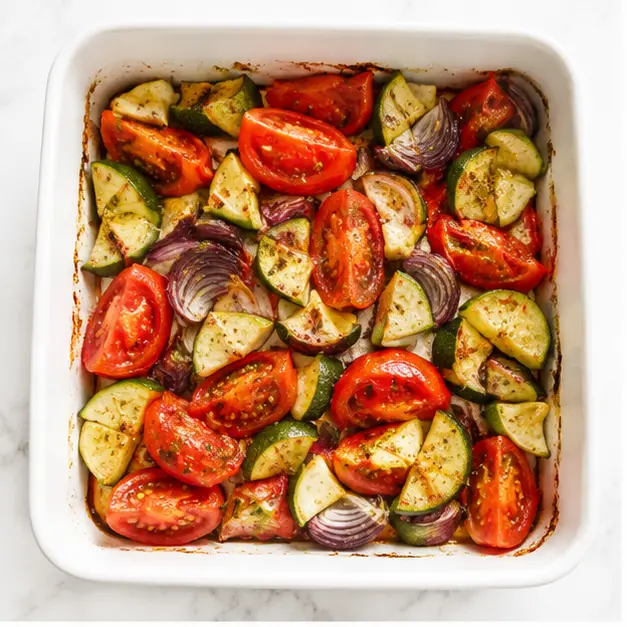
Stage 2: Add Orzo and Broth
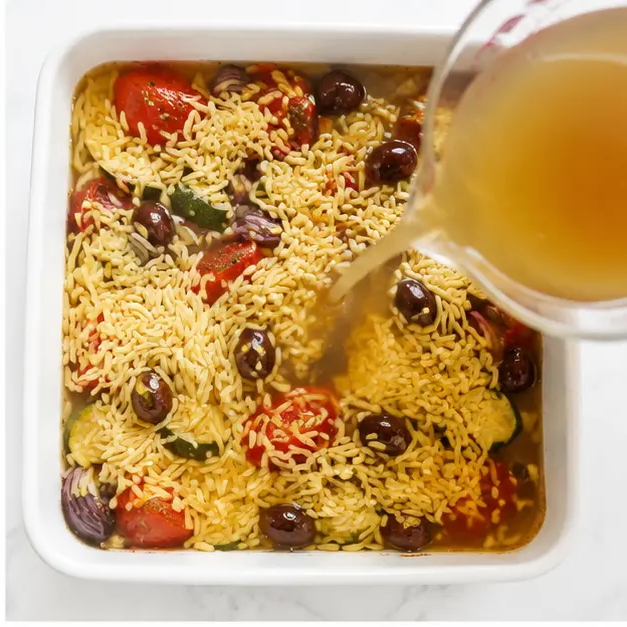
After 25 minutes, remove the dish from the oven. Scatter the orzo over the roasted vegetables. Don’t stir it in too much just let it sit on top. Then pour in the vegetable broth. Stir gently to make sure the orzo is mostly submerged.
Add the pitted kalamata olives, then cover the dish tightly with foil. Return to the oven and bake for another 25 minutes.
Here’s the tricky part: The orzo needs enough liquid to cook through, but not so much that it becomes soupy. The 2 1/2 cups of vegetable broth is the sweet spot. If your dish looks a little dry after 20 minutes, you can add a splash more broth. But don’t uncover it too often the steam is what cooks the pasta.
After 25 minutes, the orzo should be tender and have absorbed most of the liquid. It should look creamy, not watery. If it’s still a bit al dente, cover it back up and give it another 5 minutes.
Stage 3: Fry the Halloumi
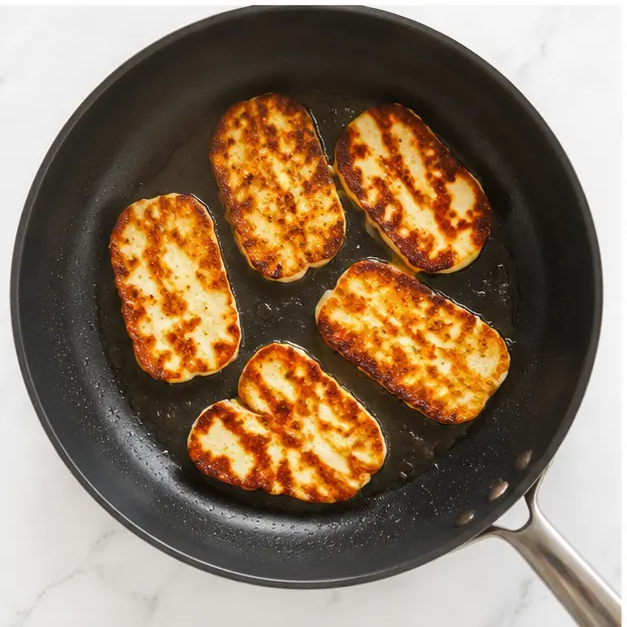
While the orzo bakes, heat the remaining 1/2 tablespoon of olive oil in a non-stick skillet over medium heat. Fry the halloumi slices for 2-3 minutes per side, until golden brown and crispy.
Don’t overcrowd the pan. Fry the halloumi in batches if needed. The slices should have a little space around them so they crisp up evenly. When they’re done, transfer them to a plate and set aside.
This is where I messed up the first time. I tried to bake the halloumi with the orzo, thinking it would get crispy in the oven. Nope. It turned into sad, rubbery pieces. Frying it separately and adding it at the end is the way to go.
Stage 4: Assemble and Serve
When the orzo is tender and has absorbed most of the liquid, remove the dish from the oven. Drizzle with red wine vinegar and the remaining 1 tablespoon of extra-virgin olive oil. This brightens everything up and adds a little acidity to balance the richness.
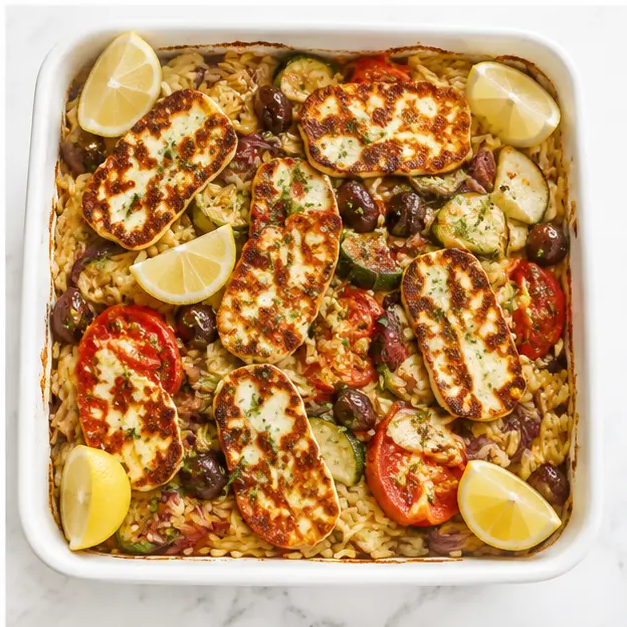
Top with the fried halloumi slices and lemon wedges. Serve immediately, while the halloumi is still crispy and the orzo is hot and creamy.
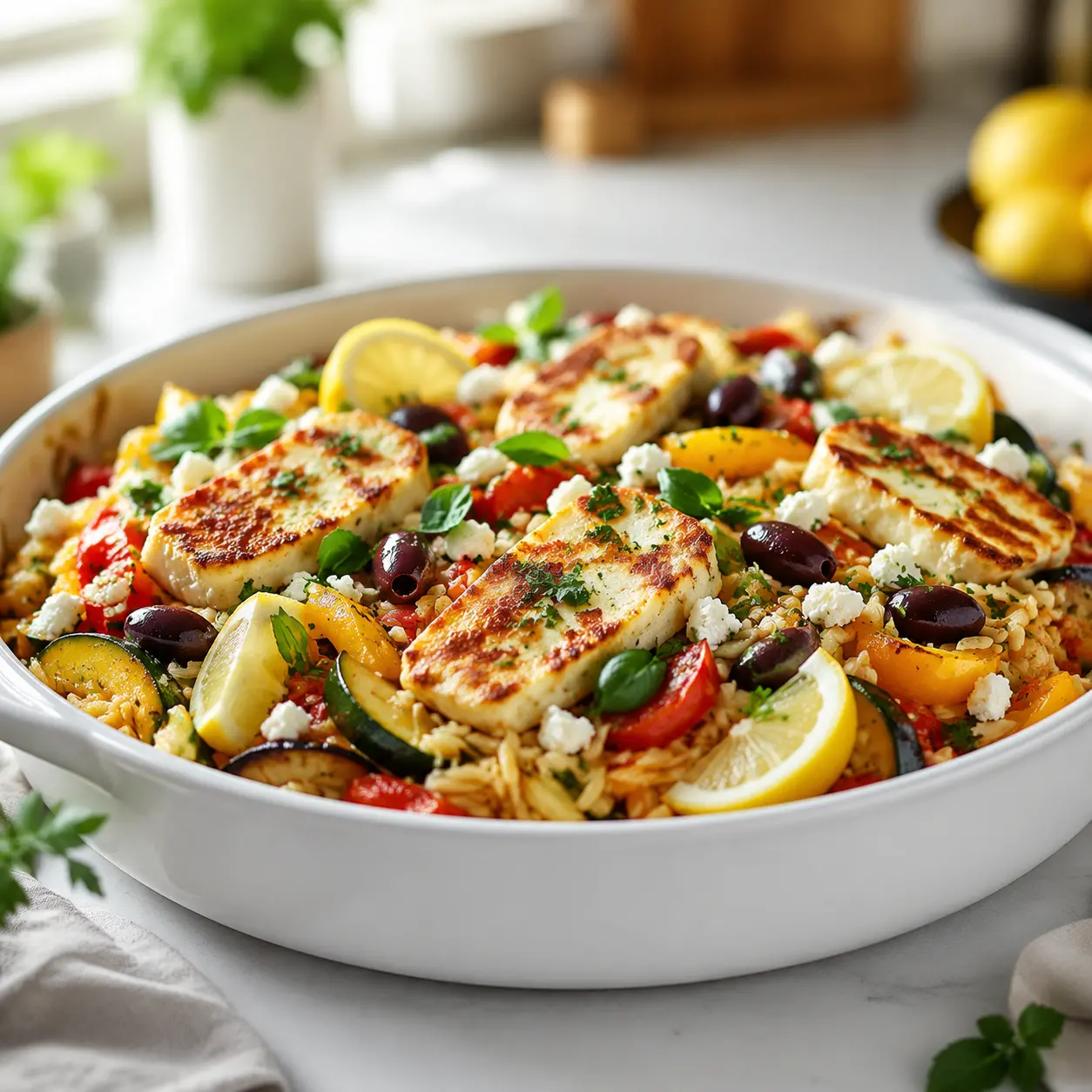
Visual cue: The finished dish should look like a beautiful, rustic casserole. The orzo will be creamy and clinging to the vegetables, the halloumi will be golden on top, and the lemon wedges add a pop of yellow. It’s a stunner.
Tips for Perfect Results
I’ve made this baked orzo with halloumi probably a dozen times now, and I’ve learned a few things along the way. Here are my best tips to make sure yours turns out perfectly.
Quick Tips at a Glance
Cut vegetables uniformly: This ensures even roasting. If your zucchini chunks are bigger than your tomato wedges, they won’t cook at the same rate.
Fry halloumi at the end: Don’t be tempted to bake it with the orzo. Frying gives it that golden crust and soft interior.
Don’t overcook the orzo: Check it after 20 minutes of covered baking. You want it tender but not mushy.
Use low-sodium broth: Halloumi is already salty, so low-sodium vegetable broth helps keep the dish balanced.
❌ Mistake: Overcooking the orzo. If you bake it too long, it turns into a starchy paste. The fix? Roast the vegetables first, then add the orzo and broth for the final 25 minutes. That timing works perfectly.
❌ Mistake: Stirring the halloumi into the dish. I know it’s tempting to mix everything together, but the halloumi will lose its crispy texture. Keep it on top.
❌ Mistake: Not adding enough liquid. Orzo is thirsty. The 2 1/2 cups of broth is the right amount, but if your dish looks dry during baking, add a splash more. Better too much liquid than too little.
✅ Solution for dry orzo: Add an ice cube or a tablespoon of water before reheating leftovers. It helps rehydrate the pasta without making it soggy.
Storage and Leftovers
This baked orzo with halloumi makes great leftovers. In fact, I sometimes think it tastes even better the next day after the flavors have melded together.
Refrigerate: Store in an airtight container for up to 3 days. The halloumi will lose some of its crispiness, but the flavor will still be great.
Reheat: Add a splash of water (about 1 tablespoon) and microwave for 2-3 minutes, stirring halfway through. Or reheat in a 350°F oven for 10-15 minutes, covered with foil.
Freeze: You can freeze this dish, but the texture of the orzo may become a bit stodgy. If you do freeze it, thaw overnight in the fridge and reheat gently. Add a little extra broth or water when reheating.
Meal prep: Divide into individual containers for easy lunches throughout the week. Just leave the halloumi on top and reheat as needed.
Frequently Asked Questions
I hope you love this baked orzo with halloumi as much as my family does. It’s one of those recipes that feels special but is secretly easy. Perfect for a busy weeknight when you want something delicious without spending hours in the kitchen.
Tag me when you pull that pan out of the oven! I’d love to see how yours turns out. And if you have any questions, drop them in the comments below.
Save this recipe to your Pinterest board for later!
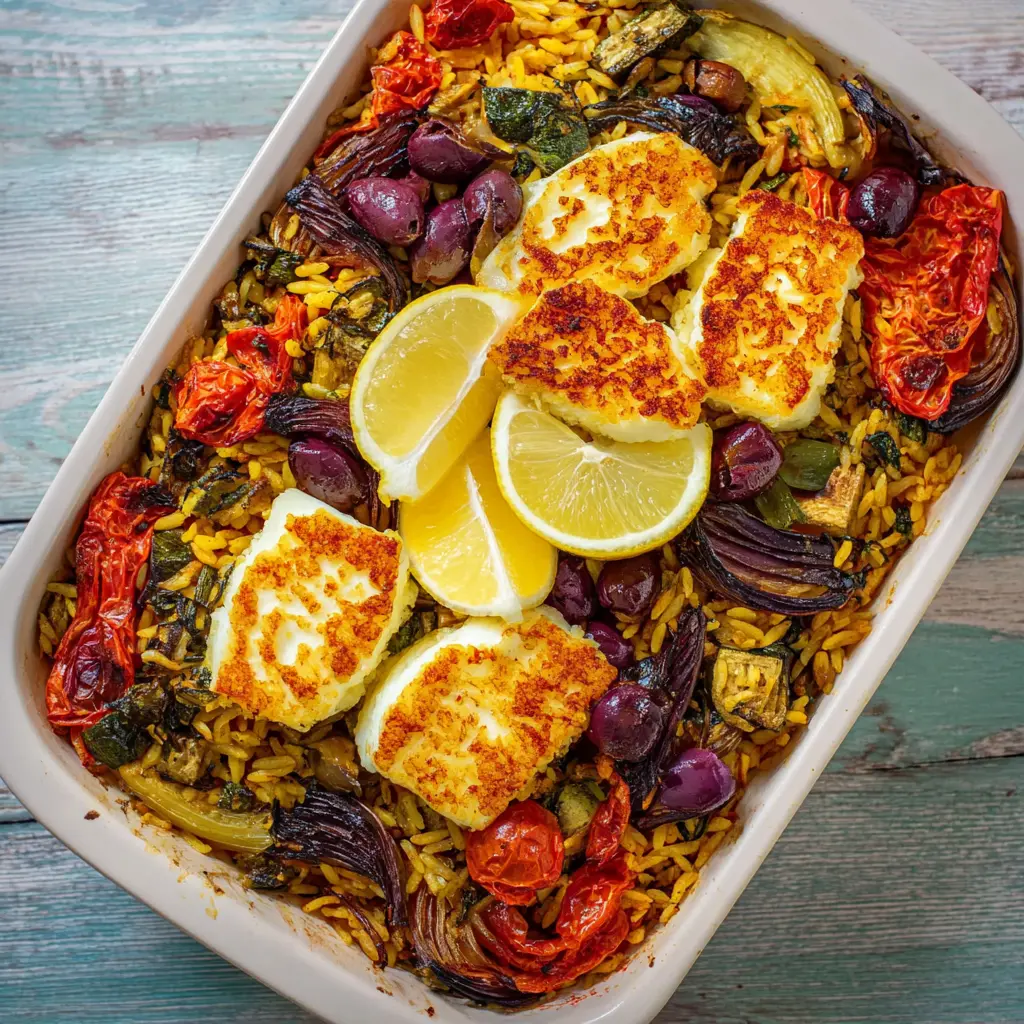
California Baked Orzo with Halloumi and Roasted Mediterranean Vegetables
Ingredients
Method
- Preheat your oven to 350°F.
- In a large baking dish, combine the tomato wedges, zucchini chunks, and red onion wedges. Drizzle with 2 tablespoons of olive oil, then sprinkle with dried oregano and a generous pinch of salt and pepper. Toss everything with a spatula to coat evenly. Roast for 25 minutes.
- After 25 minutes, remove the dish from the oven. Scatter the orzo over the roasted vegetables, then pour in the vegetable broth. Stir gently to make sure the orzo is mostly submerged. Add the pitted kalamata olives, then cover the dish tightly with foil. Return to the oven and bake for another 25 minutes.
- While the orzo bakes, heat the remaining 1/2 tablespoon of olive oil in a non-stick skillet over medium heat. Fry the halloumi slices for 2-3 minutes per side, until golden brown and crispy.
- When the orzo is tender and has absorbed most of the liquid, remove the dish from the oven. Drizzle with red wine vinegar and the remaining 1 tablespoon of extra-virgin olive oil. Top with the fried halloumi and lemon wedges, then serve immediately.
Nutrition
Notes
Tried this recipe?
Let us know how it was!Source: Nutritional Information




3 Responses
Made this last night and it was a hit with the whole family! I used cherry tomatoes instead of salad tomatoes since that’s what I had, and it turned out great. The halloumi got perfectly crispy on the edges. My only question is could I add some spinach to the veggies before roasting?
Absolutely, spinach would be a lovely addition! I’d toss it in during the last 5 minutes of roasting so it just wilts without getting soggy.
Good recipe overall but I found the orzo a bit too soft for my liking. Next time I’ll reduce the stock by about 100ml and check it a few minutes earlier. The flavors were spot on though, especially with the lemon wedges squeezed over at the end.