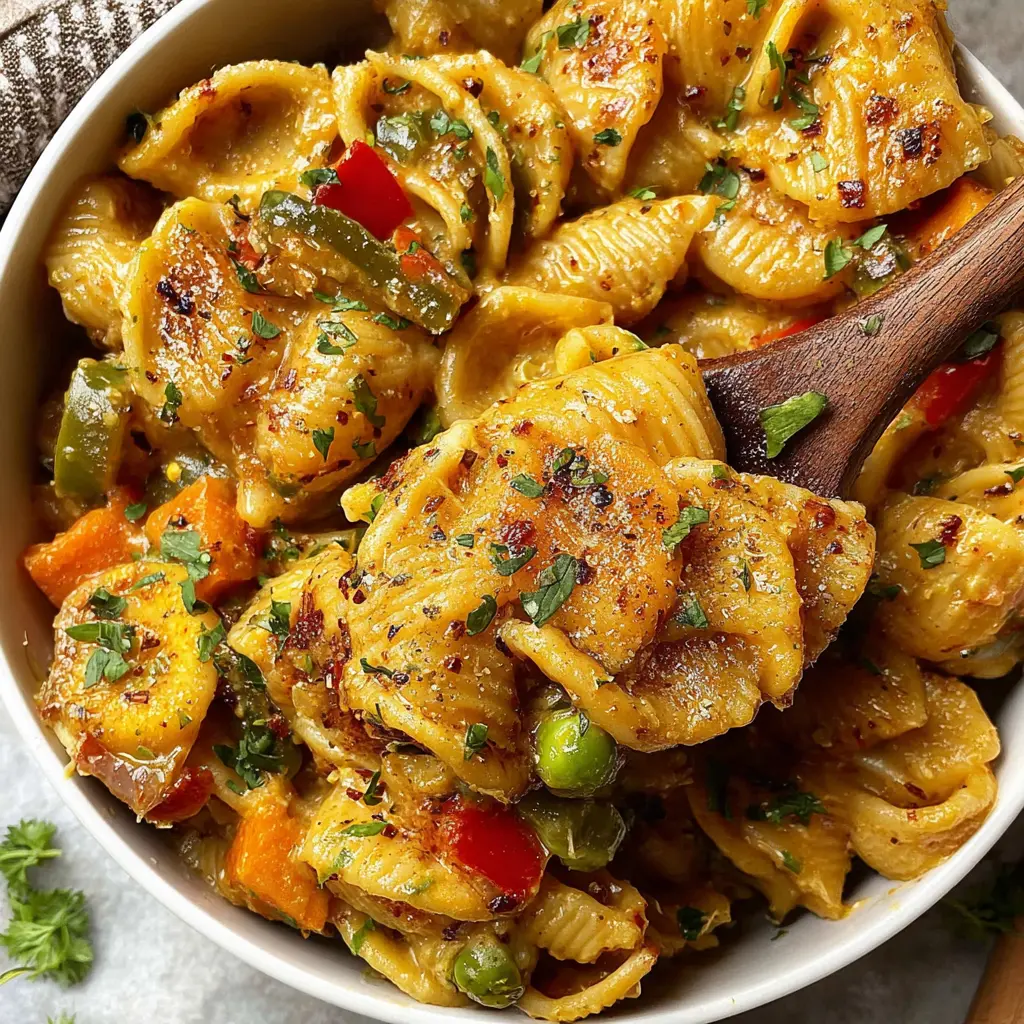
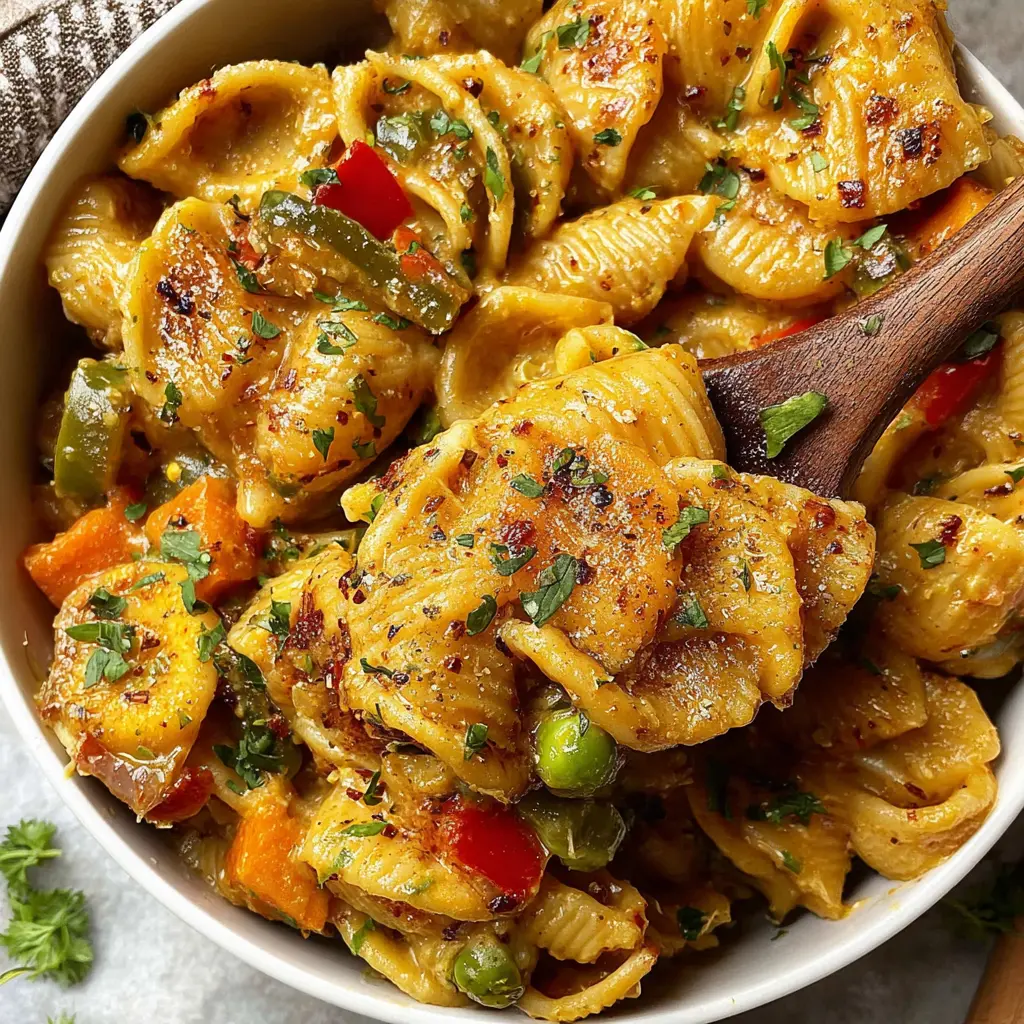
Indian Spiced Spring Vegetable Pasta
Ingredients
Method
- Bring a large pot of well-salted water to a rolling boil, ensuring the water is seasoned enough to flavor the pasta.
- Add the pasta and cook until al dente according to package directions, stirring occasionally to prevent sticking.
- Reserve approximately ½ cup of the pasta water before draining to help loosen the sauce later.
- Drain the pasta and set it aside.
- Avoid overcooking the pasta; keep it slightly firm so it holds up when tossed with the vegetables.
- Wash and slice all vegetables into similar-sized pieces while the pasta cooks to ensure even cooking.
- Slice harder vegetables like carrots and broccoli thinner than softer vegetables like zucchini.
- Use uniform cuts to ensure all ingredients cook at the same rate and improve the final presentation.
- Heat the olive oil in a large skillet over medium heat.
- Add the red onion and carrots first and cook for 2–3 minutes until they begin to soften.
- Stir in the broccoli and bell peppers and cook for an additional 3–4 minutes until tender-crisp.
- Add the zucchini last and cook for 1–2 minutes until just softened.
- Avoid overcrowding the pan; cook in batches if necessary to sauté the vegetables rather than steam them.
- Add the minced garlic, Italian seasoning, salt, black pepper, and optional red pepper flakes.
- Stir the mixture constantly for about 30 seconds until the garlic is fragrant.
- Keep the garlic moving and lower the heat if needed to prevent it from burning.
- Transfer the cooked pasta directly into the skillet with the sautéed vegetables.
- Toss the mixture gently to ensure the pasta is thoroughly coated in olive oil and seasonings.
- Add a splash of the reserved pasta water if the dish appears too dry.
- Use the reserved pasta water to create a light, silky finish without the need for cream or butter.
- Remove the skillet from the heat and stir in the lemon juice and grated Parmesan.
- Taste the dish and adjust the seasonings as needed.
- Garnish with fresh basil or parsley immediately before serving.
- Stir in the cheese after removing the pan from the heat to maintain a smooth texture and prevent clumping.
Nutrition
Notes
Nutritional Value (per serving, approximate):
- Calories: 320 kcal
- Protein: 12 g
- Carbohydrates: 45 g
- Dietary Fiber: 6 g
- Sugars: 6 g
- Fat: 10 g
- Saturated Fat: 2 g
- Sodium: 450 mg
- Vitamin A: 80% DV
- Vitamin C: 90% DV
- Calcium: 20% DV
- Iron: 15% DV
Tried this recipe?
Let us know how it was!Why You’ll Love This spring pasta recipe indian
It’s Wednesday evening, 35 minutes before dinner, and I’m staring at a box of penne. We’ve all been in that boring pasta rut. Honestly, I needed something different tonight. I wanted comfort food that didn’t take hours to make.
That’s exactly how this spring pasta recipe indian became my weekly staple. It’s budget friendly, incredibly vibrant, and packed with layers of flavor. You know, I thought fusion cooking was hard, but I discovered it’s actually quite forgiving.
I mean, combining Italian carbs with fragrant Indian aromatics is just brilliant. During these cooler LA winter months when we actually use our ovens, or on those rare 50-degree evenings, this dish is just right. It’s hearty enough for dinner but light enough to keep you energized.
Before we get into the details, here are the quick wins I’ve learned from making this constantly. First, always cook your pasta perfectly tender, maybe even a minute shy of al dente. Second, bloom your cumin seeds until you literally smell them popping in the hot oil. Third, use a splash of starchy pasta water to make the aromatic sauce cling to every single noodle. Trust me on this.
What Exactly is Indian Style Masala Pasta?
If you’re wondering what makes this different from a traditional Pasta Primavera, it’s all in the foundation. A masala pasta uses a base of bloomed Indian spices and aromatics to create a deeply savory sauce. We’re talking about a rich ginger garlic paste foundation.
I think the real magic happens when you introduce sweet spring vegetables to those warming spices. The contrast is amazing. You get the familiar comfort of a one pot pasta, but with the bold, aromatic flavor profile of a classic Indian dhaba dish.
It’s not really a heavy curry. Well, it is spiced, but the tomato puree keeps it light and saucy. You’ll get this incredibly vibrant yellow-orange color from the turmeric that makes the whole dish look like sunshine on a plate. It’s so good.
Essential Spring Ingredients for Your Indian Pasta
The beauty of this spring pasta recipe indian is how perfectly it uses up seasonal produce. After my weekly Trader Joe’s run, I always have a crisper drawer full of green veggies. Spring peas are absolutely mandatory here.
I love grabbing fresh asparagus or sweet carrots from the Santa Monica Farmers Market for this. The trick is to chop your carrots finely so they cook at the exact same rate as your peas and bell peppers. You want them perfectly tender but still retaining a slight bite.
You can use regular onions if that’s what you have. Honestly, using spring onions gives it a much fresher taste. I probably make this slightly different every time depending on what’s in the fridge, and that’s the beauty of it.

How to Make Masala Pasta (The Secret Technique)
I know building a masala sounds complicated, but it’s easier than you think. The entire flavor profile relies on the science of blooming spices in oil. You’ll heat your oil, add the cumin seeds, and wait for that specific crackling sound.
That first scent of the blooming spices hitting the hot pan is incredible. It smells like roasted earth and warm garlic. You must let the ginger-garlic paste sauté long enough to lose its raw smell. I learned this the hard way.
Once your tomato base is simmering, you’ll notice the oil starting to separate slightly at the edges. That’s your visual cue that the masala is ready. Then, fold in those delicate spring vegetables. Don’t overcook them; we want that vibrant color to pop against the golden sauce.
Expert Tips for the Best spring pasta recipe indian
Here’s what I wish someone had told me when I first started making fusion pasta. Always cook your pasta al dente to prevent mushiness when you toss it with the hot masala. The pasta will absorb some of that flavorful sauce as it finishes cooking.
If you want a deeper umami flavor, use a spoonful of tomato ketchup or tomato paste in your base. It sounds crazy, but it adds the perfect hint of sweetness to balance the heat. I mean, it’s a game-changer for the overall profile.
Look, I’ll be honest, if you’re serving this to kids, you’ll want to tone down the red chili and garam masala. You can easily customize the spice level. And always reserve a little pasta cooking water to adjust the sauce consistency right at the end.
Common Mistakes & Fixes
Mistake: The pasta turns into a mushy clump.
Solution: You likely overcooked the pasta in the boiling water. Pull it out a minute early because it will continue cooking in the hot masala sauce.
Mistake: The ginger-garlic flavor is too harsh and bitter.
Solution: You didn’t sauté the paste long enough. Let it cook in the hot oil until the raw, pungent smell transforms into a sweet, aromatic fragrance.
Mistake: The sauce is too dry and won’t coat the noodles.
Solution: This usually happens if you drain all the pasta water. Always save half a cup of that starchy water to thin out the masala and create a glossy coating.
Recipe Variations & Substitutions
This spring pasta recipe indian is incredibly versatile. If you’re doing a gluten-free diet, brown rice pasta or quinoa pasta works beautifully here. The sturdy texture actually holds up great against the thick masala sauce.
For my vegan friends, just swap heavy cream for a splash of coconut milk at the end. It adds a luxurious, creamy silkiness that tones down the spice perfectly. You can also add tofu or chickpeas to make it protein-rich.
Sometimes I’ll stir in mozzarella or cream cheese right before serving for a cheesy twist. It melts into the hot sauce and creates this amazing, comforting texture. If you don’t have garam masala, Pav Bhaji masala is a fantastic alternative.
What to Serve with Your Indian Fusion Pasta
Because this dish is so flavor-forward, I like to keep the sides pretty simple. A crisp side salad with a lemon vinaigrette cuts through the richness of the spices beautifully. It’s the perfect balance.
You definitely need some kind of bread to mop up any leftover sauce on your plate. Classic garlic bread is amazing, but a warm, buttery naan is even better. I mean, why not lean fully into the fusion concept?
If I’m making this for a weekend brunch with friends, I’ll serve it alongside a simple roasted tomato soup. It feels fancy but takes minimal effort.

Storage and Reheating Instructions
This spring pasta recipe indian makes the absolute best leftovers for your tiffin box. You’ll want to store it in an airtight container in the fridge, where it stays fresh for 2 to 7 days. The flavors actually deepen overnight.
When you’re packing it for lunch, add a tiny splash of water before closing the lid. This moisture-retention trick prevents the pasta from drying out in the fridge. You can even freeze it for up to 3 months if you’re doing heavy meal prep.
To reheat, I prefer using the stovetop. Just add a tablespoon of water to a pan, toss the pasta in, and heat it gently until it’s perfectly tender again. If you’re at the office, microwaving individual portions works fine too.
Frequently Asked Questions about spring pasta recipe indian

Spice Up Your Weeknight Routine
Once you understand the basics of building a masala, you’ll want to put it on everything. This spring pasta recipe indian is just the beginning of what you can do with fusion cooking. It’s vibrant, it’s comforting, and it totally solves that weeknight dinner panic.
I can’t wait for you to try this in your own kitchen. Grab your favorite pasta on your next grocery run and give it a go. For more inspiration, check out my Pinterest boards where I share tons of easy weeknight variations.
Source: Nutritional Information