One Pot Spring Pasta Recipe With Asparagus and Peas
Ingredients
Method
- Pour olive oil into a large pot and sauté the vegetables over medium heat for 3-4 minutes until the spinach wilts and the asparagus softens.
- Add minced shallot and sliced garlic to the vegetables and sauté until fragrant. Season with salt and pepper, then stir to combine.
- Add the dried pasta to the pot once the vegetables are soft.
- Stir in the bone broth and half-and-half. Reduce heat to medium-low, cover, and cook for 22-24 minutes until most of the liquid is absorbed and the pasta is al dente.
Nutrition
Notes
Tried this recipe?
Let us know how it was!Why You’ll Love This Spring Pasta Recipe
You know that feeling? When you walk through the Santa Monica Farmers Market in April, and the stalls are just exploding with green. Piles of pencil-thin asparagus, baskets of sugar snap peas, and that first whiff of fresh mint. It’s like winter just packed its bags and left. Honestly, that’s the exact moment I start craving this spring pasta recipe with asparagus and peas.
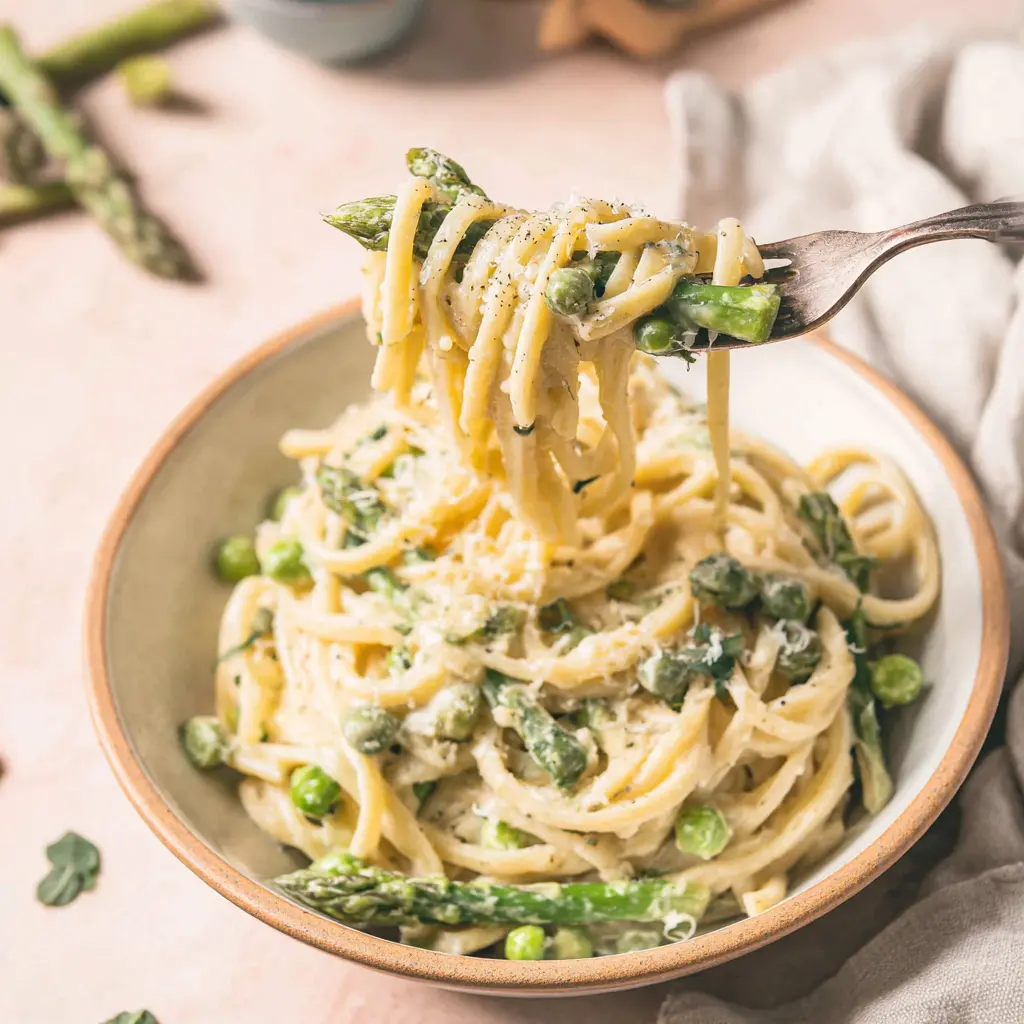
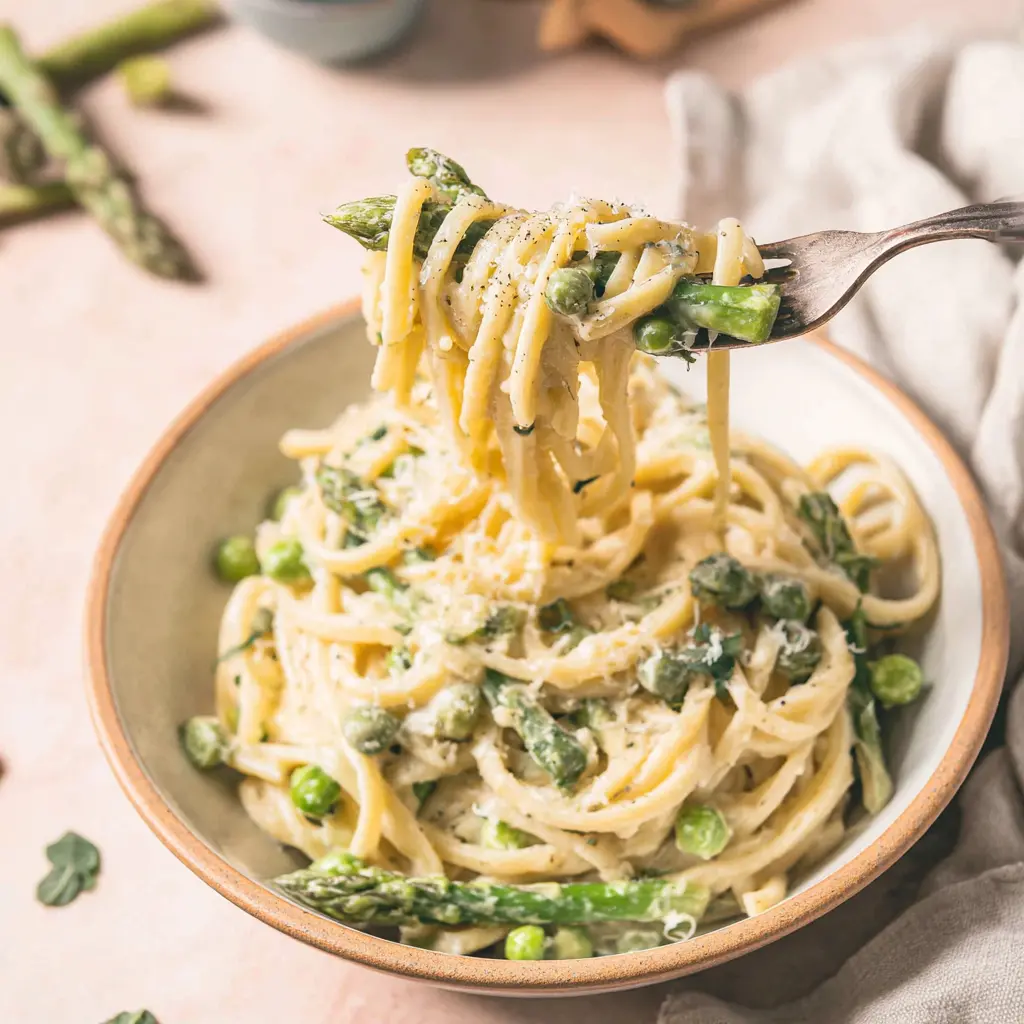
I mean, after months of heavy stews and roasts, your body just wants something light. Something that tastes like sunshine. This dish is it. It’s a 30-minute weeknight miracle that looks like you spent all afternoon in the kitchen. The asparagus stays so crunchy and bright, the peas pop with sweetness, and the sauce… it’s not heavy at all. It’s just this beautiful, glossy coating that clings to every strand of pasta. Perfect.
And with Easter right around the corner, it makes the most stunning vegetarian centerpiece. No one will miss the meat, I promise. It’s spring on a plate, you know?
Gathering Your Spring Bounty
Let’s talk ingredients, because that’s where the magic starts. For the best spring pasta recipe with asparagus and peas, you don’t need a ton. You just need the good stuff.
First, the asparagus. This is non-negotiable: look for the thin stalks. I’m talking pencil-thin. You’ll find them at the start of the season at places like Whole Foods or your local farmers market. They’re more tender, they cook in a flash, and they have that perfect snap. If you can only find thicker ones, that’s okay. You’ll just slice them lengthwise first. A little extra work, but worth it.
Now, peas. Here’s a secret I learned the hard way: frozen peas are absolutely fine. Honestly, sometimes they’re better. Fresh peas can be elusive and shelling them is a project. A bag of frozen sweet peas from the freezer aisle at Ralphs? Defrost them under cool water, and they’re vibrant, sweet, and ready to go. No one will know.
The rest is pantry staples. A good extra virgin olive oil, a couple of garlic cloves, a shallot for sweetness, and a big lemon for zest. For cheese, a block of real Parmigiano-Reggiano you grate yourself. The pre-grated stuff has anti-caking agents that can make your sauce grainy. And for pasta, I love a long shape like fettuccine or linguine. It twirls beautifully and holds the sauce and veggies so well.

The Simple Science of a Perfect Spring Sauce
Okay, here’s where most spring pasta recipes go wrong. They either drown the delicate veggies in a heavy cream sauce or leave everything dry and sad. The trick is emulsification. Sounds fancy, but it’s just using starchy pasta water to create a silky, clingy sauce without a ton of fat.
You start your pasta in well-salted water. It should taste like the sea. Seriously, this is your one chance to season the pasta itself. Then, before you drain it, you scoop out about a cup of that cloudy, starchy liquid. This is liquid gold. When you toss the hot pasta with the sautéed vegetables, a little butter, and your cheese, you add splashes of this water. It loosens everything up and the starch acts like a glue, binding the oil, cheese, and vegetable juices into a glossy coating that sticks to every noodle.
It’s the difference between a cohesive dish and a pile of separate ingredients. And it’s what makes this spring pasta recipe with asparagus and peas feel restaurant-quality.
Step-by-Step: Building Your Spring Masterpiece
I won’t rewrite the recipe card steps, but I’ll tell you the why behind them. It’s all about timing and respecting each ingredient.
First, get your pasta water boiling. Always use a big pot with plenty of water so the pasta has room to move. While that’s happening, prep your veggies. Trim the tough ends off the asparagus by snapping them where they naturally break. Rinse your peas if using frozen. Thinly slice your shallot and garlic.
Now, here’s a key decision point: to blanch or not to blanch? For the crispiest, brightest asparagus, I give it a quick 60-second dip in the boiling pasta water about a minute before the pasta is done. You fish it out with a slotted spoon, then shock it in ice water. It stays that incredible verdant green. If you want it softer, you can just sauté it. Both work.
Then, you sauté the shallot and garlic in olive oil just until fragrant. Don’t let the garlic brown. It turns bitter and will overpower your delicate spring vegetables. Add the peas and asparagus just to heat through. The goal is to keep that snap.
When your pasta is al dente, reserve that water and add the pasta straight to the veggie pan. Off the heat, add your cheese, a knob of cold butter, and a big handful of fresh herbs. Now, start adding the pasta water, a splash at a time, tossing constantly. You’ll see it come together into something magical. The smell of the lemon zest hitting the warm pan at the end is honestly the best part.
Expert Tips for Perfect Spring Pasta Every Time
I’ve made this spring pasta recipe with asparagus and peas more times than I can count. Here’s what I’ve learned.
Salt your pasta water like it’s the ocean. The pasta won’t absorb all that salt, but it seasons it from the inside out. You can’t fix bland pasta at the end. I use a glass measuring cup to scoop out my pasta water right before draining, so I never forget.
Use thin asparagus. The cook time is for pencil-thin spears. If yours are thicker, slice them in half lengthwise first. They’ll cook at the same rate.
Frozen peas are your friend. They’re flash-frozen at peak ripeness. Just run them under cool water to defrost. Easy.
Choose your own herb adventure. Flat-leaf parsley is classic. But a handful of fresh mint or chives? Amazing. Tarragon is lovely if you’re feeling fancy. Use one or mix them.
And whatever you do, don’t forget the pasta water. That starchy water is the secret sauce. Without it, you might be tempted to add more oil, which just makes everything greasy and separate.
Common Mistakes & Fixes
Mistake: Soggy, grey asparagus.
Solution: You overcooked it. Blanch for only 60-90 seconds and shock in ice water to stop the cooking. Or, sauté it just until bright green and tender-crisp.
Mistake: A dry, clumpy pasta dish.
Solution: You didn’t use enough pasta water. Add it splash by splash while tossing vigorously off the heat. The sauce should be loose and glossy before you serve.
Mistake: Bitter, burnt garlic.
Solution: Garlic burns in seconds. Add it to the pan last, just before the other veggies, and stir constantly for only 30 seconds until fragrant.
Mistake: Mushy pasta.
Solution: Cook it al dente! It will continue to cook a bit when you toss it with the hot vegetables and sauce. Taste it a minute or two before the package says it’s done.
Making It Your Own: Variations & Substitutions
The beauty of this spring pasta recipe with asparagus and peas is its flexibility. Don’t have fettuccine? Linguine, spaghetti, or even a short shape like fusilli works. Going gluten-free? I’ve had great luck with the brown rice and quinoa fusilli from Trader Joe’s.
Want to change up the veggies? In the summer, swap half the asparagus for chopped zucchini or yellow squash. A handful of halved cherry tomatoes sautéed with the shallot is so good. For a richer version, a sprinkle of toasted pine nuts adds a wonderful crunch. Just watch them closely in the pan they burn fast.
For dietary needs, it’s easy. Dairy-free? Skip the parmesan and butter. Add a little extra salt and a splash of good olive oil at the end. The pasta water will still help create a sauce. You could even add a spoonful of nutritional yeast for a cheesy flavor. Vegetarian? You’re already set. It’s a perfect meatless Monday meal.
Serving, Storing, and Bringing It All Back to Life
Serve this immediately. Pasta waits for no one. I love it in a big, shallow bowl with an extra grating of parmesan, a drizzle of my best olive oil, and a few more torn herbs on top. It’s a complete meal, but a simple arugula salad with lemon vinaigrette on the side is never a bad idea.
Now, leftovers. They’ll keep in the fridge for up to 4 days in a covered container. The pasta will absorb the sauce, so reheating is key. Don’t microwave it dry. Add it to a skillet with a couple tablespoons of water or broth over medium-low heat. Stir gently until warmed through. You can even add a fresh pat of butter or a splash of cream to bring back the sauciness.
I don’t recommend freezing this one. The asparagus and peas lose their lovely texture. It’s a make-and-eat-now kind of dish, you know?

Frequently Asked Questions
How do I cook asparagus for pasta so it stays crunchy?
Blanch it! Drop trimmed asparagus into the boiling pasta water for just 60-90 seconds, then immediately transfer it to a bowl of ice water. This locks in the bright green color and that perfect snap. You can then quickly sauté it at the end just to warm through.
What’s the best pasta shape for peas and asparagus?
Long, ribbon-like shapes like fettuccine or linguine are my top pick. They twirl beautifully on a fork and hold the light sauce and vegetables really well. The peas and asparagus pieces get caught in the strands, so you get a bit of everything in each bite.
Can I use frozen vegetables for this fresh vegetable pasta?
Absolutely. Frozen peas are fantastic and I use them all the time. For asparagus, fresh is best for texture, but in a pinch, you could use frozen asparagus pieces. Just add them straight from the freezer to the pan and sauté until heated through they’ll be softer, but still tasty.
How long can I store leftovers of this spring pea pasta?
Leftovers will keep well in the fridge for up to 4 days in an airtight container. The pasta soaks up the sauce, so when reheating, add a splash of water, broth, or a touch of cream to a skillet and warm it gently over medium-low heat, stirring often.
Is this spring pasta recipe with asparagus and peas good for meal prep?
It’s okay, but not ideal for the whole week. The vegetables are best fresh. What I do is prep the components: wash and trim the asparagus, grate the cheese, mix the herbs. Then, the actual cooking comes together in 15 minutes on the night you want to eat it. Perfect for a quick weeknight meal.

Your Spring Dinner, Sorted
So there you have it. My go-to spring pasta recipe with asparagus and peas, broken down with all the tips and tricks I’ve gathered over years of making it. It’s more than just a recipe, you know? It’s a celebration of the season. The first bite, with that pop of sweet pea, the crunch of asparagus, and the zesty lift of lemon… it’s honestly so good.
I hope you give it a try. It’s the kind of dish that makes you feel like a kitchen hero with minimal effort. Perfect for a busy weeknight, fancy enough for a weekend dinner party, and absolutely stunning on an Easter brunch table. If you do make it, I’d love to see your creation. Share a photo and tag me. For more seasonal inspiration like this, check out my Pinterest boards where I save all my favorite spring ideas.
Now, go grab some asparagus and get cooking. Spring won’t wait forever.
Source: Nutritional Information