
I Ordered Pad Thai Delivery Twice Last Week
Honestly, I’m not proud of it. But between school pickups, a work deadline, and the never-ending laundry mountain, calling our local Thai spot felt easier than thinking. The worst part? That $60 tab for four containers of noodles. So yeah, I get it if you’re here because you want easy chicken pad thai without the delivery fee.
Here’s the thing though. Traditional pad thai is a bit of a tightrope walk. Tamarind for sour, fish sauce for salty, palm sugar for sweet. Get the balance wrong and you’re left with something that tastes… off. That’s why I pivoted to this version. It’s a healthy chicken pad thai that skips the noodles entirely and swaps the usual sugar rush for a creamy, tangy almond sauce. It’s not traditional, sure. But it is ridiculously good.
And it’s fast. Like, faster-than-delivery fast. Ready in about 25 minutes, all in one skillet, no weird ingredients that send you to three different stores.
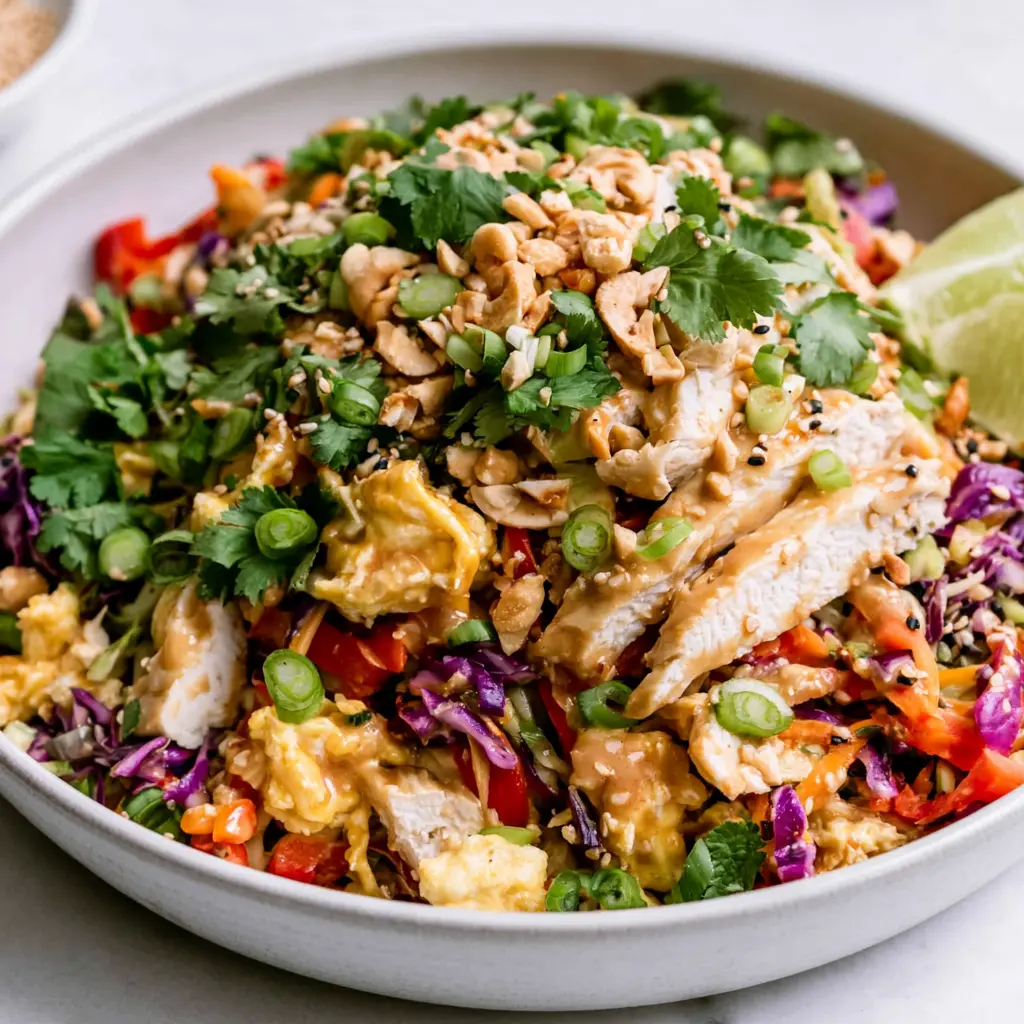
What Is Chicken Pad Thai?
You probably know the classic: thin rice noodles stir-fried with chicken, scrambled egg, bean sprouts, and that signature sweet-sour-savory sauce. It’s a staple of Thai street food and a total takeout favorite. My version keeps all that flavor energy but trades the rice noodles for a crunchy broccoli slaw base. Think of it as a noodle-free chicken pad thai that’s packed with veggies.
The sauce is where the magic happens. Instead of tamarind paste and fish sauce, I use coconut aminos, lime juice, and a little rice vinegar. The creamy texture comes from almond butter, which gives it a subtle nuttiness that mimics the traditional peanut garnish. It’s glossy, it clings to every piece of chicken and every shred of cabbage, and it’s genuinely crave-worthy.
If you’re doing a Whole30 or eating paleo, this recipe is about to become your new best friend. It’s gluten-free, grain-free, and full of clean protein and colorful vegetables.
Why This Recipe Works
I’ve tested a lot of “healthy” takeout copycats over the years. Some are bland. Some are way too complicated. This one? It just works. Here’s why:
- One skillet, minimal cleanup: Everything cooks in a single large pan, from the eggs to the chicken to the veggies.
- Noodle-free but not sad: The broccoli slaw and cabbage give you that satisfying crunch without the carb coma.
- Sauce that actually tastes like takeout: The almond butter, coconut aminos, lime, and toasted sesame oil combo is salty, tangy, and a little sweet, just like a good pad thai sauce.
- Paleo, Whole30, and gluten-free friendly: This fits a ton of dietary needs without feeling like a “diet” meal.
- 30 minutes, start to finish: Faster than waiting for delivery, I promise.
And hey, the leftovers reheat beautifully, which makes this a solid meal prep lunch too. That’s a win in my book.
Ingredients for This Chicken Pad Thai
Before you start, let’s talk about what goes in. The ingredient list looks long, but most of it is just veggies. Here’s what you’ll need to grab:
- Protein: Boneless, skinless chicken breasts cut into 1-inch cubes. If you have chicken thighs in the fridge, those work beautifully too. They’re a little juicier.
- The Veggie Base: A 12-ounce bag of broccoli slaw mix is the shortcut here. It’s pre-shredded, so it’s crisp and ready to go. You’ll also add shredded red cabbage, shredded carrots, a red bell pepper (thinly sliced), and a small yellow onion.
Insider tip: If it’s summer and you hit the Santa Monica Farmers Market, grab whatever’s freshest. The recipe is forgiving. - Aromatics: Garlic, fresh ginger, and green onions. That combo is the flavor backbone of almost every stir-fry I make.
- For the Sauce: Smooth creamy almond butter (drippy style, if you have it), coconut aminos, fresh lime juice, unseasoned rice vinegar, toasted sesame oil, and crushed red pepper flakes for heat. This blend creates a pad thai sauce without any added sugar.
- Eggs: Three large eggs, lightly whisked and scrambled into ribbons.
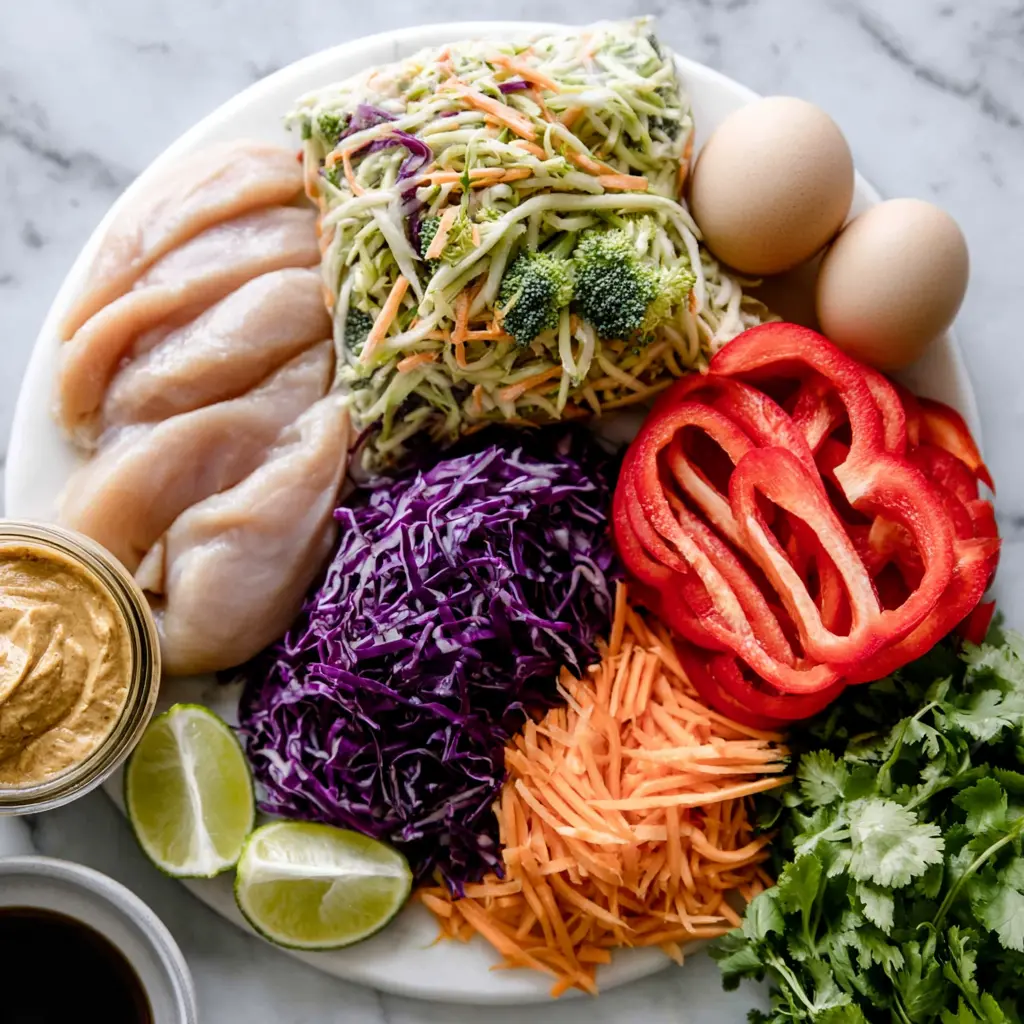
One note: coconut aminos is my go-to because it’s a bit sweeter and less salty than soy sauce. If you don’t have it, gluten-free tamari works as a swap. Just start with a little less and taste as you go. No almond butter on hand? Creamy peanut butter will absolutely do the trick.
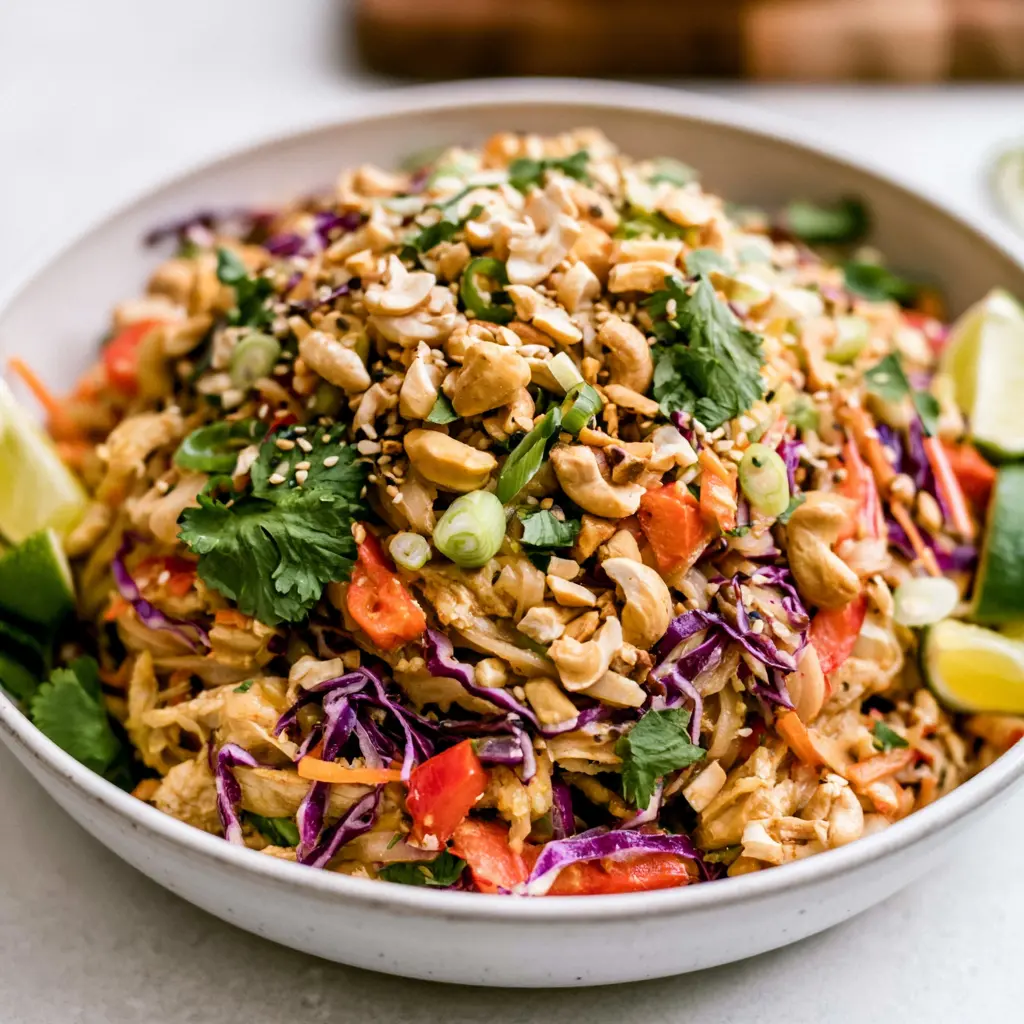
And don’t skip the toppings. Chopped dry-roasted cashews, fresh cilantro, lime wedges, and toasted sesame seeds take this from good to “can we have this every week?” good.
How to Make Chicken Pad Thai: The 4 Key Stages
Alright, let’s get into it. The key to any good stir-fry is having everything prepped and ready to go before you heat the pan. This dish moves fast. In Thai cooking, this is called mise en place, and it’s the secret to not panicking on a weeknight. Once your chicken is cubed, your veggies are shredded, and your sauce is whisked, you’re golden.
Stage 1: Scramble the Eggs
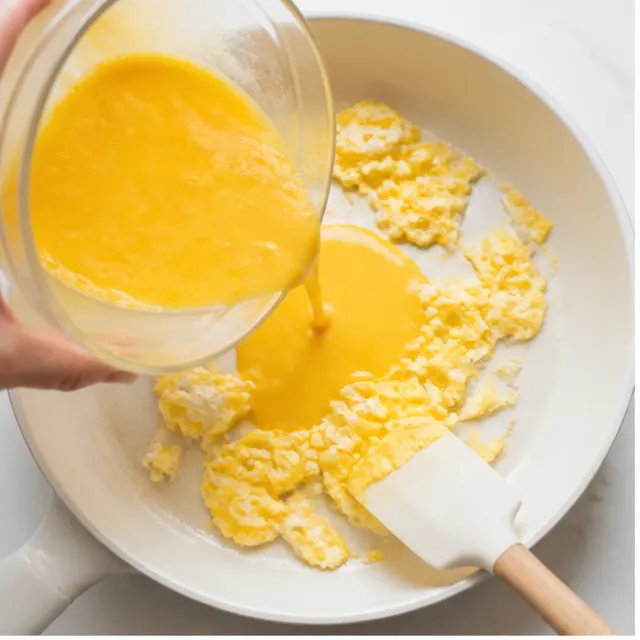
Set your 12-inch skillet (a well-seasoned wok works too) over medium heat with a little oil. When it shimmers, pour in the whisked eggs. Let them set for a moment, then gently scramble until they’re just cooked. Transfer them to a plate. They’ll go back in at the very end, so they stay soft and don’t get lost in the vegetable chaos.
The smell of eggs hitting a hot pan? That’s the exact scent that tells me dinner is about to come together.
Stage 2: Cook the Chicken and Vegetables
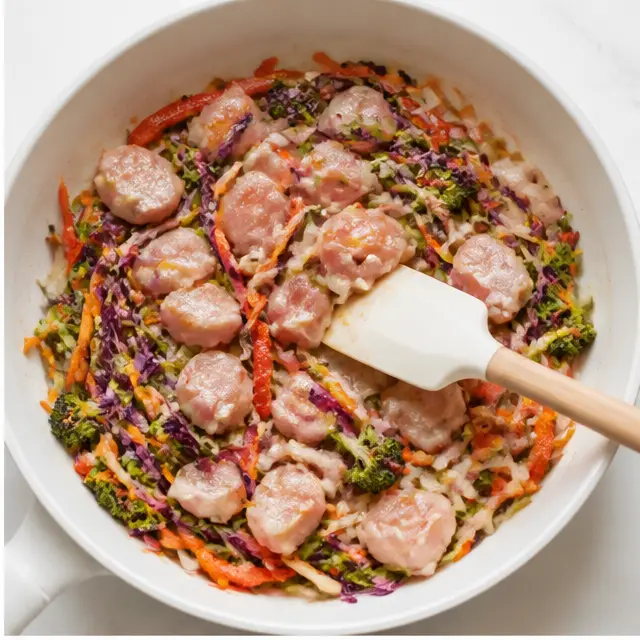
Add the rest of the oil to the skillet, then toss in the cubed chicken. Let it brown for a couple of minutes. This is where the flavor builds. Then, pile in all the veggies: broccoli slaw, red cabbage, carrots, bell pepper, onion, green onions (white and light green parts), garlic, and ginger.
Your skillet is going to look seriously full. Don’t worry about it. That’s normal. Give everything a good stir, season with a little sea salt and black pepper, and let it cook down for 8 to 12 minutes. The chicken will cook through, and the cabbage will soften but keep some of its crunch. The whole kitchen starts to smell warm and gingery.
Stage 3: Whisk the Creamy Pad Thai Sauce
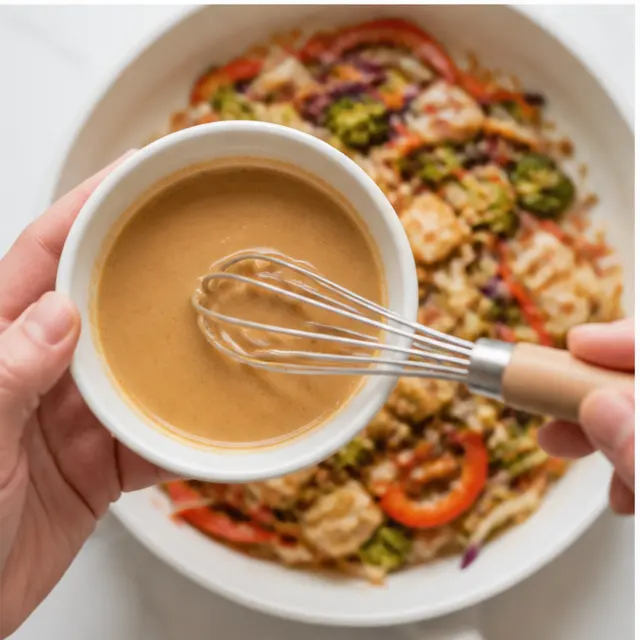
While the skillet works its magic, grab a small bowl. Whisk together the almond butter, coconut aminos, lime juice, crushed red pepper flakes, rice vinegar, and toasted sesame oil. Keep at it until the almond butter is completely smooth and the mixture looks like a glossy, pale-brown dressing.
If your sauce seems too thick (almond butter can be stubborn), just whisk in 1 or 2 teaspoons of warm water. It loosens right up.
Stage 4: Combine Everything
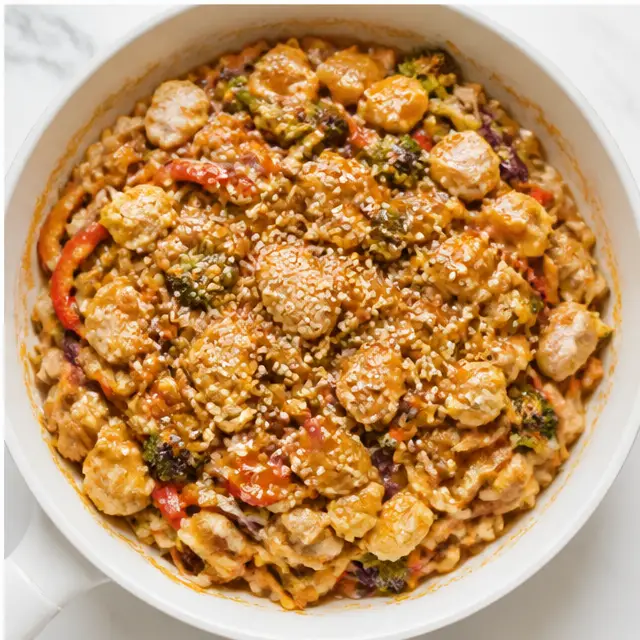
Once the chicken is cooked through and the veggies are tender, bring the scrambled eggs back to the party. Add the reserved dark green parts of the green onions, then pour the sauce over everything. Stir to coat every piece. Let it bubble and heat through for 1 to 2 minutes until the sauce is glossy and clinging to the vegetables.
This is the moment. The colors get brighter, the sauce turns everything silky, and you’ll be dying to grab a fork. That first bite? It tastes like you ordered from a great restaurant, minus the plastic containers.
Tips for the Best Chicken Pad Thai
Over the years, I’ve made a few pad thai attempts that flopped. My very first noodle version ended with more rice noodles stuck to the ceiling than in the bowl. Lesson learned. Here are the tips I wish I knew back then:
- Use a large skillet or wok. A 12-inch pan keeps the heat high and lets the vegetables cook quickly instead of steaming.
- Keep the heat at medium. If your garlic or ginger starts to brown too fast, lower the heat a notch. Burnt garlic is bitter, and no sauce can save it.
- Cut chicken into small, even pieces. Smaller cubes cook faster and soak up more sauce. It’s a simple trick that makes a big difference.
- Prep ahead. Chop all your vegetables and mix the sauce up to a day in advance. Then this is truly a 20-minute meal.
- Taste and adjust. Want more tang? Add a squeeze of lime. More heat? Crushed red pepper flakes. Make it yours.
One more thing: don’t stress about the exact veggie quantities. If you have a little extra cabbage or an extra handful of carrots, toss them in. This is a clean-out-the-fridge recipe in disguise.
Flavor Variations and Substitutions
This recipe is super flexible. Here are some easy swaps and add-ins to keep it exciting:
- Swap the protein: Shrimp pad thai is legendary. Cook the shrimp just until pink, then set aside like the eggs. Extra-firm tofu is a great plant-based option too.
- Switch the nut butter: Use creamy peanut butter instead of almond butter for a more classic flavor profile. It’s a direct 1:1 swap.
- Add more crunch: Water chestnuts, sliced mushrooms, or baby corn would be delicious here. Add them with the rest of the veggies.
- Go low-carb: This is already noodle-free, so it’s naturally low-carb. Zucchini noodles would add even more bulk if you want it.
- Make it more traditional: If you want a classic noodle version, toss in cooked rice noodles (prepared separately) after the sauce. The sauce is flexible enough to handle it.
And if you’re worried about spice for the kids, here’s the trick: keep the crushed red pepper in the sauce, but add a little less, like a pinch instead of half a teaspoon. Serve lime wedges and extra sriracha on the side so everyone can dial up the heat themselves. The tangy lime and chili on top make it taste even more like takeout.
How to Store and Reheat Leftovers
The beauty of this dish is that it keeps well. Store any leftovers in an airtight container in the fridge for up to 4 days. (Trust me, it’ll probably be gone before that.)
For reheating, the stovetop is your best friend. Add a splash of water to a skillet, toss in the leftovers, and warm over medium heat, stirring occasionally. The water helps revive the sauce and keeps the vegetables from drying out. You can also use the microwave, but the stovetop gets you closer to that just-cooked texture.
Want to make your week easier? Prep the sauce and chop all the vegetables up to a day ahead. Then this easy chicken pad thai is literally a 15-minute cook. Dinner on the table faster than the delivery driver can ring your doorbell.
A Final Push to Skip Takeout
Look, I love takeout as much as anyone. But when you can make a plate of glossy, tangy, healthy chicken pad thai at home for a fraction of the cost, it’s hard to justify that $20 delivery fee. This is a complete dinner in about 30 minutes. The kids will scrape their plates. Your wallet will breathe a sigh of relief. And you’ll feel like the kind of cook who just knows how to make stuff.
If you make this one, come find me on Pinterest and tell me how it went. I save all my favorite easy weeknight dinners and healthy twists over there, and I’d love to share this one with you. Save this chicken pad thai recipe on Pinterest for your next busy night.
When you make this Friday night, save the delivery app for another day. You’re about to beat it anyway.
One Skillet Chicken Pad Thai with Broccoli Slaw (Noodle-Free)
Ingredients
Method
- Set a large 12-inch or wider skillet over medium heat and add 1 teaspoon of the oil. If your skillet is not nonstick, add a little more oil to prevent sticking. When the oil shimmers, pour in the whisked eggs and scramble until just set, then transfer them to a plate and set aside.
- Add the remaining 1 teaspoon oil to the skillet along with the cubed chicken and sauté for about 2 minutes. Stir in the broccoli slaw, red cabbage, carrots, red bell pepper, yellow onion, white and light green parts of the scallions, garlic, and ginger. The skillet will be quite full, but the vegetables will cook down; season lightly with sea salt and black pepper and cook for 8 to 12 minutes, stirring occasionally, until the chicken is cooked through and the vegetables are tender.
- Meanwhile, in a small bowl, whisk together the almond butter, coconut aminos, lime juice, crushed red pepper flakes, rice vinegar, and toasted sesame oil until completely smooth.
- Once the vegetables have softened and the chicken is cooked through, return the scrambled eggs to the skillet, add the reserved dark green scallion parts, and pour in the sauce. Stir to coat everything evenly and cook for 1 to 2 minutes until heated through.
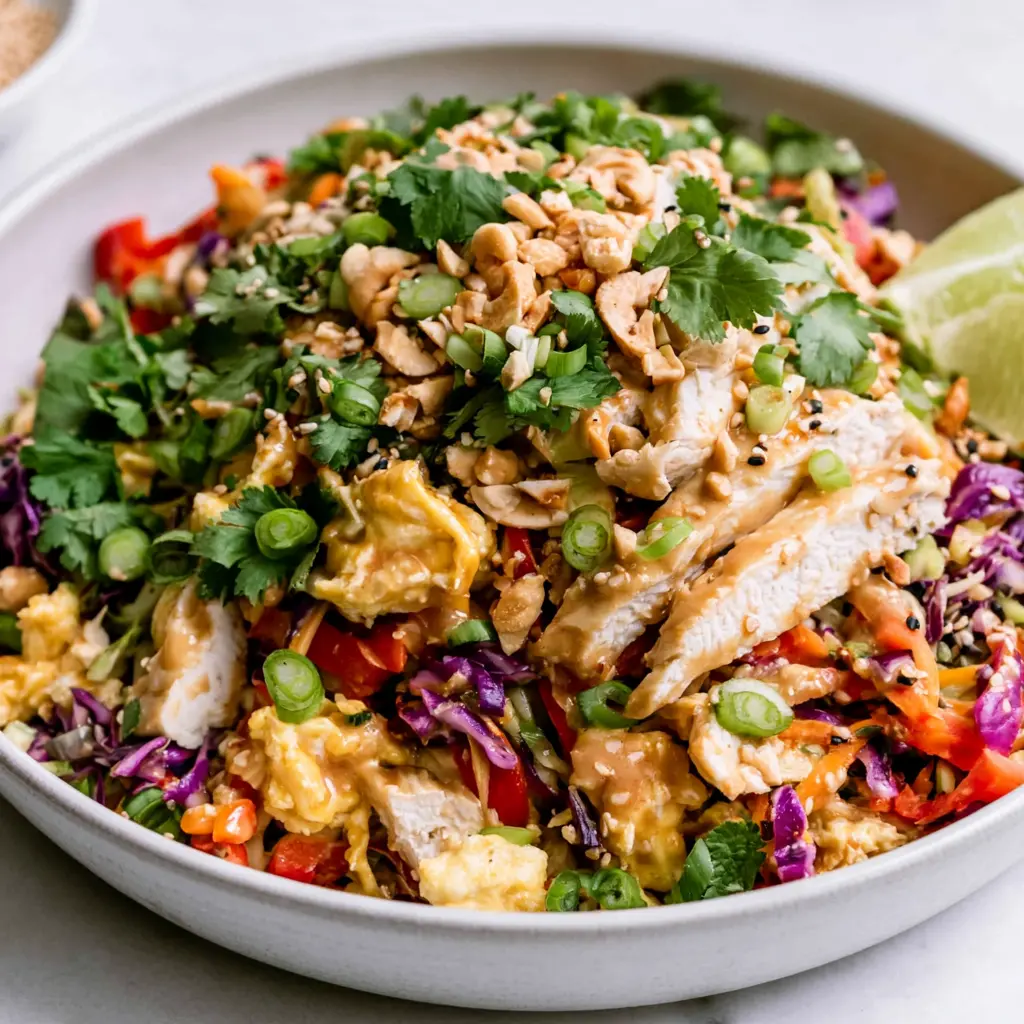
- Serve hot topped with cilantro, chopped cashews, sesame seeds, extra sliced green onion, and a squeeze of fresh lime from the lime wedges on the side.
Nutrition
Notes
Tried this recipe?
Let us know how it was!Chicken Pad Thai FAQs
Source: Learn More About This Dish

3 Responses
I was skeptical about the no-noodle thing, but this was seriously delicious! I used creamy peanut butter instead of almond butter because that’s what I had, and it still came out amazing. The whole family cleaned their plates and I didn’t miss the rice noodles one bit.
Loved how quick this came together for a weeknight dinner! One question—can I swap the coconut aminos for regular soy sauce if I’m not strictly paleo? I have a bottle sitting in the fridge and would love to use it up before buying something new.
Great question! Yes, you can absolutely use soy sauce or tamari in place of the coconut aminos. Just be aware that soy sauce is a bit saltier, so you might want to start with 3 tablespoons and adjust to taste. Enjoy!