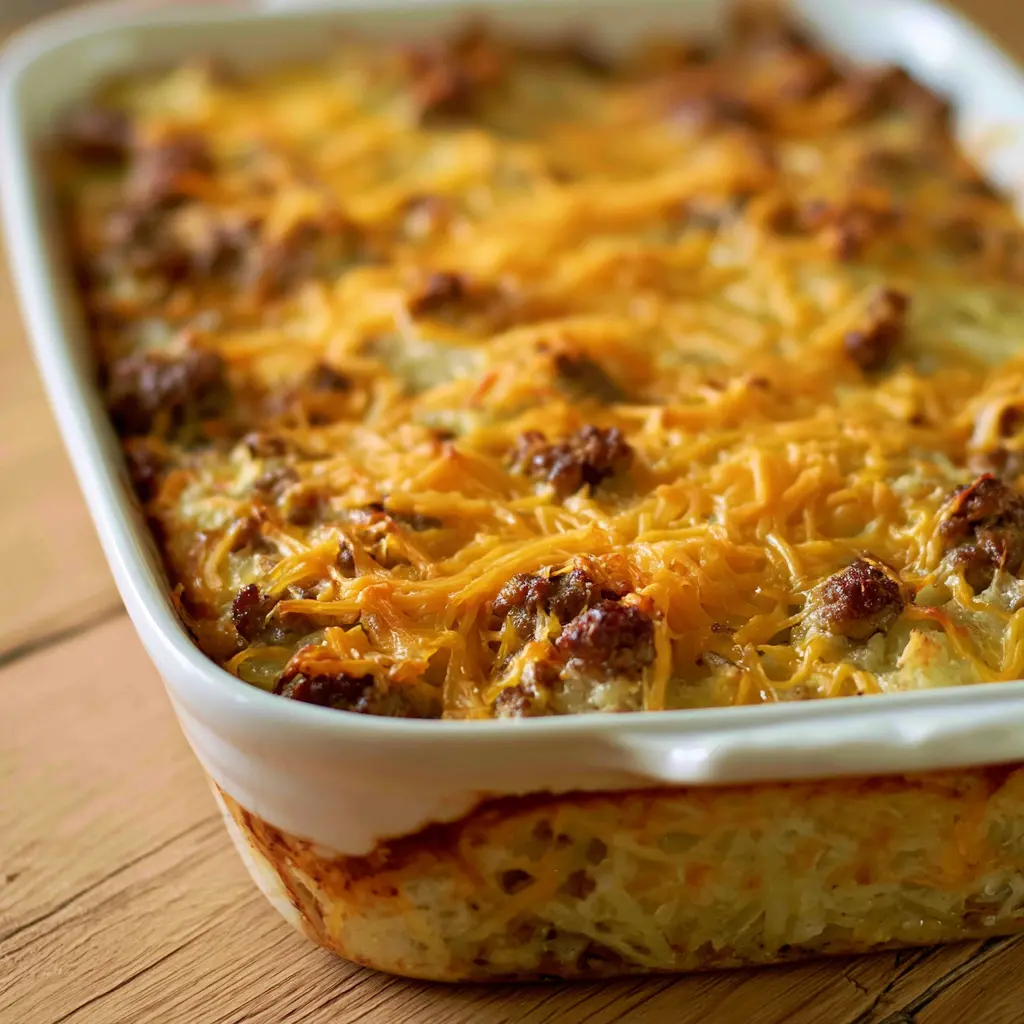
Why You’ll Love This Sausage Hash Brown Breakfast Casserole
Labor Day weekend is here, and if you’ve got people sleeping over, this sausage hash brown breakfast casserole is the single easiest way to feed them all tomorrow morning. You know the scene. House full of guests, coffee brewing, everyone wandering in with bedhead, and somehow it’s your job to put a hot breakfast on the table.
The first time I made a breakfast casserole, it came out soupy and sad. I’m not exaggerating. The eggs were rubbery, the hash browns had turned to mush, and the whole thing tasted like someone forgot to season it. Carol took one bite and gave me that look she gives me when I over-trim a brisket. You know the look.
Then I figured out the simple fix. Actually, a few fixes. And now this sausage hash brown breakfast casserole is the only breakfast recipe I trust when the house is full.
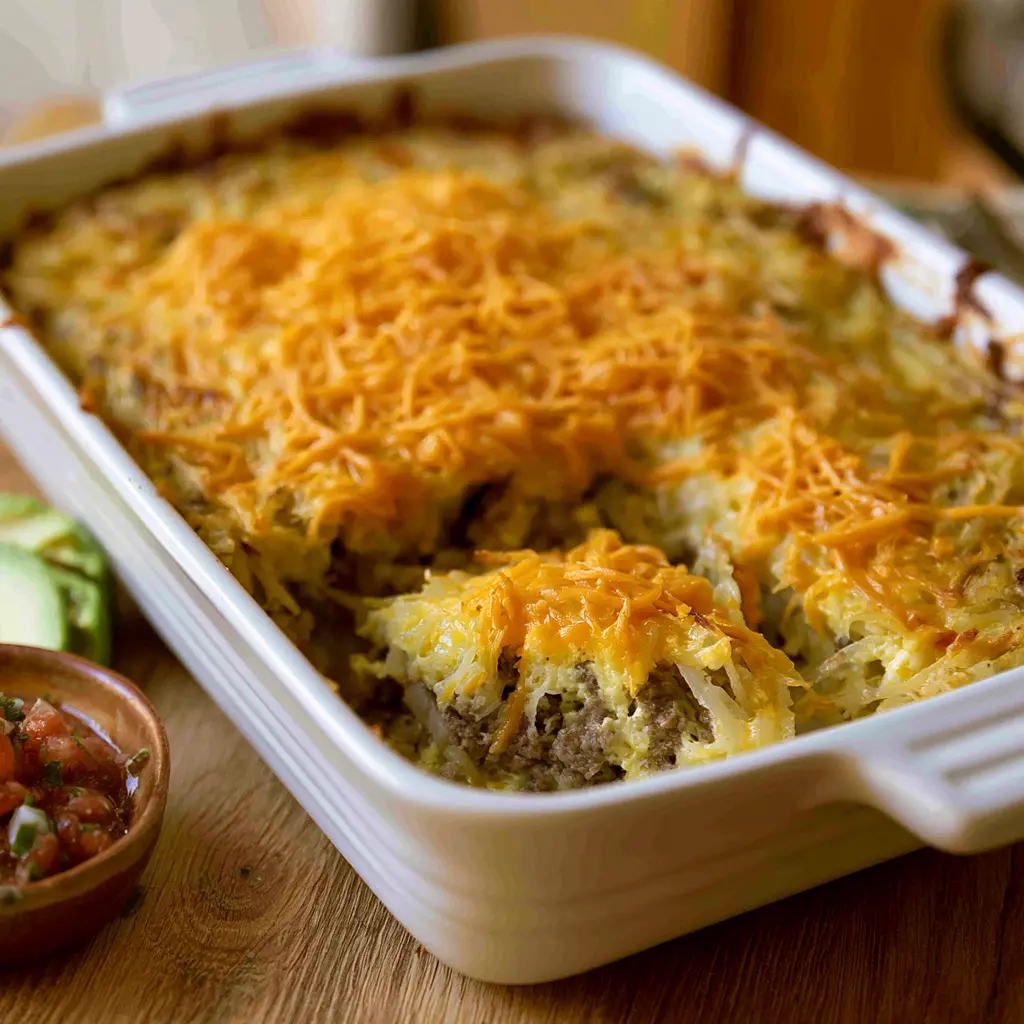
Here’s what you’re getting: crispy-edged hash browns on the bottom, a layer of hot breakfast sausage, melted cheddar cheese running through every bite, and eggs baked into a creamy custard that holds together when you slice it. It feeds ten people. Or four people with incredible leftovers for the week.
Best part? You can put it together tonight, stick it in the fridge, and bake it tomorrow while you sip your coffee. That’s the kind of math I can get behind.
Ingredients and Substitutions
This loaded breakfast casserole runs on nine simple ingredients. Nothing fancy, nothing fussy. You probably already have most of them in your kitchen.
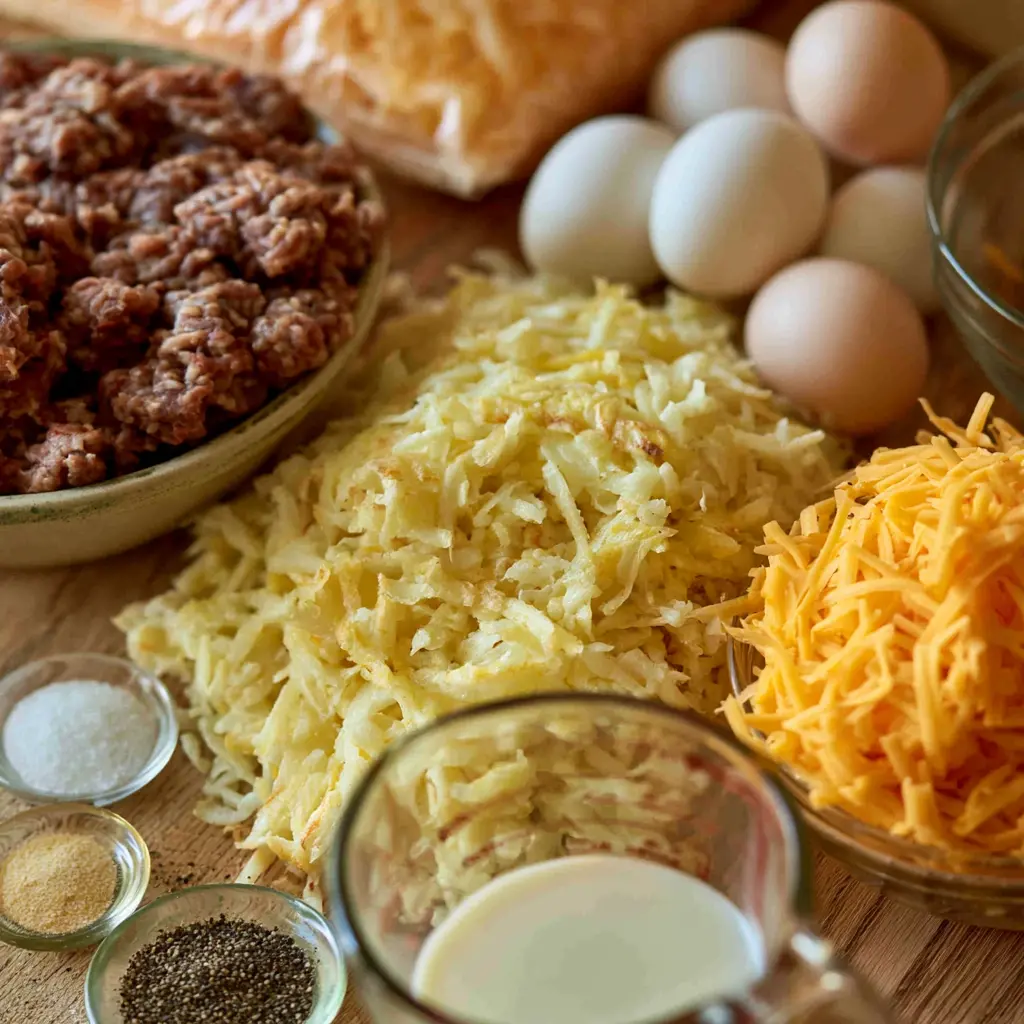
- Hot bulk breakfast sausage (2 lb): The backbone of the whole dish. The “hot” gives it a little kick without scaring off the kids. Turkey sausage works great for a lighter version. Just taste your sausage before you add the full teaspoon of salt, because some brands run saltier than others.
- Frozen shredded hash browns (30 to 32 oz): The bagged ones. No shame in that. The big question everyone asks is frozen vs thawed, and I’ll answer that right now.
- Shredded cheddar cheese (2 cups): Sharp cheddar is my pick. It melts into those little crispy pockets that make people close their eyes and make that noise. Use whatever shredded cheese is in your fridge. This recipe doesn’t judge.
- Large eggs (8) and whole milk (2 cups): Together they make the custard base. Whole milk brings the richness. Almond milk can work for dairy-free folks, though the texture won’t be quite as creamy.
- Salt, black pepper, garlic powder, onion powder: Simple seasonings that let the sausage and cheese do the talking.
On the frozen hash browns question: use them frozen, straight from the bag. Don’t thaw. You’ll brown them in the skillet first, and that’s what keeps this sausage hash brown breakfast casserole from turning into a watery mess. Browning drives off moisture and builds flavor. Five minutes of patience saves you a whole lot of regret.
And if you’re wondering about breakfast sausage links vs ground, go with the bulk ground. It browns easier, crumbles better, and works its way into every single bite instead of hiding in a few spots.
Some versions of this dish lean on cream of mushroom soup for richness. This one doesn’t. The sausage, the cheese, and the egg custard carry the flavor all on their own, and honestly, that’s plenty.
How to Make Sausage Hash Brown Breakfast Casserole
This sausage hash brown breakfast casserole comes together in four stages. None of it is complicated, but each stage has a reason. Let me walk you through it.
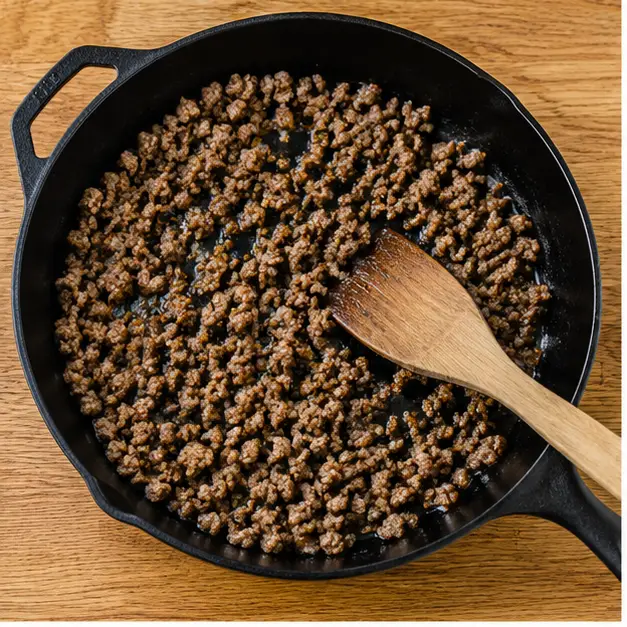
Stage 1: Brown the sausage. Grab a 9×13 baking dish and coat it with nonstick spray. Preheat your oven to 350°F. That’s the sweet spot where eggs set up creamy and the top turns golden without drying out. Then, in a large skillet over medium-high heat, brown the sausage, breaking it into crumbles until no pink remains. Drain off the rendered fat. Don’t skip that. Too much grease turns a breakfast casserole heavy instead of rich. Set the sausage aside and keep that skillet handy.
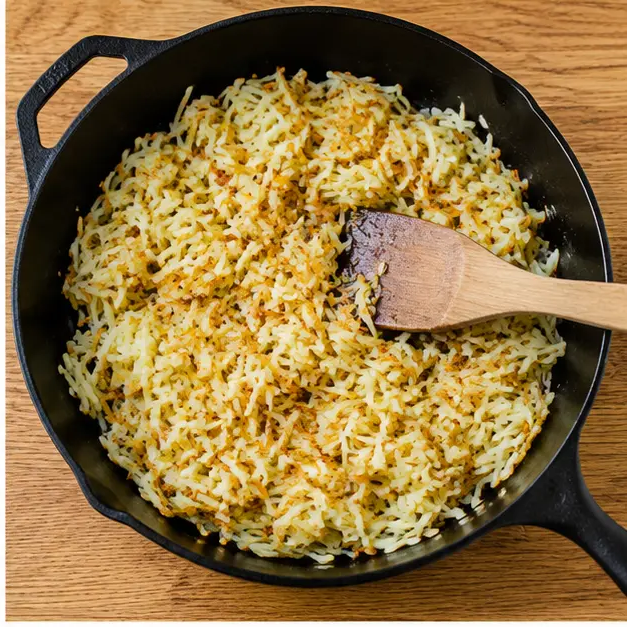
a little oil and a generous pinch of salt. Press them into an even layer and let them sit untouched for a few minutes. I know it’s tempting to stir. Don’t. That’s how the bottom develops those crispy brown bits that make this casserole worth the extra pan. Flip them, press them down again, and give the other side a few minutes too. You’re not cooking the hash browns all the way through. You’re driving off moisture and building flavor. When they start to crisp around the edges, pull them off the heat and set them aside with the sausage.
Stage 3: Make the custard. In a large bowl, crack the eggs and add the milk, salt, black pepper, garlic powder, and onion powder. Whisk until the yolks are completely broken up and the mixture turns one uniform pale yellow. You’re not trying to add air here. You just want the whites and yolks to stop fighting each other.
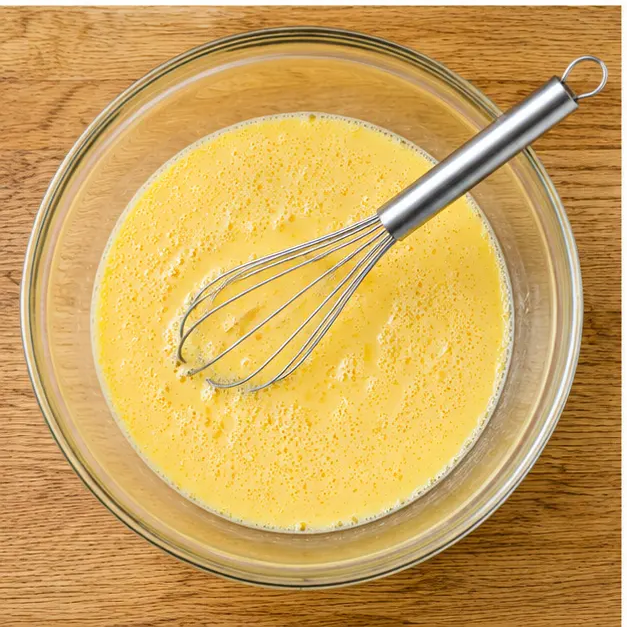
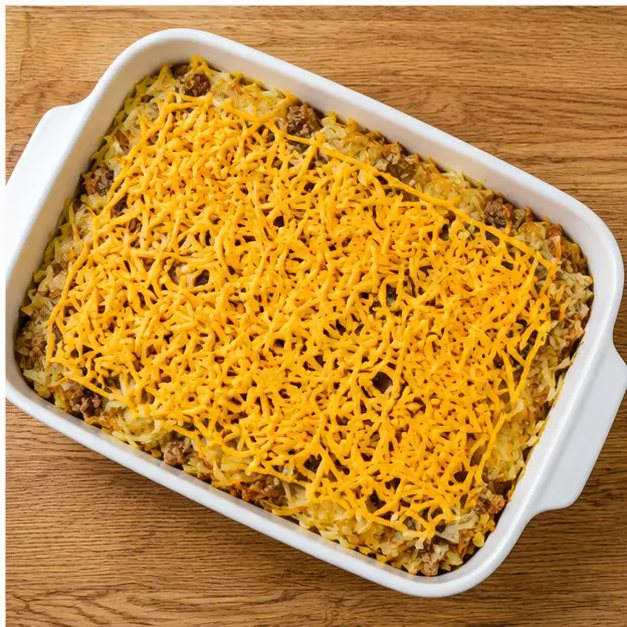
Stage 4: Assemble and bake. Spread the browned hash browns across the bottom of your prepared baking dish. Don’t pack them down. Leave a little looseness so the custard can find its way down through the layers. Scatter the sausage evenly over the hash browns, then sprinkle about a cup and a half of the cheese on top. Slowly pour the egg mixture over everything, giving the dish a gentle shake or two so it settles into the corners. Finish with the remaining half cup of cheese.
Slide the dish into the oven and bake for 40 to 50 minutes, until the edges are golden and pulling away from the sides, and the center has just the slightest wobble. If the top is browning too fast but the center still looks loose, tent the dish with foil for the last 15 minutes. And here’s the step everyone wants to skip: let the casserole rest for at least 10 minutes before you slice into it. The custard keeps setting while it rests. Cut into it too soon and you’ll get a delicious mess instead of clean squares.
That’s it. Crispy edges, sausage in every single bite, cheese melted into all the right pockets, and eggs that are creamy instead of rubbery. This sausage hash brown breakfast casserole has carried me through more holiday weekends than I can count.
Make-Ahead, Storage, and Reheating
This is where the sausage hash brown breakfast casserole really earns its keep. You can assemble the whole thing the night before, cover it, and park it in the fridge. Come morning, all you have to do is pull it out, preheat the oven, and go back to your coffee while it bakes.
If you’re baking straight from the fridge, know this: it needs more time. Plan on an extra 10 to 15 minutes in the oven, and if the top starts getting too dark while the center lags behind, tent it with foil. Even better set it on the counter 30 minutes before baking. Not to bring it fully to room temperature, which takes hours, but to take the chill off the dish so it heats more evenly.
| Situation | What to Do | Time |
|---|---|---|
| Bake immediately | Assemble and bake right away | 40–50 min at 350°F |
| Make ahead, refrigerated | Assemble, cover, refrigerate up to 48 hours | 50–65 min at 350°F |
| Refrigerated leftovers | Store in an airtight container | Use within 4–5 days |
| Frozen whole casserole | Thaw overnight in the fridge | Reheat covered, 30–40 min at 350°F |
| Frozen individual slices | Microwave, or warm in a covered skillet | 2–4 min microwave; 5–6 min skillet |
Can You Freeze This Breakfast Casserole?
Yes, and you absolutely should. I’ve frozen this sausage hash brown breakfast casserole more times than I can count, and those frozen squares have rescued plenty of rushed weekday mornings.
The trick is freezing it in portions, not as one giant slab. After the casserole has baked and cooled, slice it into squares, lay them on a parchment-lined baking sheet, and pop the whole sheet into the freezer. Once the squares are solid, transfer them to a freezer bag or container with a piece of parchment between each slice so they don’t stick together.
To reheat, grab a square or two and microwave until hot. If you want those crispy edges back, warm them in a skillet over medium-low heat, covered, for a few minutes per side. For a whole frozen casserole, thaw it in the refrigerator overnight, then reheat covered with foil at 350°F for 30 to 40 minutes until it’s warm all the way through.
Can you freeze the casserole before baking? Technically yes, but I’ll be honest with you the hash browns turn mealy. Freeze after baking. Future-you will be grateful.
Variations and Substitutions
This loaded breakfast casserole is one of the most forgiving recipes I own. Here’s where you can play around without breaking anything.
Cheese Swaps
Sharp cheddar is my default, but pepper jack adds a nice kick, and smoked gouda gives the whole dish a deeper, almost nutty flavor. Whatever cheese you choose, save a little for the top so you get that golden, slightly blistered cheese crust.
Vegetables
Throw in whatever is hanging out in your crisper. Bell peppers, spinach, caramelized onions, and green onions all work beautifully. But there’s one rule: if it’s watery, cook it first. Mushrooms especially. Raw mushrooms release all their moisture into the custard and leave you with soggy pockets. Sauté them briefly before adding. Same goes for spinach wilt it and squeeze it dry. Nobody wants a watery breakfast casserole.
The Milk Question
I’ve seen a lot of versions of this dish, and the number one complaint in the comments section is always the same: it came out soupy. The culprit is almost always too much milk for the situation. The full 2 cups is correct when you’re using all 8 eggs and baking the casserole properly. But if you’re nervous, or if you’re adding extra vegetables, drop the milk to 1½ cups, or use 1 cup of milk plus ½ cup of half-and-half. That combination sets faster, tastes richer, and forgives almost everything.
Common Mistakes and Troubleshooting
Over the years, I’ve read every comment and every late-night email from someone whose breakfast casserole went sideways. Here are the fixes for the problems that actually happen.
Why Is My Casserole Soupy?
Three culprits, in order of likelihood:
- Too much milk. If your baking dish is packed full, or you added extra vegetables, the custard can overwhelm the hash browns. Reduce the milk to 1½ cups or use the half-and-half combo above.
- Hash browns that never got browned. The skillet step exists specifically to drive moisture out of those frozen shreds. Skip it, and the hash browns release water while they bake. You get a puddle instead of a casserole.
- Watery vegetables. Raw mushrooms, zucchini, and unwilted spinach all leak. Cook them first. This isn’t optional.
How Do I Know When It’s Done?
Your thermometer is the safest answer. The center should register 160°F when you pull it out, and the edges should be golden and pulling slightly away from the sides. The center will have the faintest wobble that’s normal. It finishes setting during the rest.
High-Altitude Adjustments
If you live above roughly 3,500 feet, eggs set more slowly and liquids evaporate faster. One reader at 7,300 feet found she needed an extra 10 to 15 minutes plus a foil tent. Start checking at the 45-minute mark and go from there.
Can I Skip Browning the Hash Browns?
You can, but the texture won’t be the same, and you’ll be rolling the dice on a watery casserole. If you’re truly in a rush, at least thaw the hash browns and squeeze them dry in a clean kitchen towel before adding them to the dish. It’s not as good as browning, but it beats a puddle.
The Science Behind This Breakfast Casserole
You didn’t ask for a science lesson, but you’re getting one anyway, because knowing why this works makes the whole thing less fragile.
The egg-to-milk ratio. Eight eggs to 2 cups of milk is a custard ratio that’s been tested by basically every brunch cook in existence. Eggs coagulate around 160°F, and the fat in whole milk slows that coagulation just enough to keep the result creamy instead of rubbery. Too much milk and the custard never sets properly. Too little and you’re eating an egg pancake.
Why frozen hash browns turn to mush. Ice crystals puncture the potato cells as they freeze. When the hash browns thaw, that water has nowhere to go. Putting them into a hot skillet while still frozen flash-evaporates the moisture before it can soak into the dish. It’s also the secret to the crispy edges. The bits of potato that make contact with the hot pan turn golden and crunchy, and they stay crisp even after the custard sets around them.
Why vegetables need to be pre-cooked. It’s not just about flavor, though that helps. It’s about water. Raw vegetables are mostly water by weight, and when that water hits a hot oven, it leaves the vegetable and enters your casserole. Cooking vegetables first evaporates the water and concentrates the flavor, so you get all the taste and none of the puddle.
Frequently Asked Questions
Can I make this casserole the night before?
Yes. Assemble the whole thing, cover it tightly with plastic wrap or foil, and refrigerate for up to 48 hours. When you’re ready to bake, add an extra 10 to 15 minutes to the baking time. For best results, pull it out of the fridge 30 minutes before baking.
Can I freeze the sausage hash brown breakfast casserole?
Yes. Bake it first, let it cool completely, slice it into portions, and freeze with parchment paper between the slices. It will keep for up to 3 months. Thaw overnight in the refrigerator and reheat in the microwave, a skillet, or the oven.
Can I use almond milk instead of whole milk?
You can, but use unsweetened almond milk, and go in knowing the texture won’t be quite as rich or creamy. Several cooks have tested non-dairy milks in this exact formula. Oat milk performs the closest to dairy, and coconut milk works but adds its own flavor. If you’re feeding guests who aren’t dairy-free, stick with the whole milk.
Do I need to thaw the frozen hash browns first?
No. Use them straight from the freezer. That’s the whole trick. Thawed hash browns hold extra water and give you a mushier casserole.
Can I use egg whites or an egg substitute?
It’ll work in a pinch, but you’ll lose some richness and the texture will be firmer, almost spongy. If you go that route, add a tablespoon of oil or melted butter for every four eggs to make up for the missing fat.
How long should the casserole rest before slicing?
At least 10 minutes. The custard is still setting when the dish comes out of the oven. Slice it immediately and you’ll have a delicious mess instead of clean squares.
What to Serve With It
The sausage hash brown breakfast casserole is basically a full breakfast on its own, but if you’re feeding a crowd, a few extras go a long way.
- A big bowl of fresh fruit or a simple fruit salad to cut through all that cheesy richness.
- Avocado slices on top, if you’re one of those people who puts avocado on everything. I am. No judgment here.
- A handful of arugula dressed with lemon and olive oil on the side. Sounds fancy, takes thirty seconds, and makes the whole plate feel lighter.
- Hot sauce. Always hot sauce.
And if you’re camping? Honestly, this casserole is just as good cold out of a cooler, which makes it one of the more useful leftover recipes I know.
Expert Notes & Data Insights
After years of making this sausage hash brown breakfast casserole, and reading through a mountain of reviews from people who’ve tried their own versions, a few patterns stand out. They’re worth keeping in mind before you tie on your apron.
First, the milk ratio. It’s the number one cause of a soupy breakfast casserole, and it’s almost never because the recipe is wrong. It’s because the bake time was cut short, or extra vegetables added moisture, or the baking dish was packed too full. If you want one guaranteed fix, use 1 cup of milk plus ½ cup of half-and-half. That custard sets faster, tastes richer, and forgives almost everything.
Second, browning the hash browns is non-negotiable. I know it’s an extra step and an extra pan to wash. I know the dish looks fine without it. But the difference between crisp, distinct layers and a sad, soggy mass is exactly those six minutes on the stovetop. Every single review that complained about a watery casserole skipped this step. I can’t prove that, but I know it in my bones.
Third, your thermometer is the most reliable test. An instant-read thermometer doesn’t lie: 160°F in the center means it’s done. The wobble test works too, but it takes practice and a certain amount of confidence in your own custard judgment. The thermometer takes the guesswork out of a breakfast you’re probably serving to people you love while you’re still half asleep.
And finally, leftovers are your friend. This is one of those rare casseroles that reheats beautifully, in the microwave or in a skillet, and the frozen squares have rescued more rushed mornings than I can count. Make the extra pan. Freeze the leftovers. Your future self will send you a thank-you note.
Now go brown some sausage and hash browns. Your house is about to smell incredible.