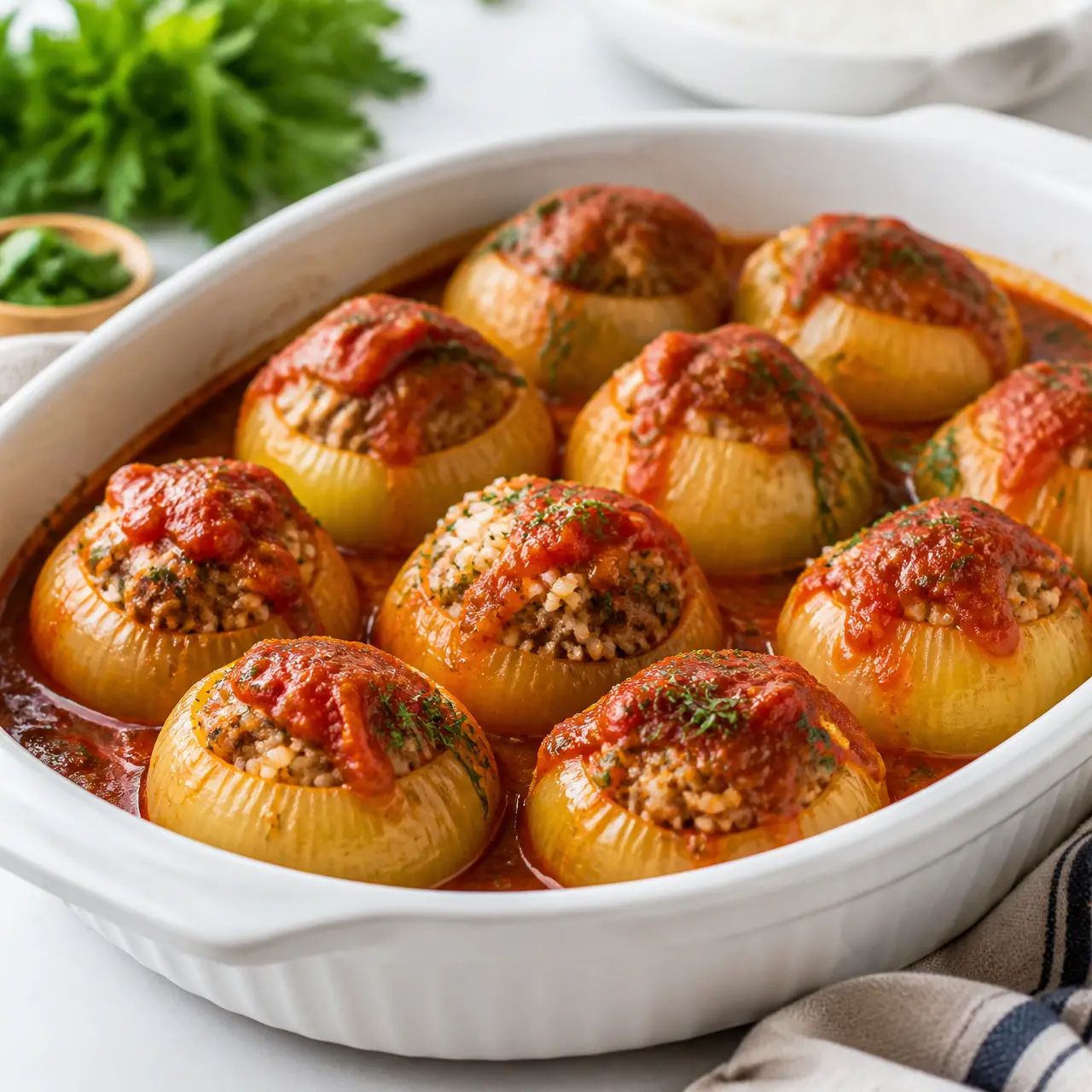
Why You’ll Love These Greek Stuffed Onions
I swear I can still smell that little taverna in Nafplio. Faded blue shutters, a few stray cats under the tables, and this old woman in the back who’d bring out a tray of something golden, glossy, and completely mysterious. Turned out they were Greek stuffed onions. Salantourmasi, she called them. I’ve been chasing that flavor ever since.
The good news? You don’t need a flight to Greece to make these greek stuffed onions at home. They’re extremely doable in a regular kitchen. Tender sweet onion layers wrapped around a savory beef-and-rice filling, braised low and slow in tomato sauce until everything turns silky and jammy.
This is Greek comfort food in its purest form. Humble ingredients, a little patience, and a baking dish that fills the whole house with the smell of summer. That’s the magic of greek stuffed onions.
- Big flavor, short shopping list: onions, beef, rice, herbs, tomato. That’s it.
- Make-ahead friendly: assemble the night before, bake when you’re ready.
- Leftovers get better: the onions keep soaking up that sauce overnight.
If you love gemista or any of the great Greek stuffed vegetables, these will blow your mind. They’re part of the same beautiful Mediterranean family, and they deserve a permanent spot in your rotation.
Ingredients You’ll Need
For the best greek stuffed onions, the shopping list is refreshingly short. You probably already have half of it in your pantry right now.
You’ll want 6 to 8 large sweet yellow onions for the shells, plus one more medium onion chopped fine for the filling. Then 2 pounds of ground beef (80/20 is ideal, it stays juicy), a cup of Arborio rice, 5 or 6 cloves of garlic, and a big bunch of fresh parsley. The Greek herb backbone is dried oregano, dried mint, and dried dill. That combo smells like a sun-baked hillside, I’m telling you.
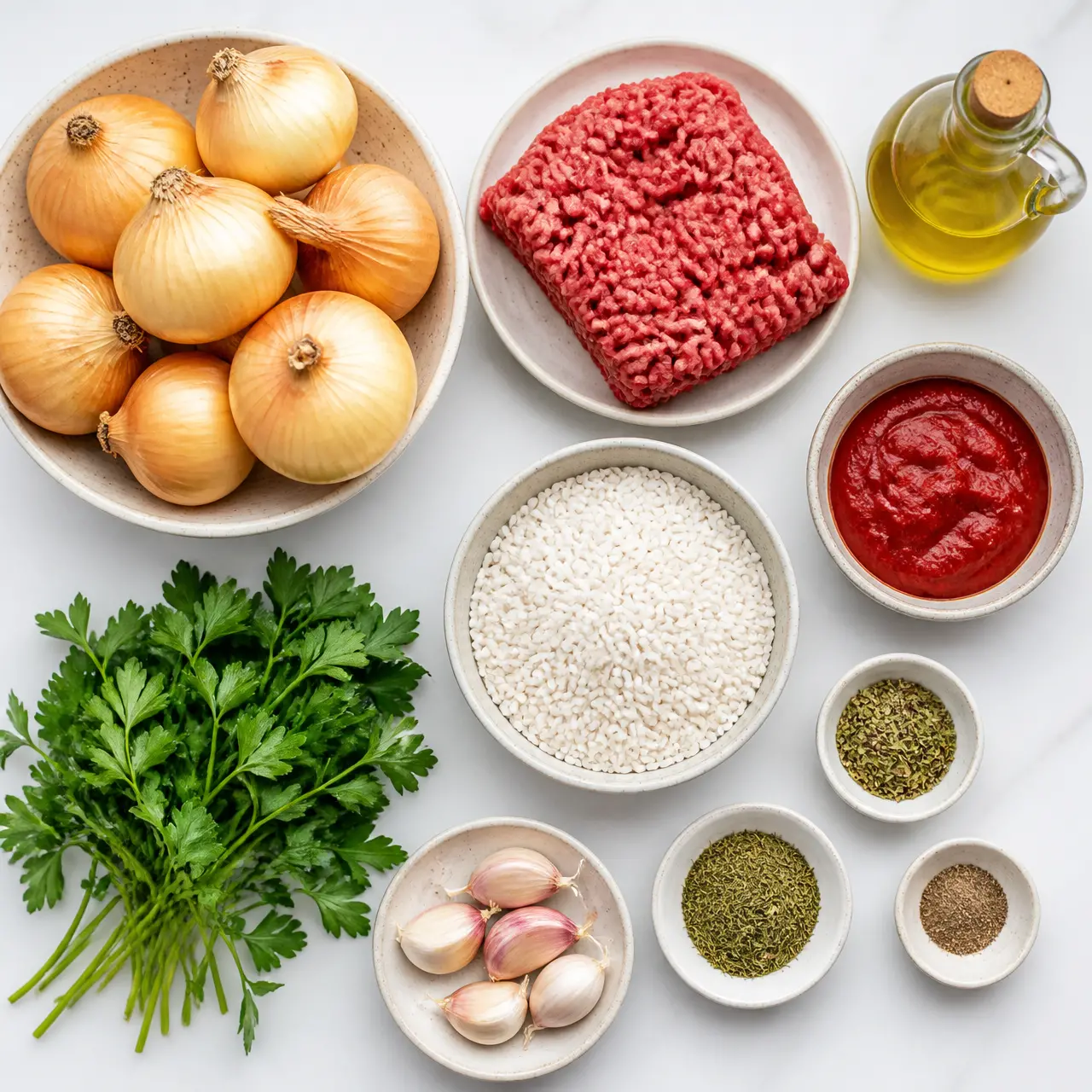
Tomato puree does double duty: 1 cup goes into the meat filling, and 2 cups build the braising sauce. Canned works great, but if August blessed your farmers’ market with ripe tomatoes, puree those instead. Most of this comes from a standard run at Ralphs or Trader Joe’s, plus whatever looks gorgeous at the market this week.
The sauce also gets a few tablespoons of balsamic vinegar for gentle tang, plus reserved onion broth. Nothing fancy, just smart cooking. And for serving, grab a block of feta and some plain yogurt. Trust me on this, more on that later.
How to Make Greek Stuffed Onions
There are four big moments here: parboil, fill, roll, braise. None of them are hard, but the order matters. Here’s the whole dance.
Prep the Onions for Stuffing
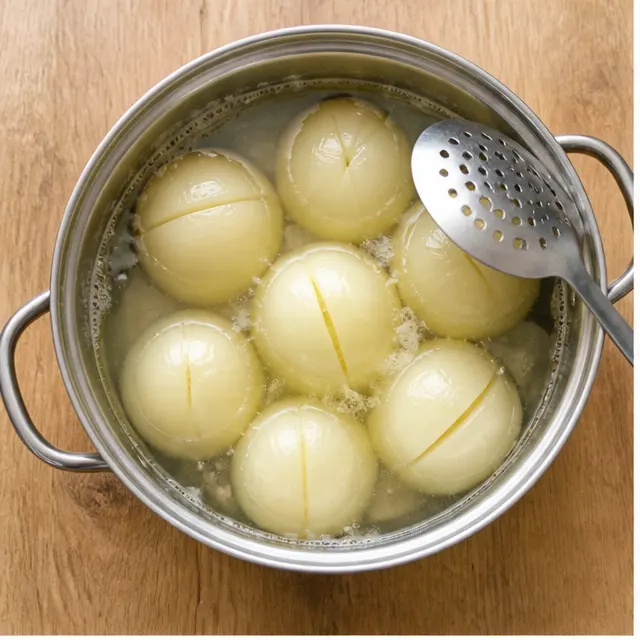
Trim the tops and bottoms, peel, then carefully cut a single slit down one side of each onion, not all the way through. This is the aha trick behind all greek stuffed onions. When you boil them, those layers practically loosen themselves. Drop them in salted boiling water for 10 to 15 minutes until a layer bends without cracking. The hot water tames the onion’s sharp bite and makes every layer pliable.
Save 4 cups of that onion broth before you drain. It’s liquid gold for the sauce. Once the onions are cool enough to handle, gently peel the layers apart. Some will be big, perfect shells, some smaller. Keep them all, they all find a job.
Make the Beef and Rice Filling
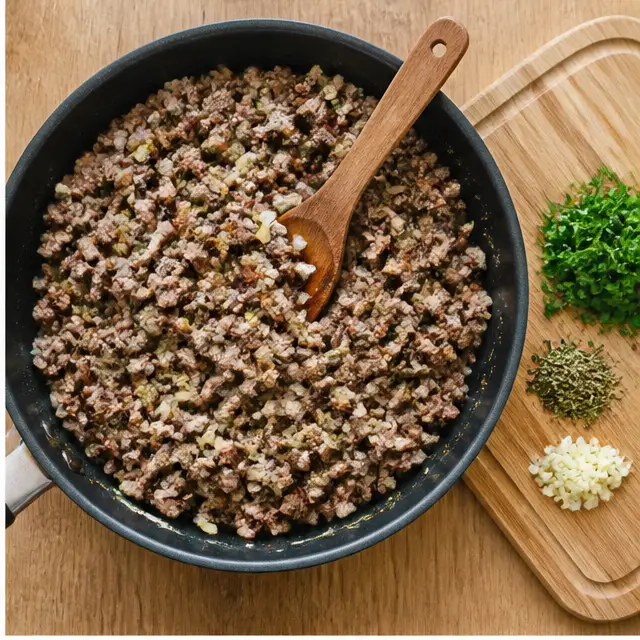
While the onions cool, warm a few tablespoons of olive oil in a skillet and soften that chopped onion. Add the garlic and let it get fragrant, about a minute. Then in goes the ground beef with salt and plenty of cracked black pepper. Listen for that sizzle, it’s the sound of the greek stuffed onions filling coming together.
Once the beef is no longer pink, stir in 1 cup of tomato puree and let it thicken slightly. Add the Arborio rice, half a cup of the reserved broth, and a little more salt. Simmer 6 to 8 minutes until the liquid absorbs, but don’t overcook. The rice keeps softening in the oven. Pull it off the heat and fold in the parsley, oregano, mint, and dill. The mint and dill hit your nose immediately, in the best way.
Roll and Bake the Stuffed Onions
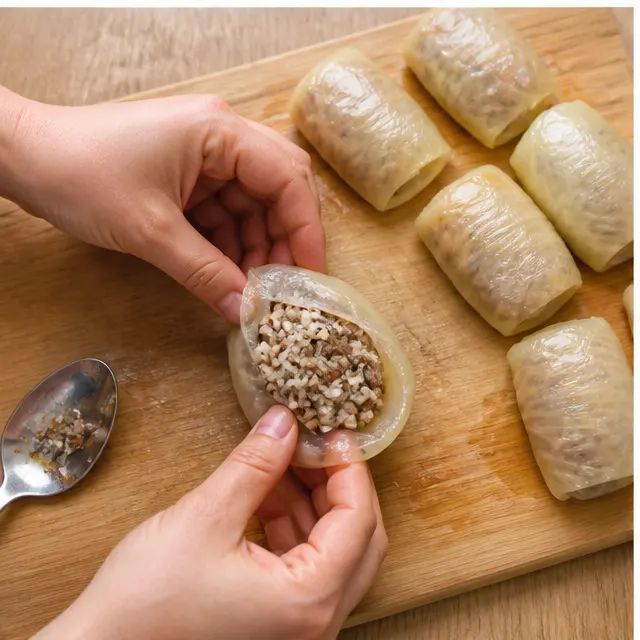
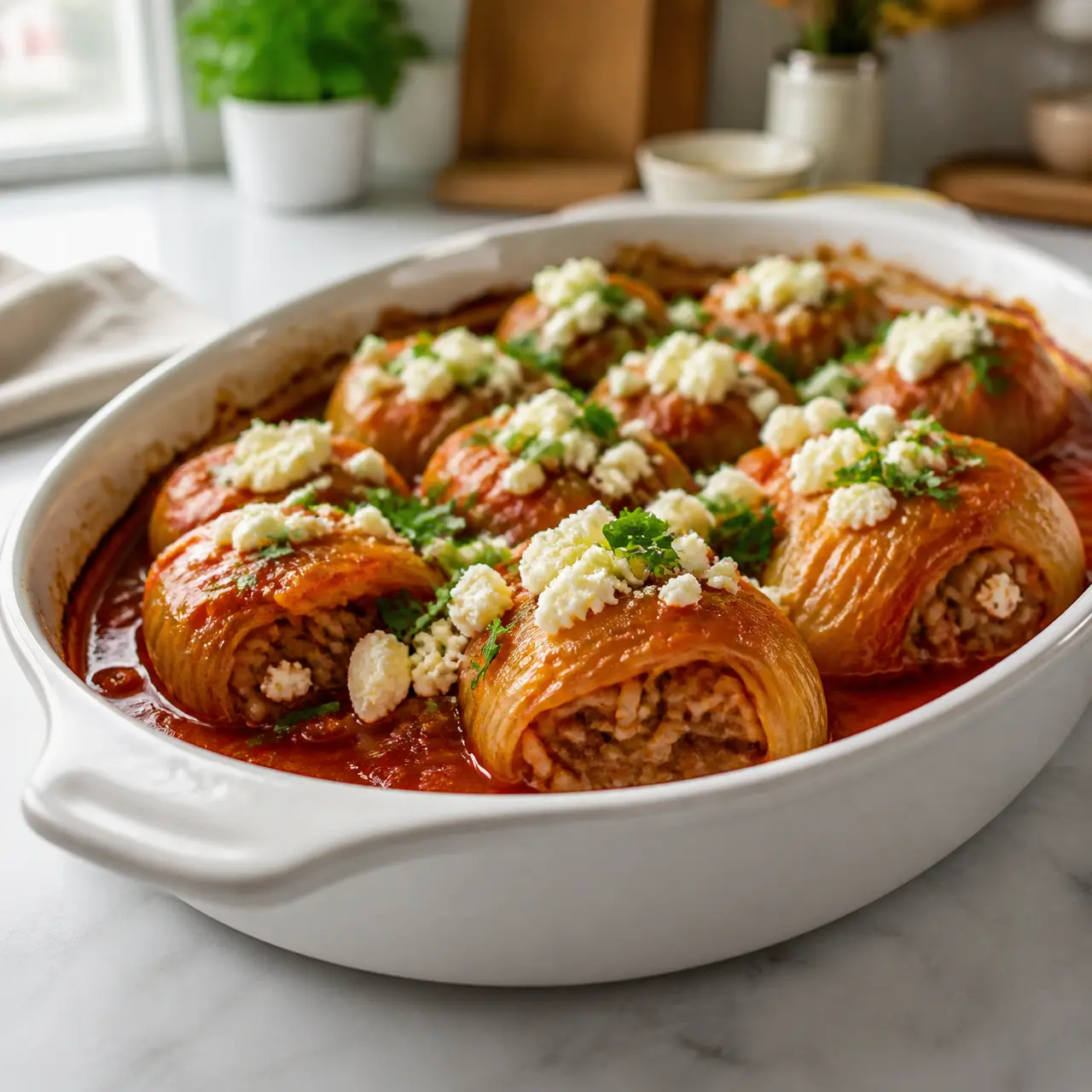
Here’s where rolling greek stuffed onions gets fun. Lay an onion layer flat, put a heaping spoonful of filling in the center, and roll it into a neat little parcel. Don’t overstuff, the rice expands as it cooks. Tuck it seam-side down in a baking dish and repeat. Pack them snugly in a single layer so they hold each other in place. I use a 9×13 ceramic dish for this.
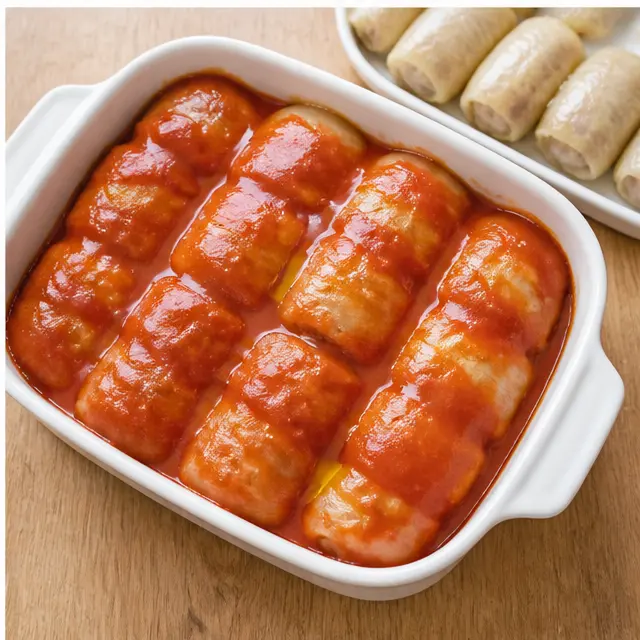
For the sauce, whisk the remaining 2 cups of tomato puree, 2 cups of onion broth, balsamic vinegar, and salt and pepper. Pour it over the rolls, then cover with foil and bake at 400°F for 45 minutes. Uncover and bake another 35 to 45 minutes until the onions are tender and the tops caramelize. Broil for the final 5 minutes and watch it like a hawk. That golden char, with the glossy sheen of olive oil swirling into the deep red sauce, is what makes greek stuffed onions memorable.
Tips for Perfect Stuffed Onions
Let me save you a few headaches. The first time I made these, an onion collapsed on me mid-roll. I ate it anyway. It was perfection. These things happen, and greek stuffed onions are forgiving.
- Buy big onions. Medium ones don’t give layers large enough to wrap the filling completely.
- Score with one slit only. Cutting all the way in half leaves you with tiny pieces that won’t hold anything.
- Patch tears as you go. A broken layer can be patched with a smaller piece, no one will ever know.
- Reserve that broth. Forgetting it is the number one mistake. It makes the sauce taste like the onions themselves.
- Skip short-grain rice. It turns to paste. Stick with Arborio.
Common Mistakes, Solved
❌ Cutting the onion all the way in half: the layers become too small to fill. ✅ Cut a single slit down one side only.
❌ Forgetting to save the onion boiling water: you lose the sauce’s best flavor. ✅ Reserve 4 cups before draining.
❌ Walking away during the final broil: burnt tops happen fast. ✅ Stay close and watch for golden spots.
Best Rice for Greek Stuffed Onions
This recipe calls for Arborio rice, and it’s the right call. Its plump grains soak up the tomato sauce while staying distinct, giving the filling lovely texture. A personal tradeoff: white long-grain rice cooks faster but lacks that nutty bite, and medium-grain brown rice works well if you want whole-grain heft, just expect a softer, denser stuffing. Short-grain rice? Skip it entirely.
What to Serve with Stuffed Onions
These greek stuffed onions are a full meal on their own, but they love company. Crusty bread for soaking up the sauce is non-negotiable in my house. Add a dollop of plain yogurt and a shower of crumbled feta, and you’ve got a plate that tastes like it came from a Greek taverna. A simple green salad with lemon cuts the richness too.
They also make a show-stopping side dish next to grilled chicken or fish. Leftover filling? Roll it into more onions or even a bell pepper or two. Waste nothing. And if you want a meatless version, skip the beef and make vegetarian stuffed onions with extra rice and herbs, just adjust the seasoning to your taste.
Storage and Reheating
These keep beautifully, which makes greek stuffed onions perfect for meal prep Sundays or a slow August weekend project.
Store leftovers in an airtight container in the fridge for up to 3 days. They also freeze well for up to 2 months, sauce and all. To reheat, warm them in a 350°F oven covered with foil until hot, or gently on the stovetop with a splash of water or extra sauce.
Want to get ahead? Assemble the whole dish a day in advance, keep it chilled, and add 10 to 15 minutes to the covered bake time. Your future self will be very grateful.
Here’s the thing about these greek stuffed onions. They’re patient, forgiving, and deeply rewarding. The first batch teaches you, the second becomes your signature. Trust the process, this is how Greeks have been cooking for centuries, and it works. No lamb? Use beef. Short on time? Assemble it ahead. Cook for who you are tonight.
Planning to make these? Save this recipe to your Pinterest board so it’s waiting for you when summer tomatoes call.
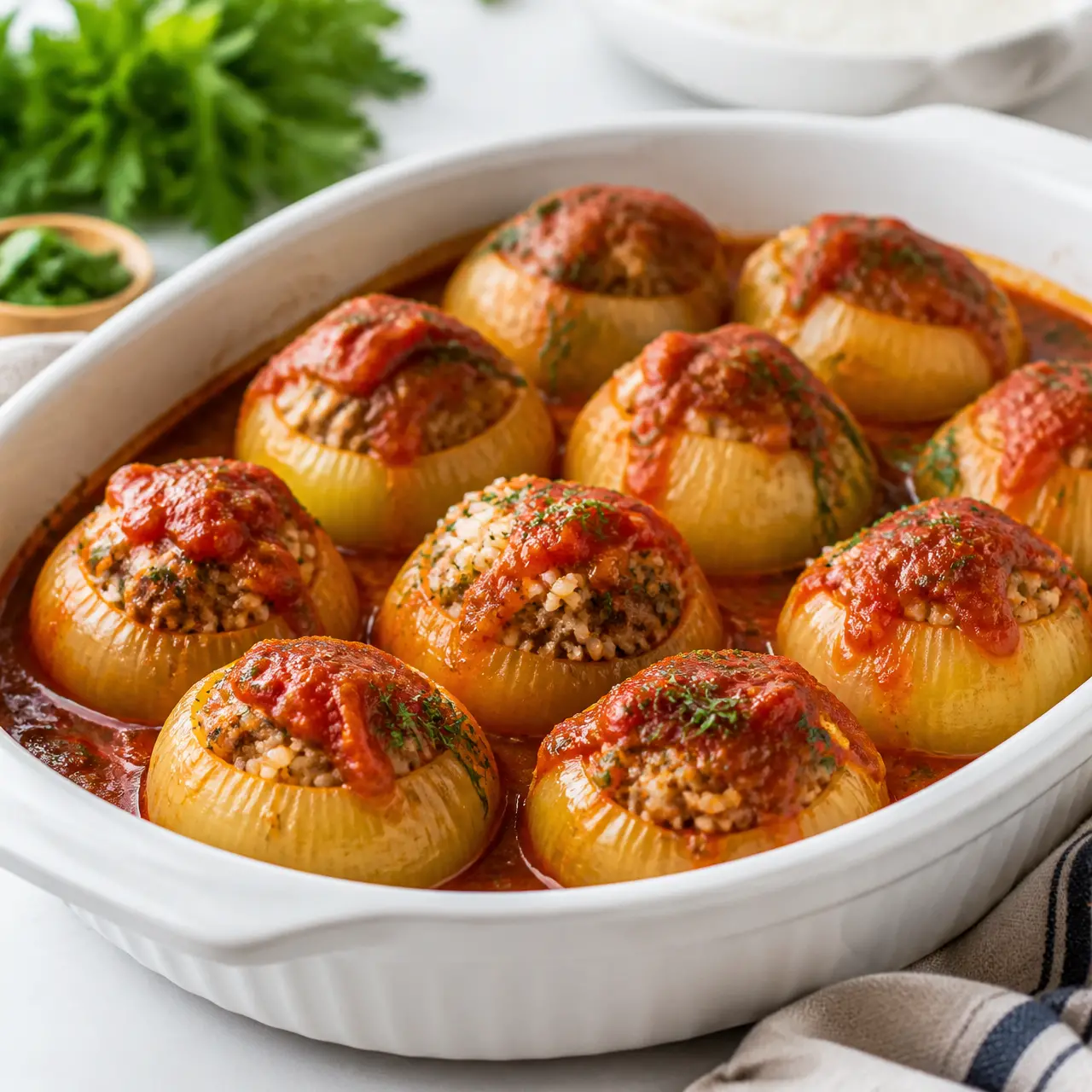
Greek Stuffed Onions with Savory Beef and Rice Filling
Ingredients
Method
- Trim the tops and bottoms off the onions, then peel them. Carefully score a single slit down one side of each onion, being careful not to cut all the way through the layers. Boil the onions in salted water for 10 to 15 minutes until pliable. Reserve 4 cups of the onion broth, then drain and cool the onions. Gently peel apart the layers, keeping each piece intact for stuffing.
- Warm the olive oil in a skillet over medium heat and cook the chopped onion until softened, about 8 minutes. Add the garlic and cook until fragrant. Add the ground beef, season with salt and pepper, and cook until no longer pink. Stir in 1 cup of the tomato puree and cook until slightly thickened. Add the rice, 1/2 cup of the reserved onion broth, and a little extra salt. Simmer for 6 to 8 minutes until the liquid is absorbed. Do not overcook, as the rice will continue to soften in the oven. Remove from heat and fold in the parsley, oregano, mint, and dill. Set aside.
- Place a heaping spoonful of the filling in the center of one onion layer. Roll the onion around the filling to form a neat packet. Repeat with the remaining onion layers and filling.
- Arrange the stuffed onions seam-side down in a baking dish, packing them snugly in a single layer so they stay rolled during baking.
- Whisk together the remaining 2 cups of tomato puree, 2 cups of reserved onion broth, balsamic vinegar, and salt and pepper to taste. Pour the sauce over the stuffed onions. Cover the dish with foil or parchment paper.
- Preheat the oven to 400°F (200°C). Bake the covered dish for 45 minutes, then uncover and bake for an additional 35 to 45 minutes, until the onions are tender and lightly caramelized. Switch the oven to broil for the final 5 minutes to add golden color on top.
- Let the stuffed onions rest for a few minutes before serving. Garnish with extra chopped parsley and serve with crusty bread, yogurt, feta, or a fresh salad on the side.
Nutrition
Notes
Tried this recipe?
Let us know how it was!Frequently Asked Questions
Substitutions and Variations
This is one of those recipes that practically begs to be adapted. I’ve made Greek stuffed onions with whatever needed using up in the fridge, and the template holds up beautifully every single time. Here’s how to make them yours.
Ground Meat Swaps
Ground lamb is the classic Greek alternative to beef, and it brings a rich, slightly gamey depth that pairs gorgeously with the mint and oregano. Ground turkey or chicken work too, just add a splash of olive oil to the pan since they’re leaner and can turn dry. And if you’re feeling fancy, a mix of beef and lamb is genuinely glorious.
Rice Options
Arborio is my default because its plump grains soak up the tomato sauce while staying distinct. Parboiled brown rice is a fantastic whole-grain swap; it cooks evenly, resists clumping, and holds its structure during the long braise. Long-grain white rice gives a lighter, fluffier interior but cooks faster, so keep an eye on it. Skip short-grain rice entirely, it turns to paste.
Tomato Options
Canned tomato puree is the reliable workhorse. Fresh pureed tomatoes are heaven in late summer. And jarred tomato sauce works in a pinch, just taste it first and adjust the salt, since jarred sauces often come seasoned.
Warm Spice Additions
For a slightly different personality, add a teaspoon of ground cumin and a pinch of cinnamon to the filling. It’s not strictly traditional, but it nods to the broader Eastern Mediterranean spice cabinet and smells incredible while baking.
No-Waste Ideas
Got leftover filling? Stuff a bell pepper or two and bake them alongside the onions. Those small inner onion layers that are too tiny to wrap? Toss them into the sauce or caramelize them separately for a sweet, jammy side dish. Waste nothing, this dish rewards thrift.
Expert Notes & Data Insights
Here’s where I get a little nerdy with you, but I promise it’s the good kind. Understanding why these Greek stuffed onions work makes you a better cook the second time around, and it explains the choices buried in the recipe.
The Science of the Single Slit
Scoring each onion with one cut down the side isn’t decorative. It creates a deliberate stress point where the layers naturally separate as they parboil, releasing them without brute force. That’s why you never cut all the way through. The slit lets steam and water penetrate the layers, softening the cell walls and taming the onion’s sharp bite, so you get sweet, pliable shells instead of a crying session.
Why Onion Broth Is Non-Negotiable
That reserved boiling water is loaded with soluble sugars and sulfur compounds that leached out of the onions during parboiling. When you use it in the sauce, it’s essentially onion stock, infusing every roll with deeper sweetness and savory backbone. Water simply can’t do that. This is the low-effort, high-reward trick that separates good stuffed onions from unforgettable ones.
Rice Science, Briefly
Arborio’s high starch content acts as a natural binder, giving the filling a creamy cohesion without turning to mush. If you swap in parboiled brown rice, you’re getting grains that were partially pre-cooked and then dried, which is why they hold their shape beautifully during a long oven braise. That’s also why parboiled brown rice retains more of its minerals and B vitamins than standard white rice. Whole onion layers provide prebiotic fiber and antioxidants like quercetin, the herbs add anti-inflammatory compounds, and the olive oil brings heart-healthy monounsaturated fats. This is Mediterranean longevity cooking, on a plate.
Nutrition Notes
Per serving of two stuffed onion rolls, you’re looking at roughly 385 calories, 22g protein, 29g carbohydrates, and 19g fat, depending on the leanness of your beef and how generous you are with the olive oil. That’s a satisfying, well-balanced meal with a solid protein-to-carb ratio, and it’s naturally gluten-free. Not bad for something that tastes like a holiday.
And listen. The old woman in Nafplio never weighed her ingredients or timed her parboil. She just cooked from feel, the way this recipe wants you to. The first time you make these Greek stuffed onions, you’ll follow the instructions carefully. The second time, you’ll follow your nose. That’s the moment they become yours, and honestly, that’s the whole point. Enjoy every bite, and don’t skimp on the feta.