

Why This Recipe Works
The first time I made butternut squash soup, I spent 15 minutes wrestling a raw squash with a Y-peeler and genuinely questioned my life choices. The squash won that round. I ended up with a watery, vaguely orange liquid that tasted like, well, nothing at all.
I almost gave up on homemade butternut squash soup entirely. But this recipe pulled me back in, and it’s been my go-to ever since.
Here’s why this easy butternut squash soup actually works:
- The stovetop method builds flavor without fuss. You sauté the onion first, then cook the cubed squash right in the pot until the edges soften. That little bit of caramelization does more for depth than you’d ever believe.
- Sage, rosemary, and ginger do the heavy lifting. These three fresh aromatics turn plain squash into something you’d happily pay restaurant prices for. Trust me on this one.
- It’s naturally vegan and gluten-free. No cream, no flour, no dairy at all. This creamy butternut squash soup gets its silky texture purely from blending. It’s the kind of gluten-free creamy soup that doesn’t taste like a compromise.
- It’s forgiving. If you can stir a pot, you can make this. That’s genuinely the hardest part.
And the best part? The whole thing comes together in about 45 minutes, mostly hands-off while the squash simmers. That makes it a perfect weeknight win, even during the busiest back-to-school stretch.
Ingredients and Substitutions
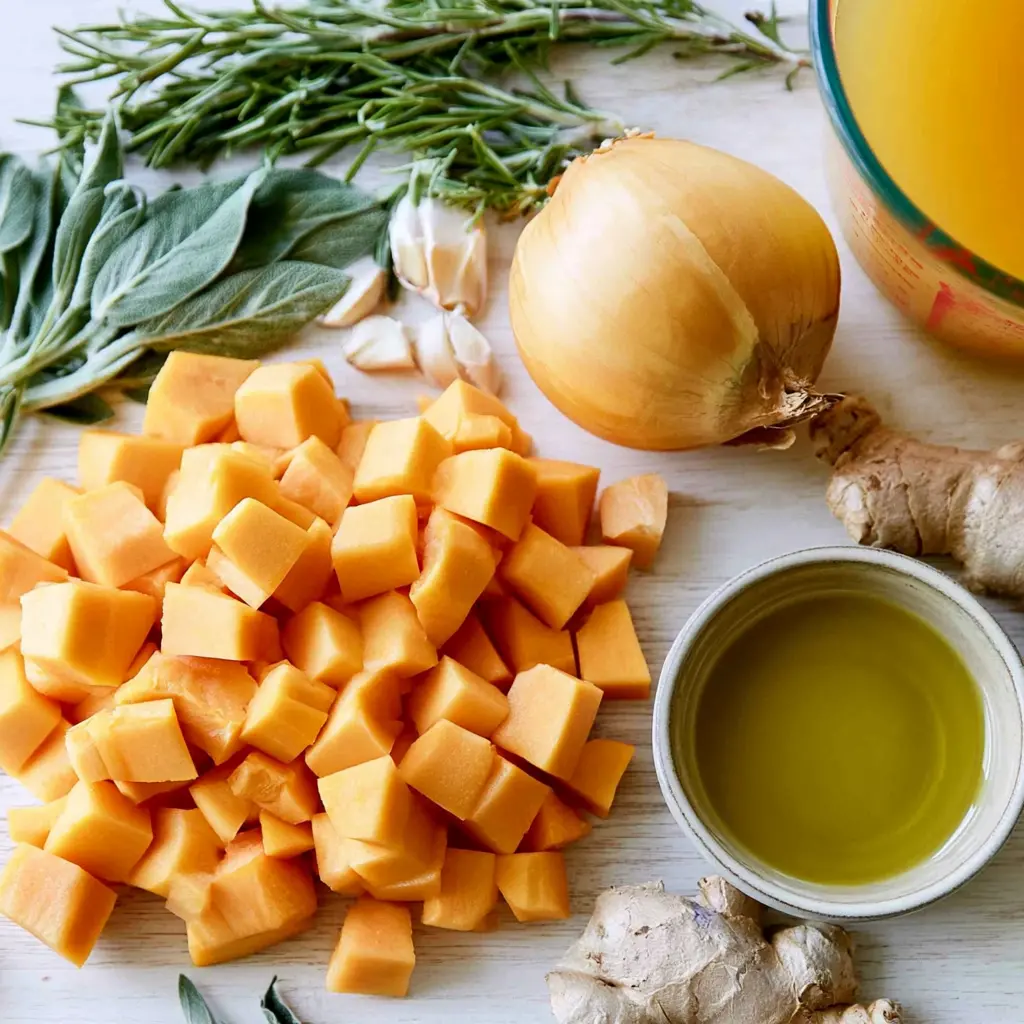
Let’s talk about what goes into this simple butternut squash soup. You only need 10 ingredients, and most of them are probably in your kitchen right now.
- Butternut squash (about 3 pounds): Choose one that feels heavy for its size with matte, beige skin. A 3-pounder yields about 8 cups of cubes. Short on time? Grab a bag of pre-cut butternut squash from the produce section. Grocery stores sell it for exactly this reason, and nobody is checking your peeling credentials.
- Yellow onion and garlic: The classic garlic and onion soup base. They bring sweetness and savory depth.
- Fresh sage and rosemary: This is where the soup gets its cozy, almost woodsy personality. Fresh herbs make a real difference here, so don’t swap in dried if you can avoid it.
- Fresh ginger: Just a teaspoon, grated. It adds a gentle warmth that wakes up the whole pot.
- Vegetable broth: Reach for a low-sodium one so you stay in control of the salt. Vegetable broth keeps this soup plant-based, and it’s my pick for letting the squash shine. Chicken broth works in a pinch if you’re not cooking vegan.
- Extra-virgin olive oil: A fruity California olive oil is lovely here. It’s the only fat in the recipe.
- Sea salt and black pepper: Simple seasonings, adjusted at the very end.
For serving, grab some chopped fresh parsley, toasted pepitas (pumpkin seeds), and crusty sourdough bread. San Francisco style if you can find it. The pepitas add a wonderful crunch against all that velvet.
A quick note on variations: some folks love adding a pinch of cinnamon or nutmeg for warm spice, and a swirl of coconut milk makes it extra lush. A drizzle of maple syrup can balance a less-sweet squash too. All of these are optional add-ons, not part of the base recipe. I say try it as written first, then get creative with batch number two.
How to Make Butternut Squash Soup
This part is genuinely easy. Grab a large soup pot or Dutch oven and follow along. I’ve broken it into four stages so you always know where you are.
Stage 1: Sauté the Onion Base
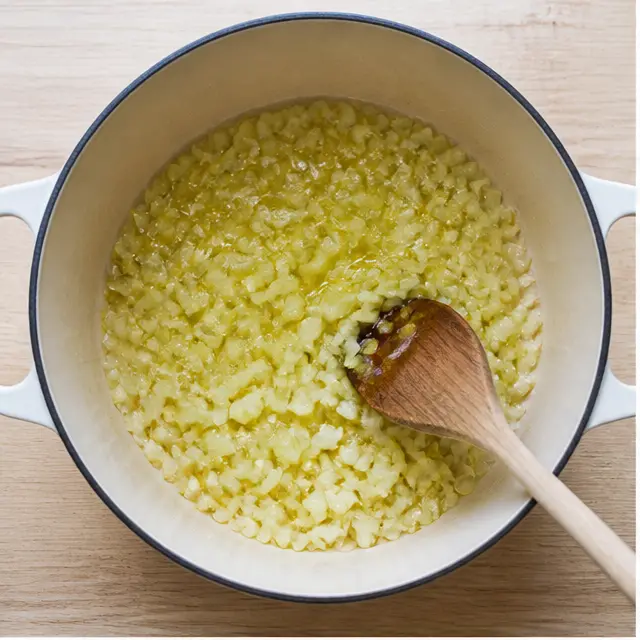
Warm the olive oil over medium heat. Add the finely chopped onion, sea salt, and a few generous grinds of black pepper. Cook, stirring occasionally, until the onion is soft and translucent, about 5 to 8 minutes. Your kitchen should start smelling sweet and savory right about now, which is honestly one of my favorite parts of this whole recipe.
Stage 2: Cook the Squash with Aromatics
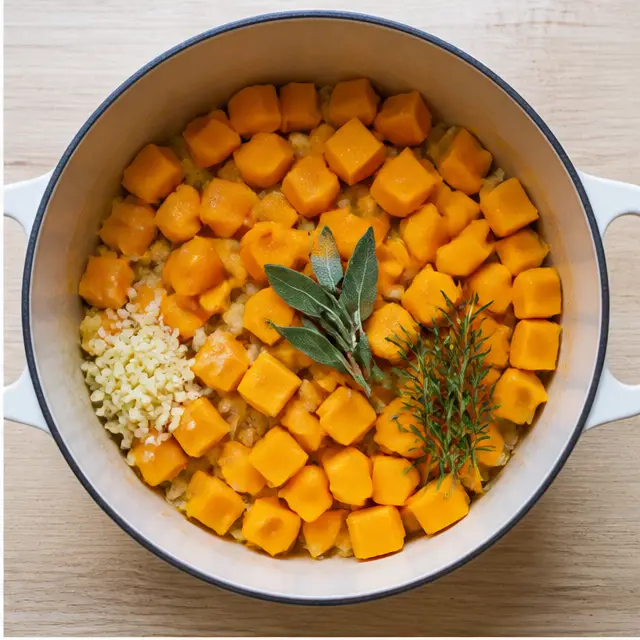
Stir in the cubed butternut squash and cook for 8 to 10 minutes, stirring now and then, until the squash begins to soften at the edges. You’ll hear a soft sizzle as it hits the pot. Then add the minced garlic, chopped sage, rosemary, and grated ginger. Cook for just 30 seconds to a minute, until the whole pot smells incredibly fragrant. Don’t wander off here, garlic burns fast.
Stage 3: Simmer Until Tender
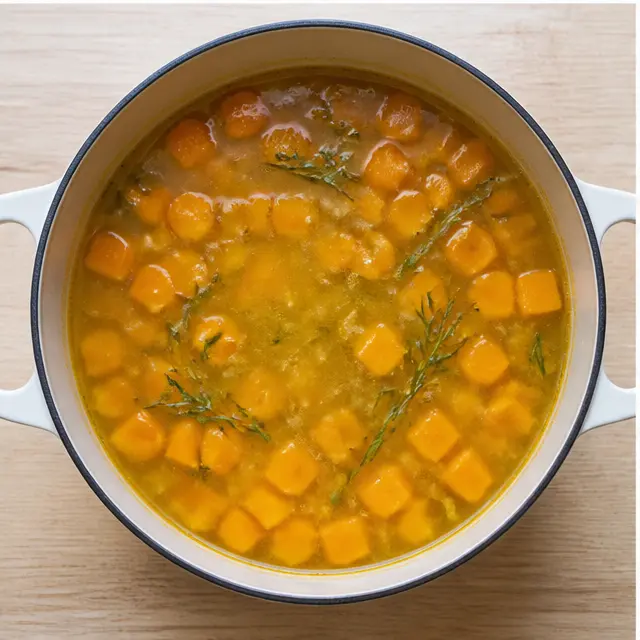
Pour in 3 cups of the vegetable broth. Turn the heat to high and bring it to a boil. Once it’s boiling, cover the pot, drop the heat to a gentle simmer, and let it cook for 20 to 30 minutes. You’ll know it’s ready when a fork slides into a squash cube and it practically falls apart. Watch the color deepen from pale yellow to deep gold as it cooks.
Stage 4: Blend Until Velvety
Here’s the moment of truth. Let the soup cool for about 10 minutes before blending, I promise hot soup splatters are no joke. Then puree it in batches until completely smooth. If it looks too thick, add the remaining cup of broth and blend again. Taste it, adjust the salt and pepper, and you’re done. That first velvety, golden spoonful is worth every single minute.
How to Blend Butternut Soup
Blending is where butternut squash soup goes from good to incredible, so let’s get the technique right.
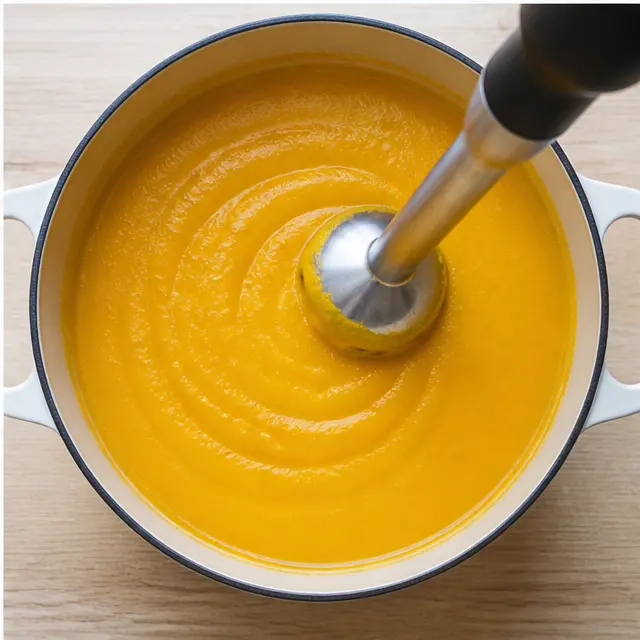
Immersion blender: The no-fuss option. Stick it right in the pot and blend until smooth. One less thing to wash, which I’m always here for. Just use a deep pot to keep splatter contained. A high-powered immersion blender for soup gets you a very creamy result in seconds.
Countertop blender: This gives you the absolute silkiest texture. But you gotta be smart about it:
- Never fill past the maximum fill line. Hot liquid expands and can pop the lid right off. I learned that one the messy way.
- Blend in batches, about 2 to 3 cups at a time.
- Hold the lid down with a folded kitchen towel while you blend.
- Leave the center vent open so steam can escape.
Either method works beautifully. After blending with a countertop blender, pour the soup back into the pot and warm it over medium heat before serving. I reach for my immersion blender on busy weeknights, but when I want that ultra-smooth, restaurant-quality texture, the countertop blender wins every time.
Tips for the Best Butternut Squash Soup
I’ve made this soup more times than I can count, and these little habits make it consistently excellent:
- Buy pre-cut squash when you’re in a hurry. It saves 15 minutes of dangerous peeling, and the soup tastes identical. No shame in the shortcut game.
- Don’t skip the sauté step. Those 8 to 10 minutes of cooking the squash before adding liquid build flavor you just can’t get any other way.
- Use low-sodium vegetable broth. You can always add salt at the end, but you can’t take it out.
- Taste before you serve. Squash sweetness varies from one fruit to the next, so trust your palate over the written recipe.
- Toast the pepitas. A quick dry skillet toast until they start to pop adds a nutty finish that’s hard to resist.
One more tip: if the soup feels too thick, thin it with extra broth or a splash of water. If it’s too thin, simmer it uncovered for a few minutes to reduce. Both fixes are painless, so don’t stress. This recipe also adapts well to a slow cooker or Instant Pot if that’s your thing, but the stovetop method gives you the most control over flavor.
Storage and Freezing
This might be my favorite thing about this butternut squash soup. It’s a meal prep hero and one of the best make-ahead soup recipes I know.
Refrigerator: Store leftovers in a sealed container for up to 4 days. Let the soup cool to room temperature first, don’t put hot soup straight into the fridge.
Freezer: This soup freezes beautifully for up to 3 months. Portion it into freezer-safe containers or zip-top bags, leaving a little room for expansion. Lay the bags flat so they stack nicely. It’s the ultimate freezer-friendly soup batch.
Reheating: Thaw overnight in the fridge, then warm gently on the stove with a splash of broth or water to bring back that silky texture. Or do what I do: reheat single portions straight from frozen in a small pot over low heat. It takes a few extra minutes, but it’s worth it on a busy day.

And if it’s still hot outside where you are? Make a double batch anyway and stash it in the freezer. When the first cool October evening rolls around, future-you will be incredibly grateful. That’s the beauty of this fall comfort food recipe: it’s always ready when you are.
Serving Suggestions
This creamy butternut squash soup is beautiful on its own, but the right toppings take it over the top.
- Toasted pepitas: Crunchy, nutty, and pretty. Non-negotiable in my house.
- Chopped fresh parsley: A bright, fresh contrast to the rich, velvety soup.
- Crusty sourdough bread: Perfect for dipping into every last spoonful.
- A final drizzle of olive oil: Adds richness and a lovely shine.
It works as a starter for a fancy dinner, a main course with a simple fall salad, or even as a Thanksgiving appetizer served in little mugs. For a heartier meal, blend in a can of drained cannellini beans for protein, though I love the pure squash flavor as-is. And if you want a roasted butternut squash soup instead, you can roast the cubes at 425°F for 25 minutes before adding them to the pot. Different method, equally delicious.
This is the kind of recipe that makes people say “wait, you made this?” And honestly, that never gets old.
Love it? Pin this butternut squash soup for later so it’s waiting in your back pocket when the craving hits. Save it now, thank yourself in October.
There you have it: a velvety, vegan butternut squash soup that’s easy enough for a Tuesday and impressive enough for company. When you make it, and I know you will, come back and tell me how it went. I want the full report.

Velvety Vegan Butternut Squash Soup
Ingredients
Method
- Warm the olive oil in a large soup pot or Dutch oven over medium heat. Add the onion, salt, and a few generous grinds of black pepper. Cook, stirring occasionally, until the onion is soft and translucent, 5 to 8 minutes.
- Stir in the cubed butternut squash and cook for 8 to 10 minutes, stirring occasionally, until the squash begins to soften. Add the garlic, sage, rosemary, and ginger and cook for 30 seconds to 1 minute, until fragrant. Pour in 3 cups of the broth, raise the heat to high, and bring to a boil. Once boiling, cover the pot, reduce the heat to a gentle simmer, and cook until the squash is completely tender, 20 to 30 minutes.
- Let the soup cool slightly, then puree it in batches in a blender until completely smooth. If the soup looks too thick, add the remaining cup of broth and blend again. Taste and adjust the seasoning with salt and pepper, then serve warm with parsley, pepitas, and sourdough bread.
Nutrition
Notes
Tried this recipe?
Let us know how it was!Frequently Asked Questions
Source: Learn More About This Dish