Why This Classic Greek Salad Belongs on Your Table
The last cookout of summer is here, and you need a side dish. Not the sad grocery-store pasta salad. Not the coleslaw that’s been sweating in the sun. You need a classic Greek salad.
The real kind, the one they serve in Greece. Horiatiki, they call it. Village salad. And here’s the thing nobody tells you: the best version has no lettuce. There, I said it.
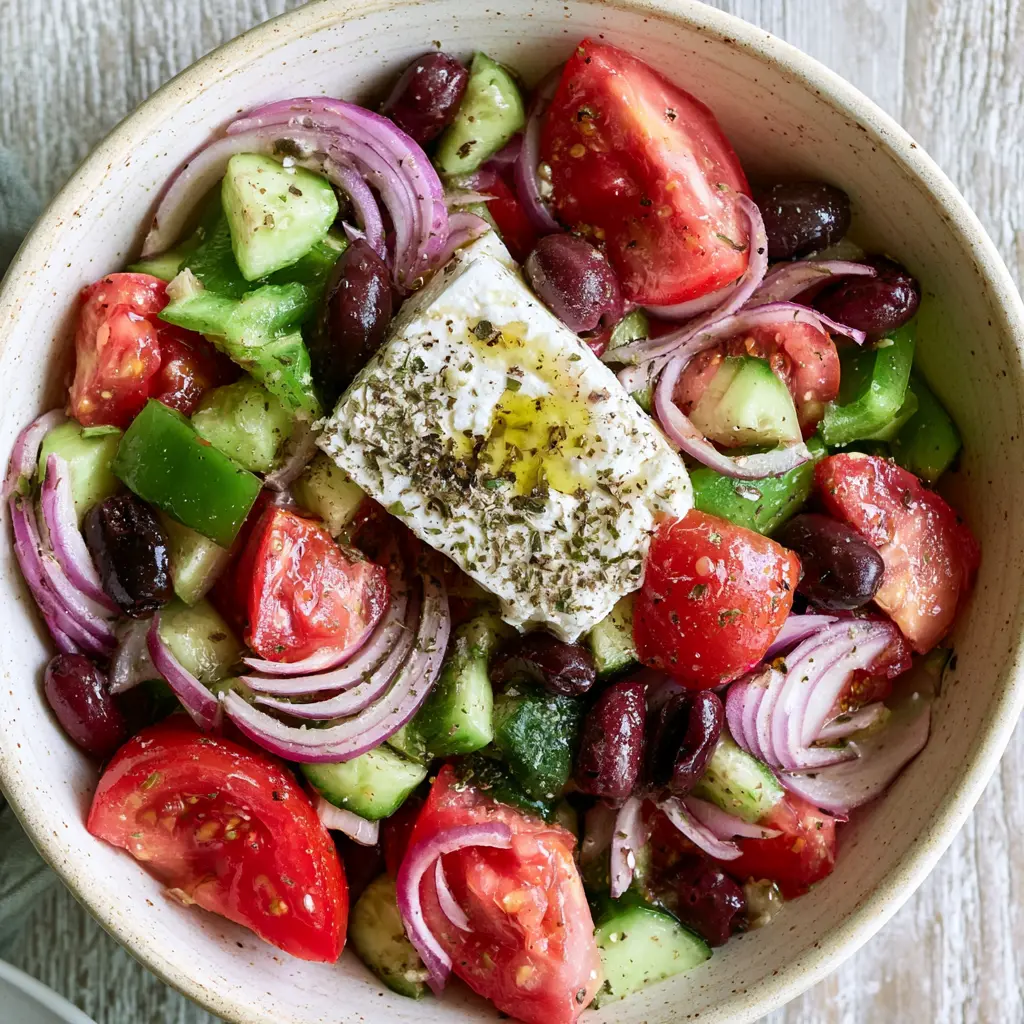
I had my first authentic Greek salad on a tiny island in the Aegean, at a taverna with crooked tables and cats begging under every one. The tomatoes were still warm from the sun. The feta sat on top in one glorious slab. Olive oil pooled at the bottom of the bowl like liquid gold. I’ve been chasing that exact bowl ever since.
This is that bowl. And it’s embarrassingly easy to pull off at home:
- 15 minutes, one cutting board. No cooking, no fuss.
- No mayo, no wilting. It holds up in the sun at any cookout.
- Rustic cut vegetables. Chunky, honest, full of flavor.
- A thick-cut feta slab on top. It’s the centerpiece, not an afterthought.
Trust me on this. Make it once and it becomes your summer signature.
Classic Greek Salad Ingredients
This is where most Greek salads go sideways. It’s not about technique. It’s about picking the right things at the store.
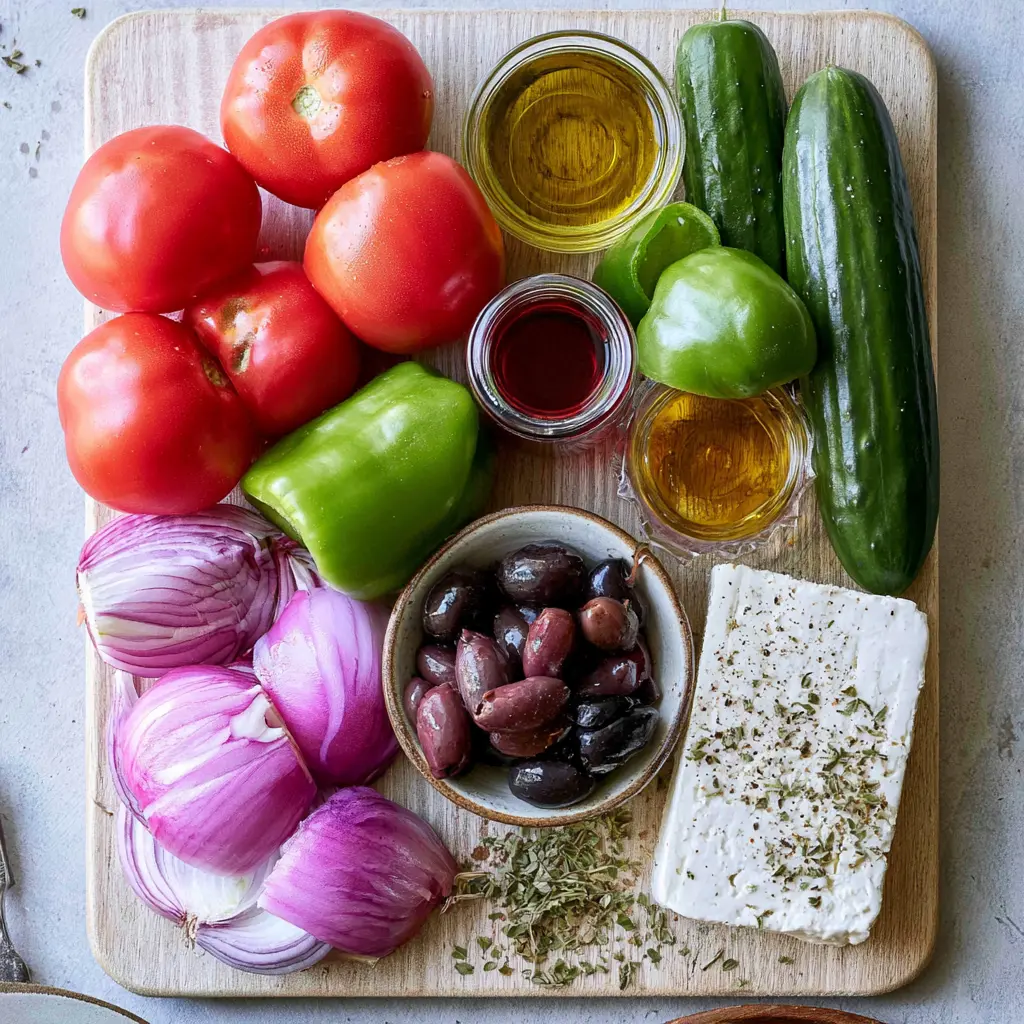
- Ripe tomatoes. Fragrant, heavy, in-season. If they don’t smell like anything, they won’t taste like anything.
- Cucumbers. English cucumbers are my go-to. Firm, thin-skinned, less watery. Regular ones work if you seed them.
- Green bell pepper. Crunchy, a little bitter, and traditional.
- Red onion. Thinly sliced half-moons. Soak them in cold water if they’re too sharp.
- Pitted black olives. Kalamata if you can find them. Briny, meaty, and dark.
- Feta. Buy the cheese block, the one packed in brine. Never pre-crumbled. Ever.
- Extra-virgin olive oil. This is the secret. Good oil makes the whole thing sing.
- Red wine vinegar, dried Greek oregano, salt, pepper. The dressing in full.
No bell pepper? No problem. Use what you have. This is more of a formula than a strict recipe, and it forgives you.
How to Make Classic Greek Salad
Grab your biggest cutting board. This is chop, salt, drizzle, done. Fifteen minutes, one bowl, zero stress. Here’s the rhythm.
Prep the Vegetables
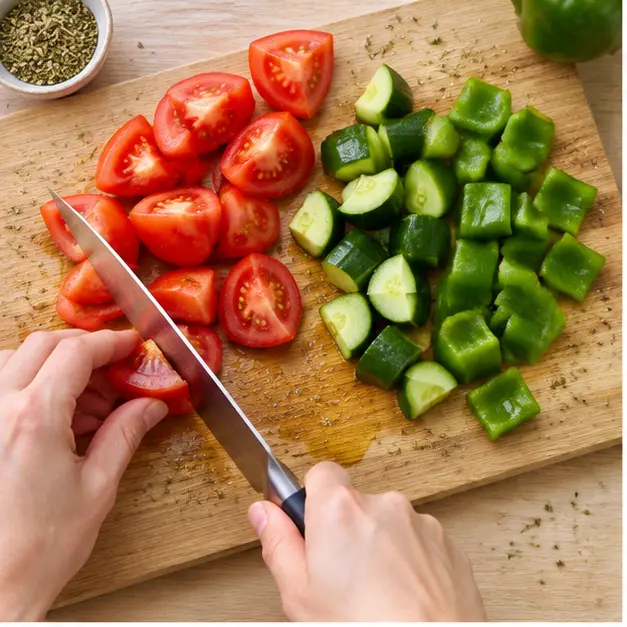
Cut the cucumbers, tomatoes, and green bell pepper into large, rustic bite-size chunks. Think big, not dainty. Greeks don’t make tiny dice. The vegetables are the main event here.
Slice the red onion into thin half-moons. If raw onion makes you wince, soak the slices in cold water while you chop the rest, then drain and pat dry. It takes the bite out without losing the crunch.
Here’s the trick nobody mentions: sprinkle the cut cucumbers lightly with kosher salt and let them sit for a minute. Drain the liquid that pools up. That’s how you avoid a watery salad at the bottom of the bowl.
Make the Oregano Vinaigrette
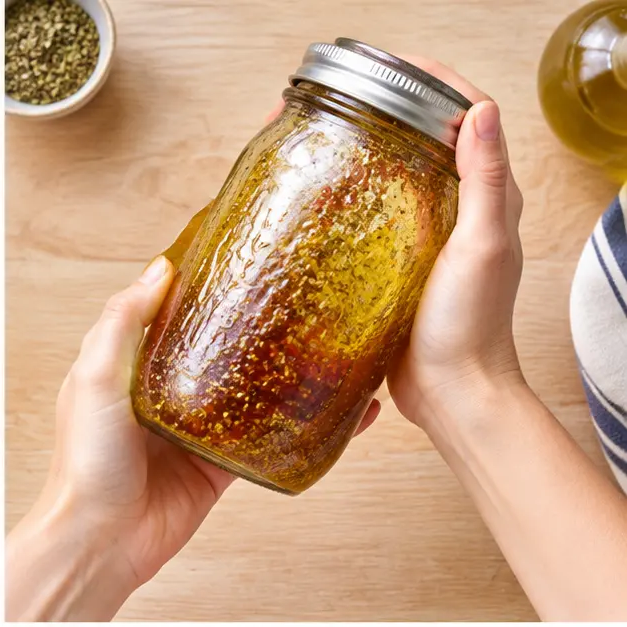
The Greek salad dressing is embarrassingly simple. Extra-virgin olive oil, red wine vinegar, dried Greek oregano, salt, and fresh cracked pepper. That’s it. No honey, no mustard, no garlic. The Greeks don’t need ’em.
I use a mason jar. Everything in, lid on, shake like you mean it until it emulsifies. No jar? Whisk in a bowl. Or just drizzle the oil and vinegar straight over the salad and toss. It all works.
High-quality olive oil matters more here than in any other recipe I make. This is a no-lettuce salad, so the oil is doing heavy lifting. Taste it on its own first. If you wouldn’t eat it on bread, don’t put it on your salad.
Assemble the Salad
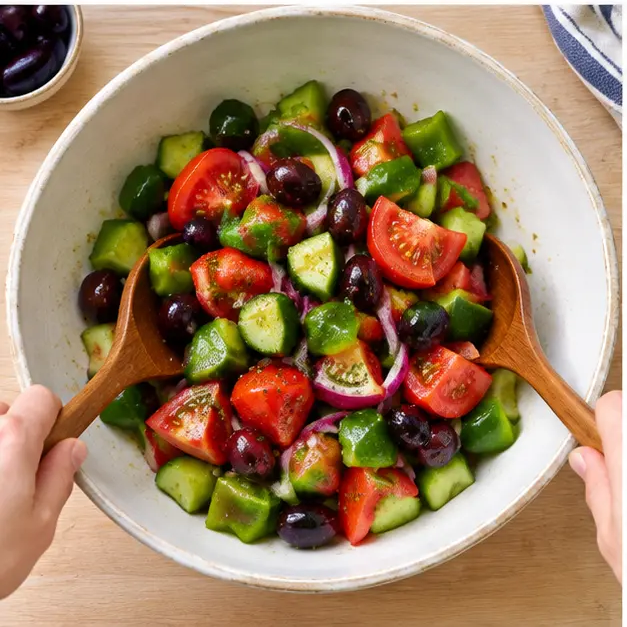
Combine the chopped vegetables and olives in a large serving bowl. Pour the dressing over the top and toss gently, like you’re handling something precious. The tomato juices will mingle with the dressing. That’s the magic.
The dressing should coat every chunk without pooling. If it looks dry, add a touch more olive oil. Taste before you salt. Feta and olives are already salty, so go easy.
The Feta Finish
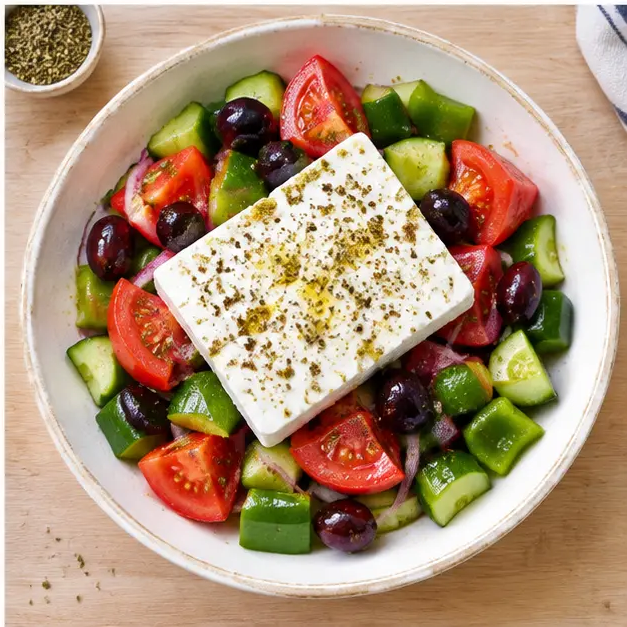
Now the best part. Place the block of feta right on top, whole or in a thick slab. Don’t crumble it. I repeat, do not crumble it. Each person breaks off a piece as they serve. It keeps the feta creamy and lets it stay the star.
Finish with a sprinkle of dried oregano and a crack of black pepper over the top. A final drizzle of olive oil doesn’t hurt either.
If you can, let it rest for 30 minutes before serving. The flavors settle in and get friendlier. Honestly, it gets better as it sits.
Tips for the Best Greek Salad
I’ve made every mistake in the book, including buying pre-crumbled feta once. Once. Let me save you the trouble:
❌ Crumbling the feta into the salad → ✅ Leave it in one thick slab on top.
❌ Using pre-crumbled or fat-free feta → ✅ Block feta packed in brine, always.
❌ Salting everything before tasting → ✅ Season carefully. Feta and olives bring the salt.
❌ Watery, out-of-season tomatoes → ✅ Ripe, fragrant ones, warm from the counter.
❌ Serving right away → ✅ Give it 30 minutes to rest and mingle.
And please, don’t skip the good oil. I know it’s tempting to grab the cheap bottle, but olive oil is the backbone of this easy Greek salad. Every ingredient has to earn its place.
Greek Salad Variations
The classic is perfect as is. But here’s how to make it yours on a Tuesday:
- Vegan: Use your favorite plant-based feta. Everything else stays the same.
- Out of red wine vinegar? Fresh lemon juice is a perfect swap.
- Add protein: Grilled chicken or chickpeas turn it into a full meal.
- Extra briny? Toss in a few capers or whole anchovies. Optional, but lovely.
- Fresh herbs: Mint, oregano, or basil on top add a bright finish.
These are all optional twists. The authentic Greek salad formula is simple on purpose. Don’t overload it.
What to Serve with Greek Salad
This is the make-ahead salad that never turns soggy, which makes it the MVP of any Labor Day cookout. It sits in the sun while the burgers and brisket do their thing, and it just gets juicier.
At home, I serve it alongside roast chicken, lamb chops, or whatever Sam is pulling off his Big Green Egg. It’s a staple of the Mediterranean diet for a reason: bright, fresh, and endlessly good with grilled things.
Don’t forget the bread. A crusty loaf or warm pita to swipe through the leftover juices at the bottom of the bowl. That’s the Greek ritual called papara, and it’s non-negotiable in my house.
How to Store Leftover Greek Salad
Honestly, this classic Greek salad tastes best the day you make it. The tomatoes are at their peak, the cucumber is crunchy, everything is alive.
Leftovers keep in the fridge for up to two days in a covered container. The cucumber softens and the flavors deepen, so it’s still good, just different.
If you’re prepping ahead for a party, keep the chopped vegetables and the dressing separate. Combine them about an hour before serving. Nobody will know you did the work the night before.
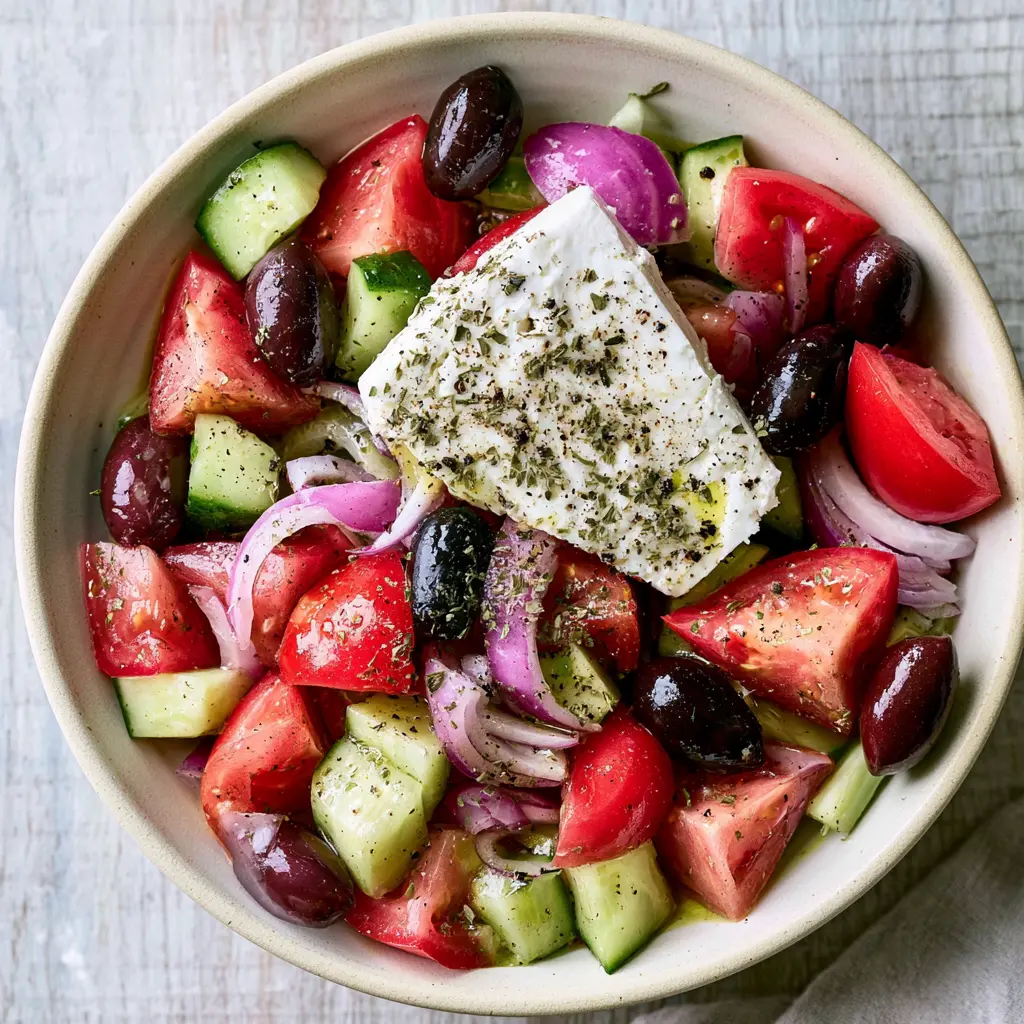
When you bring this classic Greek salad to your table, watch what happens. The bowl empties first, every single time. People hover, sneaking bites with their fingers. Someone always asks for the recipe.
That’s the thing about the real Greek salad. It doesn’t try to impress. It just shows up, fresh and bright and honest, and dares you not to fall in love.
Want to save this for later? I’ve got a board full of summer sides just like it. Save this classic Greek salad to your Pinterest board and you’ll have it for every cookout from now on.
Make this once, and it becomes the side dish everyone requests. I promise.
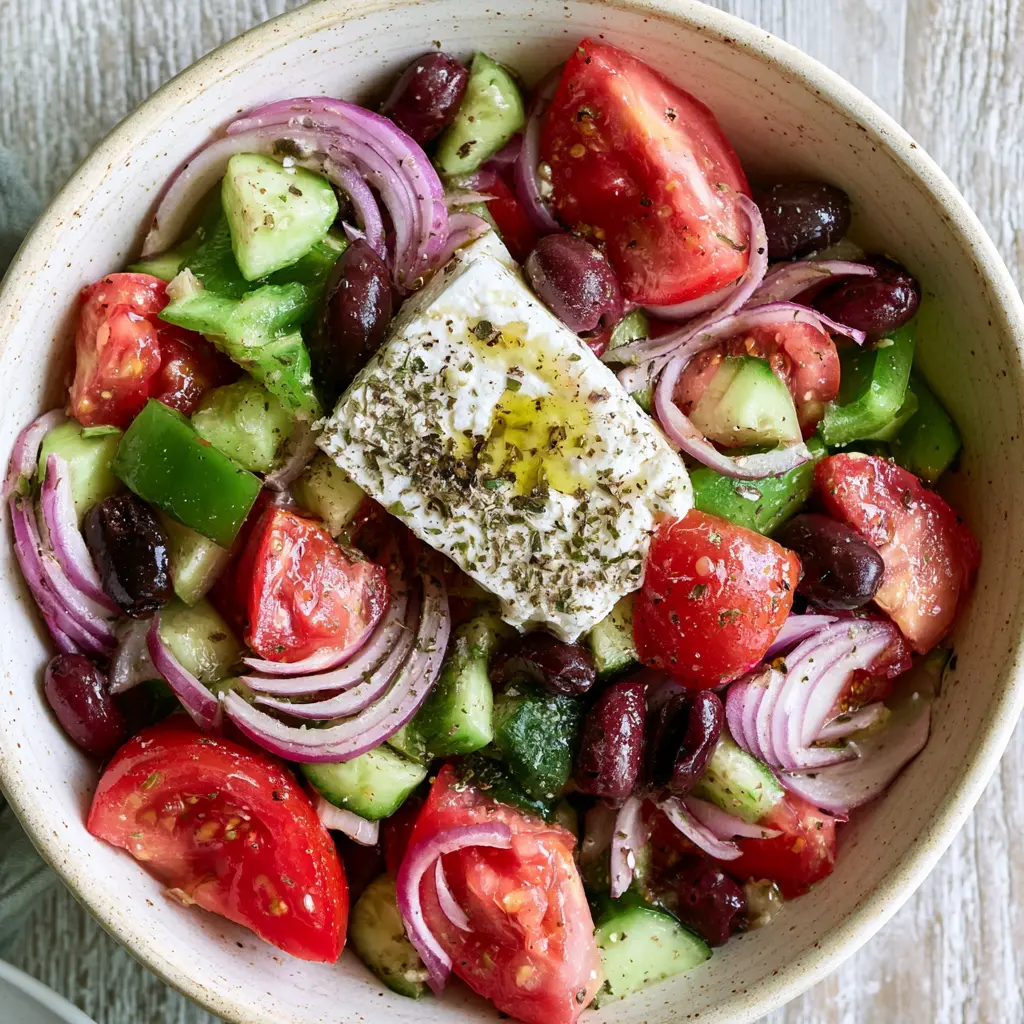
Easy Classic Greek Salad with Feta and Oregano Vinaigrette
Ingredients
Method
- Cut the cucumbers, tomatoes, and green bell pepper into large bite-size chunks.
- Slice the red onion into thin half-moons.
- In a mason jar, combine the olive oil, red wine vinegar, and dried oregano.
- Season with salt and pepper.
- Secure the lid and shake well until the dressing is emulsified.
- In a large serving bowl, combine the chopped cucumbers, tomatoes, bell pepper, red onion, and olives.
- Pour the dressing over the salad and toss gently.
- Place the block of feta on top of the salad.
- Finish with a sprinkle of dried oregano and cracked black pepper.
Nutrition
Notes
Tried this recipe?
Let us know how it was!Greek Salad FAQ
Source: Learn More About This Dish